
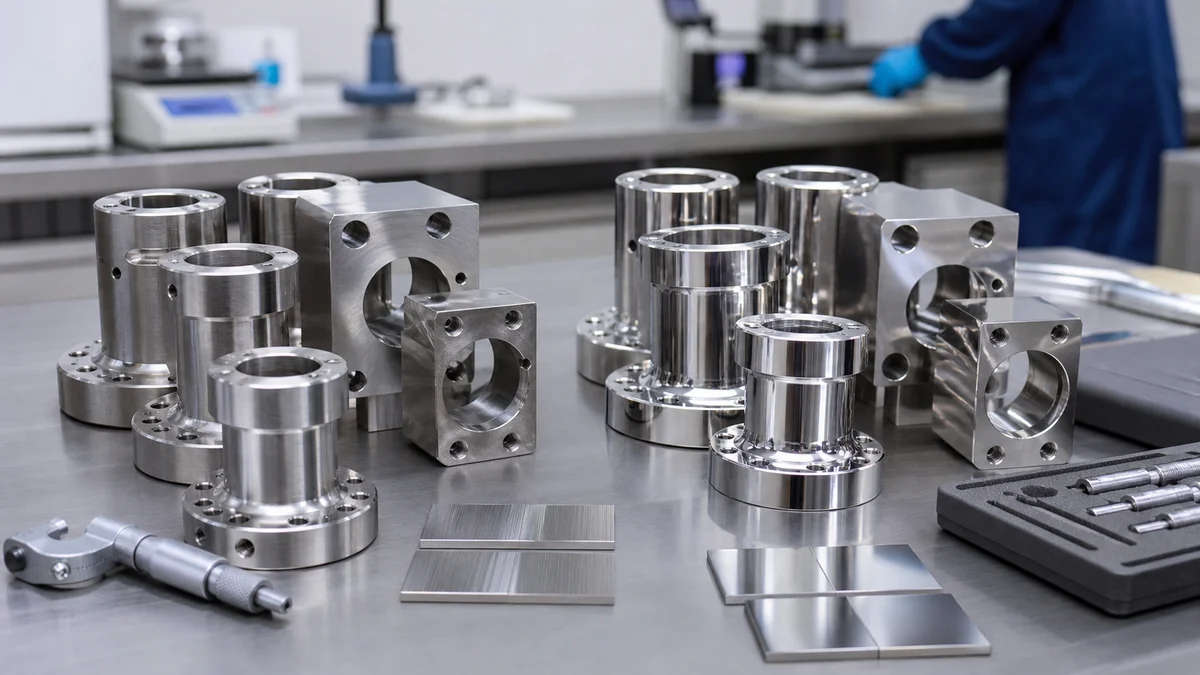
Passivation and electropolishing both treat stainless steel surfaces, but they solve different manufacturing problems. Passivation removes free iron and contaminants without intentionally changing the machined geometry. Electropolishing removes surface material, smoothing microscopic peaks and potentially reducing fine, accessible burrs.
The right choice depends on the finished CNC part. Corrosion exposure matters, but so do stainless grade, starting surface condition, cleanability, fitted dimensions, thin features, masking access, inspection scope, quantity, and production intent.
The practical decision is not which process sounds more advanced. It is which surface change the part requires, which dimensional effects it can accept, and how those requirements will be controlled on the drawing and RFQ.
How Do Passivation and Electropolishing Change a Stainless Steel CNC Part?
Choose passivation when the machined surface is already acceptable and the main requirement is removing free iron and contamination. Choose electropolishing when the specification requires controlled surface removal, smoothing of microscopic peaks, accessible fine-burr reduction, or improved cleanability in addition to corrosion support.
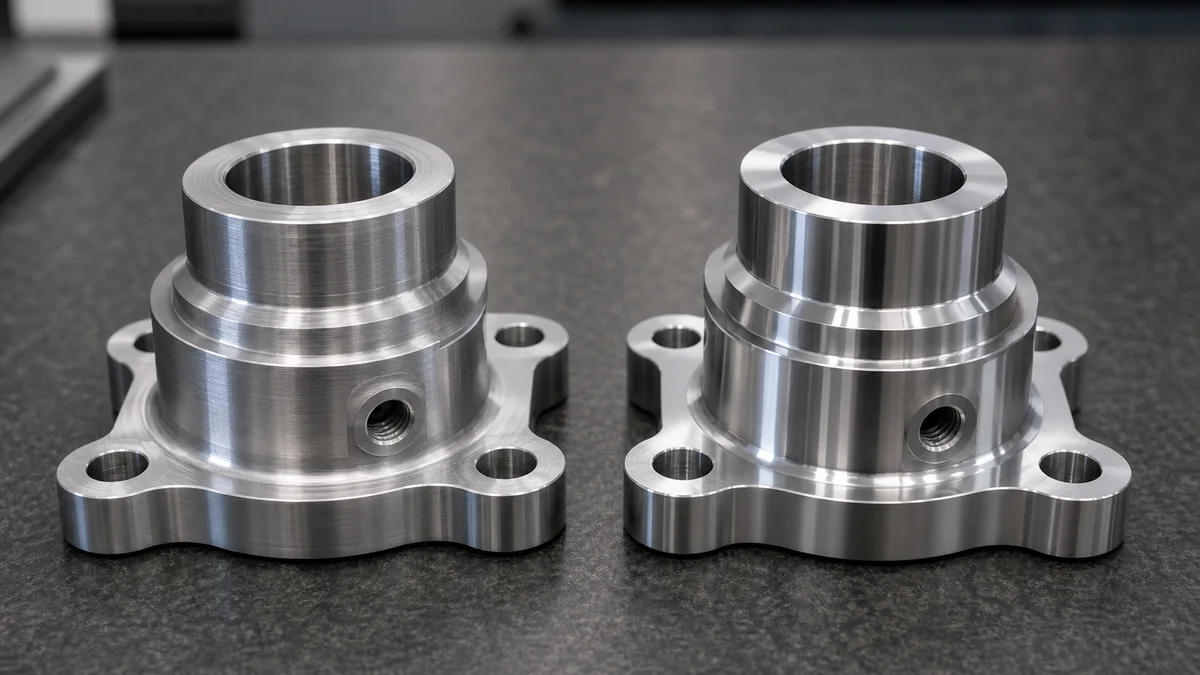
Passivation is a non-electrolytic acid treatment1. It removes free iron and suitable surface contaminants, supporting the stainless steel passive oxide condition. It does not intentionally level tool marks, reduce surface roughness, round edges, or remove machining burrs.
Electropolishing is an electrochemical material-removal process2. The stainless part acts as the anode in an electrolyte, and microscopic high points are preferentially dissolved. The result depends on alloy, initial surface condition, geometry, fixturing, and process control. Unlike passivation, electropolishing changes both surface topography and part dimensions.
| Specification decision | Passivation | Electropolishing |
|---|---|---|
| Intentional base-metal removal | No | Yes |
| Machining-mark leveling | Not a process function | May reduce accessible peaks |
| Fine accessible burr reduction | No | May occur |
| Dimensional allowance | Normally unnecessary for material removal | Required on treatment-sensitive features |
| Existing machined texture | Largely retained | Modified |
| Primary drawing concern | Cleanliness and treatment requirement | Finish location, allowance, masking, and final inspection |
A note such as “improve corrosion resistance” is not enough to select the process. It does not say whether the part must retain its machined texture, become easier to clean, lose fine peaks, preserve a sharp edge, or maintain a fitted diameter.
The sound specification starts with the required surface change. If contamination removal is the objective and the finish is already functional, passivation is usually the direct route. If smoothing or fine-burr reduction is part of the function, electropolishing deserves review—but only with its dimensional consequences included.
How Do Stainless Grade and Starting Surface Condition Affect Treatment Choice?
Specify the exact stainless grade and document the surface condition entering treatment. Passivation and electropolishing both depend on effective cleaning, while oils, coolants, chips, embedded iron, abrasive blasting, mechanical polishing, and rough machining can influence treatment consistency and final acceptance.
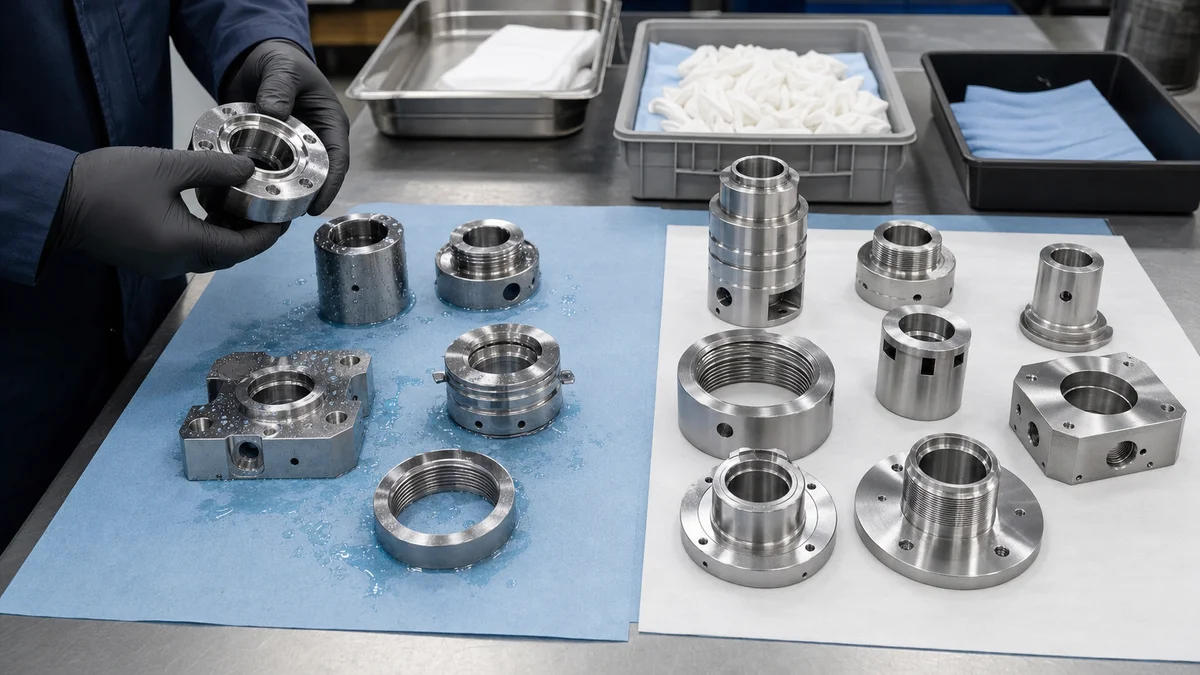
An RFQ that says only “stainless steel” leaves a material decision unresolved. The supplier needs the exact grade and condition because alloy composition and prior processing affect machining, cleaning, finishing, and inspection assumptions. The supported grades discussed here include 303, 304, 316, and 17-4PH3, but their presence on that list does not make every treatment sequence equivalent.
Starting condition matters just as much. A machined surface may carry coolant, oil, chips, polishing compound, abrasive residue, or embedded contamination4 from handling. Those conditions should be addressed before chemical or electrochemical treatment. Neither process should be expected to compensate for uncontrolled preparation.
Before quotation, identify:
- Exact stainless grade and material condition.
- Machining operations performed before treatment.
- Known coolant, oil, or cleaning conditions that may affect preparation.
- Abrasive blasting or mechanical polishing and the surfaces involved.
- Existing scratches, tool marks, burrs, embedded debris, or cosmetic limits.
- Surfaces that must retain their machined condition.
- Required material documentation.
Passivation will not convert inconsistent machining marks into a uniform polished finish. Electropolishing also begins with the surface produced by machining and preparation; it may reduce microscopic peaks, but it is not a general repair process.
Use a controlled 2D drawing to separate functional, cosmetic, and non-critical surfaces. That distinction tells the finisher whether the real concern is surface contamination, appearance, roughness, edge condition, or dimensional preservation. It also prevents unnecessary treatment requirements from spreading across the entire part.
Which Part Features Make Electropolishing a Dimensional Risk?
Electropolishing requires special review around fitted diameters, threads, thin walls, sharp functional edges, sealing lands, internal passages, and masked areas. Because the process removes material, it can reduce sections, alter fits, soften edges, or produce an unacceptable result where exposure and current distribution are difficult to control.
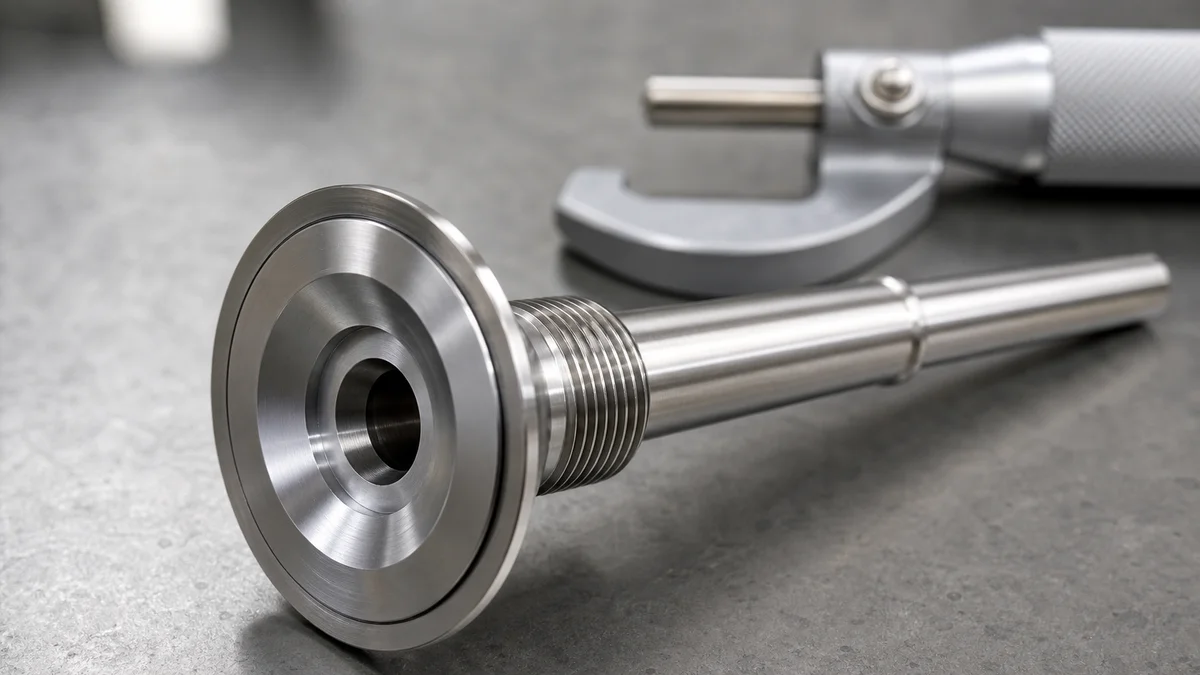
Geometry determines whether material removal is useful or risky. A broad clearance face may tolerate electropolishing differently from a press-fit diameter, thread flank, narrow sealing land, or minimum wall thickness. The drawing should therefore localize treatment instead of assuming every exposed surface can accept the same change.
Flag these features for supplier review:
- Male and female threads whose final fit matters.
- Bearing, slip-fit, press-fit, and alignment diameters.
- Thin walls, narrow ribs, delicate lands, and small cross-sections.
- Sharp edges used for cutting, locating, sealing, or metering.
- Gasket-contact regions and other sealing surfaces.
- Blind pockets, intersecting passages, and restricted internal channels.
- Areas requiring masking or electrical contact during processing.
- Adjacent cosmetic faces that must remain visually consistent.
Scenario: A CNC machined stainless valve component has a fitted bore, a narrow sealing land, and an internal fluid passage. Electropolishing may support passage cleanability, but an unrestricted treatment could alter the bore or soften the land. A better RFQ marks the passage as treatment-critical, the bore as dimension-critical, and the sealing land as protected or subject to an agreed machining allowance5.
Masking is not automatically practical on every small or recessed feature. Part orientation and electrical fixturing6 also need physical access, so the supplier must review the complete geometry rather than isolated dimensions.
Avoid copying a universal removal value onto the drawing. Ask the supplier to evaluate the alloy, initial finish, feature exposure, target surface condition, and final tolerance together. Where texture and geometry must remain essentially as machined, passivation is generally the lower-risk choice.
Should Critical Dimensions Be Specified Before or After Surface Treatment?
Specify functional acceptance dimensions in the final treatment condition unless the drawing clearly defines another sequence. Electropolished features need an agreed machining allowance, masking decision, and post-treatment inspection plan, while passivated features normally do not require compensation for intentional base-material removal.
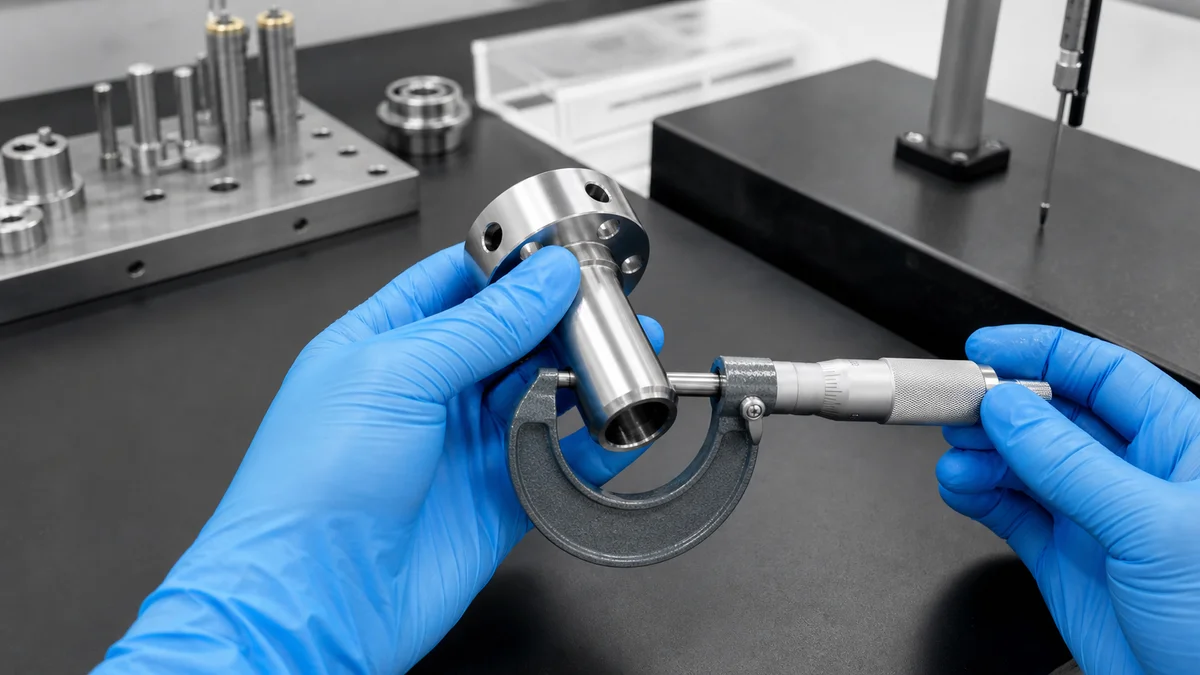
A tolerance is incomplete when the drawing does not identify the process condition it controls. For electropolished parts, the machining supplier and finisher must know whether a bore, thread, wall, or sealing land is sized before treatment or accepted afterward. Otherwise, both parties may use different allowance assumptions and create an avoidable tolerance stack-up7.
| Feature | Drawing requirement | Final verification |
|---|---|---|
| Fitted bore or shaft | State whether size applies after treatment | Measure in the specified finished condition |
| Thread | Define exposed, masked, or compensated status | Confirm required fit after treatment |
| Thin wall or narrow land | State minimum final section or protected condition | Measure using the agreed support condition |
| Sealing face | Localize dimensional and surface requirements | Verify geometry and specified surface condition |
| Roughness-controlled area | Mark the exact post-treatment zone | Measure at defined locations and direction |
| Non-critical surface | Apply only necessary general control | Use the agreed routine inspection scope |
When should allowance be agreed?
Before production machining. The allowance strategy depends on stainless grade, geometry, initial finish, masking feasibility, feature orientation, and the supplier’s treatment plan. One value should not be copied across unrelated parts or features.
Inspection must be defined at the same time. State whether acceptance requires first-article results8, selected final dimensions, roughness readings, batch sampling, or another documented method. “Full inspection” is too vague unless the drawing identifies the characteristics, frequency, and final measurement condition.
Passivation simplifies the dimensional plan because it does not intentionally remove base metal. Even then, final inspection should follow all specified processing when the released drawing defines the completed part as the acceptance state.
When Do Surface Finish and Cleanability Justify Electropolishing?
Electropolishing is justified when smoother accessible surfaces, fine-peak reduction, cleanability, or fine-burr control serves a defined function. Passivation is usually sufficient when the machined texture is acceptable and the requirement is contamination removal rather than a measurable or application-specific change in surface topography.
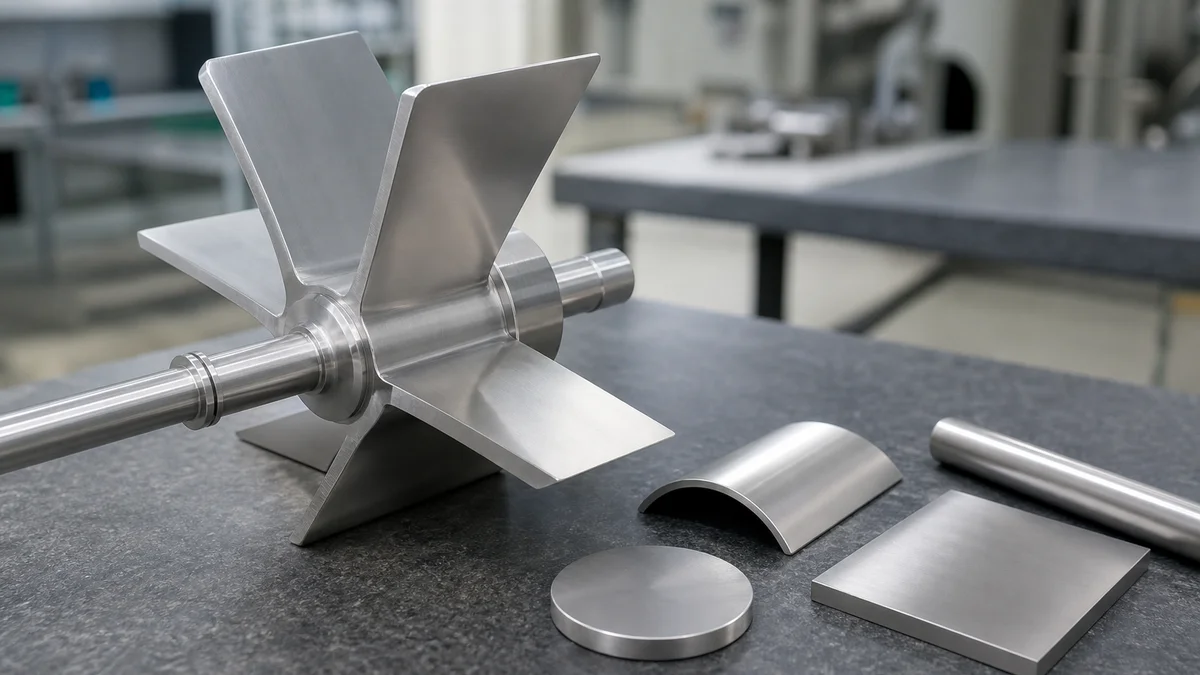
Surface finish should follow feature function. Product-contact surfaces9, fluid passages, sliding areas, sealing zones, and particle-sensitive regions may need a different condition from mounting faces, clearance pockets, or hidden non-contact areas. Electropolishing may help by reducing microscopic peaks on accessible surfaces, but the drawing still needs a measurable or otherwise unambiguous acceptance requirement.
| Functional surface | Passivation may fit when | Electropolishing may fit when | Drawing information needed |
|---|---|---|---|
| Product-contact area | Machined texture already supports cleaning | Smoother accessible topography is required | Treated boundary and final surface condition |
| Fluid passage | Existing marks and fine edge condition are acceptable | Peak or fine-burr reduction supports cleaning or flow | Passage identification and inspection access |
| Sliding area | Machined finish meets motion requirements | A modified surface is functionally necessary | Finish zone and final fit |
| Sealing face | Existing finish already meets sealing intent | Surface modification is specifically required | Local roughness, flatness, and masking decision |
| Cosmetic face | Appearance is accepted as machined | A modified appearance is approved | Visual boundary and acceptance method |
Example: A CNC machined stainless mixing component has product-contact blades, a fitted shaft, and a non-contact mounting face. A blanket electropolish note creates unnecessary risk. The better drawing identifies the product-contact surfaces, protects or compensates the shaft fit, and leaves the mounting face under its normal requirements.
Avoid using “smooth,” “hygienic,” or “mirror-like” as the only acceptance language. If roughness controls function, state the post-treatment value, measurement locations, sampling plan, and measurement direction10 where relevant. Electropolishing may reduce fine accessible burrs, but it should not replace mechanical removal of a substantial machining burr.
What Drives the Cost and Lead Time of Each Treatment?
Passivation is generally the simpler processing route, while electropolishing adds material-removal control, electrical fixturing, possible masking, handling, and additional verification. Actual cost and schedule depend on geometry, treated area, part size, quantity, lot strategy, inspection scope, and the supplier’s production sequence.
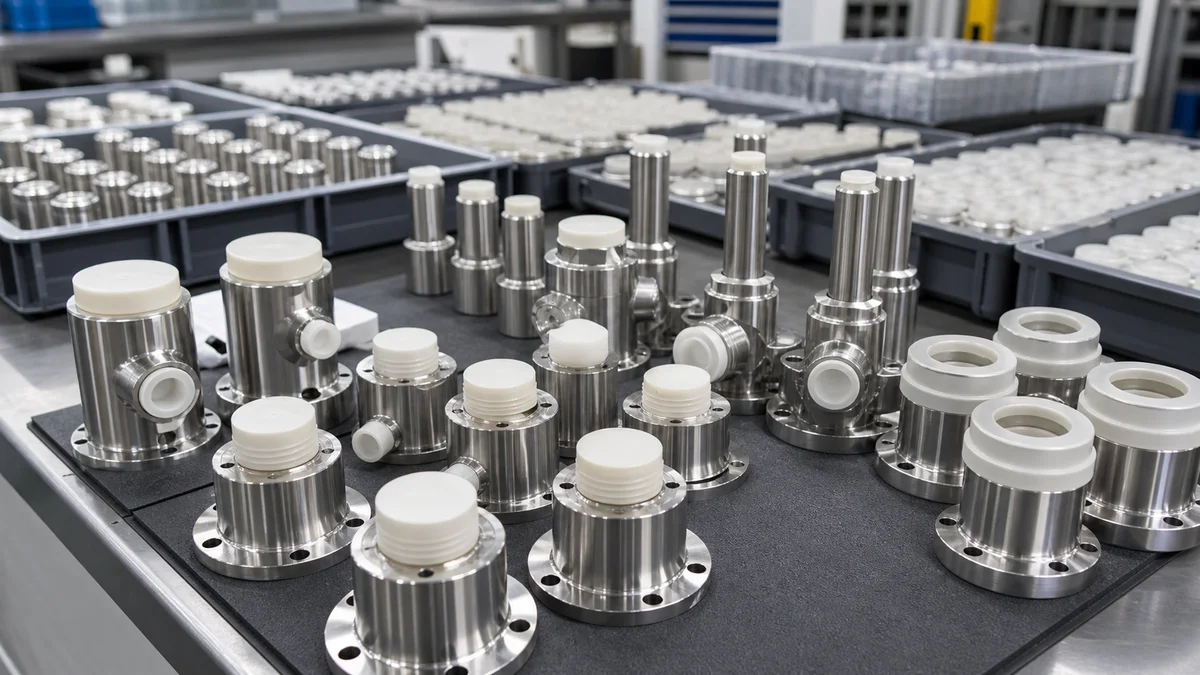
A fixed price multiplier or assumed turnaround is a poor comparison method. The quotation must reflect the complete route for the specific part. A simple passivated block with routine inspection is not comparable to an electropolished component with internal channels, protected threads, several fitted diameters, and documented roughness requirements.
The main cost and schedule drivers are:
- Part envelope and geometry: Recessed cavities, internal passages, thin features, and delicate handling can increase processing effort.
- Treatment coverage: A fully treated part differs from one with selected product-contact or cosmetic zones.
- Masking: Threads, fitted diameters, sealing lands, electrical contact areas, and untreated faces may need individual protection.
- Quantity and lot strategy: Prototype, pilot, and repeat production orders create different batching and approval assumptions.
- Annual demand: Expected usage helps the supplier evaluate repeat fixturing, handling, and inspection routines.
- Starting condition: Extra cleaning, mechanical preparation, or burr correction may be required before treatment.
- Inspection scope: Final dimensional reports, roughness readings, first-article evidence, and production sampling add work beyond visual review.
- Process routing11: Transport, rehandling, queue coordination, and handoff between machining and finishing affect schedule.
Ask suppliers to separate machining, treatment, masking, and inspection assumptions where practical. If both routes could meet the function, request alternatives against the same drawing revision, quantity, and delivery expectation. That keeps the comparison technically consistent.
The lowest finishing line item may not produce the lowest total route. Dimensional risk, approval effort, inspection time, and possible rework belong in the decision alongside the treatment price.
What Specification Failures Cause Poor Passivation or Electropolishing Results?
The most common specification failures are expecting passivation to repair machining defects and specifying electropolishing without accounting for material removal. Prevent disputes by defining the incoming surface, pre-cleaning, deburring, protected features, final dimensions, finish locations, treatment sequence, and inspection timing before quotation.
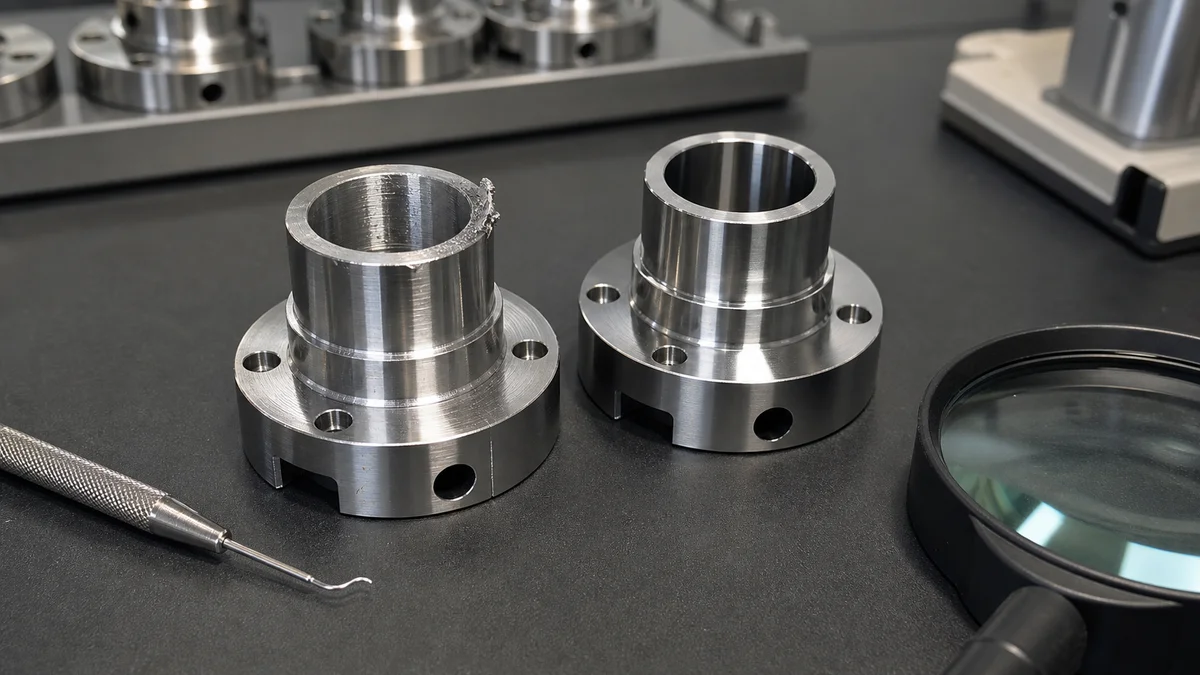
Passivation removes free iron and suitable contamination. It does not erase scratches, level rough tool paths, remove substantial burrs, or restore damaged edges. If the incoming surface is unacceptable, the drawing or routing should call out the required machining correction, mechanical deburring12, polishing, or cleaning as a separate operation.
Electropolishing creates the opposite risk: the buyer specifies a smoother surface but overlooks dimensional change. Fitted diameters, thread geometry, minimum wall thickness, sharp edges, and sealing lands can be affected when exposed without allowance or masking.
Example: A stainless manifold drawing says only “passivate after machining,” while the purchase description expects internal burr removal and a polished exterior. Those requirements conflict. The buyer should specify mechanical deburring, internal passage acceptance, cosmetic finish, and passivation separately.
Scenario: A small CNC machined nozzle is electropolished after its bore and edge geometry have been accepted at the machining stage. The drawing does not state whether bore size applies after treatment. If the feature changes, the machinist and finisher have no shared acceptance basis. The correction is to define final bore size, edge function, treatment exposure, and post-treatment inspection13 before release.
For a demanding part, use this approval check:
- Confirm that model and drawing revisions agree.
- Classify functional, assembly, cosmetic, and non-critical surfaces.
- Approve the incoming machined and deburred condition.
- Define exposed, masked, and electrical-contact areas.
- State which dimensions and finish requirements apply after treatment.
- Confirm the inspection method, frequency, and required evidence.
A finishing note should define a controlled process outcome, not serve as a vague instruction to repair earlier manufacturing problems.
What Should an RFQ Specify for Passivation or Electropolishing?
A useful RFQ must identify the exact manufacturing process, stainless grade, geometry, treatment sequence, final tolerance condition, finish locations, masking, inspection scope, quantity, production intent, revision, and delivery expectations. Do not leave the supplier to assume whether passivation, electropolishing, or a combined sequence is required.
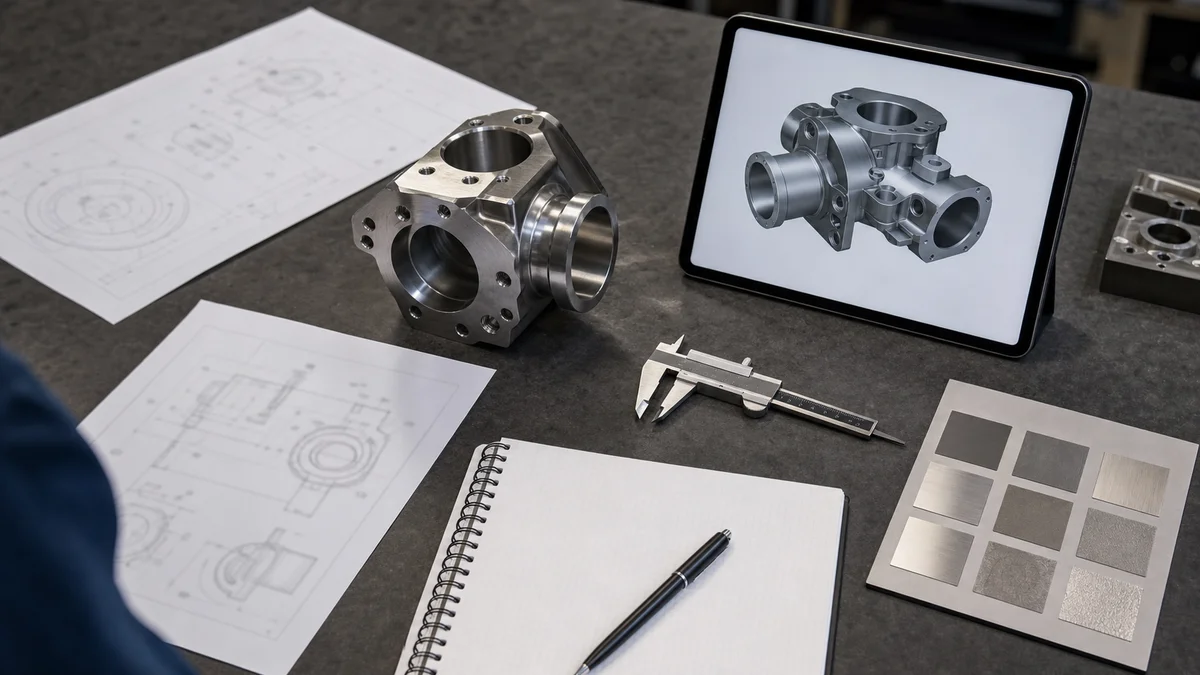
Give the machining supplier and finisher one controlled requirement set. The 3D model communicates complete geometry; the controlled 2D drawing14 defines dimensions, tolerances, surface boundaries, notes, and acceptance requirements. If they conflict, resolve which document governs before requesting a quotation.
RFQ and approval checklist
- 3D CAD model and controlled 2D drawing.
- Part number, units, and active revision level.
- Exact stainless grade and material condition.
- Immediate quantity, prototype or production intent, and annual demand if known.
- Service environment and relevant cleaning or media-contact conditions.
- Critical fits, bores, threads, sealing lands, thin walls, sharp edges, and internal passages.
- Functional, assembly-related, cosmetic, and non-critical surface classifications.
- Required sequence: passivation only, electropolishing only, or electropolishing followed by passivation when specified.
- Pre-cleaning, mechanical deburring, blasting, or polishing requirements.
- Treatment boundaries and areas requiring masking or protection.
- Statement of whether dimensions apply before or after treatment.
- Required post-treatment surface condition and measurement locations.
- First-article, final-report, sampling, or other inspection requirements.
- Material or process documentation explicitly required at delivery.
- Delivery expectations and staged approval requirements.
Name the manufacturing process correctly. CNC machining removes material from stainless stock by milling, turning, drilling, boring, reaming, and related operations. CNC turret punching or CNC punch press work uses programmed punch tools on sheet metal. Metal stamping uses dedicated dies. Sheet metal fabrication may combine cutting, punching, bending, welding, and finishing. Plastic injection molding forms polymers in a mold and is not a stainless machining process.
“CNC turret punching, CNC punch press, CNC-controlled stamping equipment, or metal stamping depending on the actual process” is not one standard term. Clarify whether it means turret punching, a CNC-controlled press, or general die stamping. The distinction matters because burr direction, springback, bend radius15, tooling, inspection, and finishing risks differ from those of a machined stainless component.
For a treatment recommendation, sample plan, or quotation, send the 3D model, controlled 2D drawing, stainless grade, quantity, prototype or production intent, critical tolerances, surface-finish locations, masking needs, inspection expectations, revision level, service environment, and delivery requirements. State whether passivation, electropolishing, or a combined sequence is under consideration.
References
-
Passivation of Stainless Steel | ASTM A967, AMS 2700 & QQ-P-35 - Proper passivation of stainless steel with an oxidizing acid such as nitric or citric acid removes this free iron and promotes the growth of a thin, dense ... ↩
-
What is Electropolishing? How Does Electropolishing Work? - Electropolishing is an electrochemical finishing process that removes a thin layer of material from a metal part, typically stainless steel or similar alloys. ↩
-
What Grades of Stainless Steel Need Passivation? - 304, 316, 17-4, and many 400 series stainless steels can all benefit from passivation depending on the application and how the material was processed. ↩
-
What is Passivation? How Does Stainless Steel Passivation Work? - In stainless steel, the passivation process uses nitric acid or citric acid to remove free iron from the surface. The stainless steel passivation treatment ... ↩
-
Best Surface Finish After CNC Turning - WMTCNC - electropolishing removes material, small bores, thin walls, threads, and precision features should be reviewed before processing. ↩
-
Specifying Electropolishing: 4 Steps & Best Practices | Able - Here's what engineers and manufacturers can use to ensure the microfinish of their metals parts meets specific requirements with electropolishing. ↩
-
Tolerance Stack-Up: Analysis Methods, Examples, and Cost - The stack-up study allows engineers to identify gaps, interference issues, alignment shifts, and fit conditions before production starts. ↩
-
A Guide to First Article Inspection (FAI) - 1factory - For example, every First Article Inspection report requires a dimensional record. Most require a Gage ID against each measurement. And a subset further ... ↩
-
Hygienic Surface Finishes for Stainless Steel - Northern Manufacturing - This guide provides the technical framework for creating precise and enforceable surface finish specifications, ensuring your components are ... ↩
-
Mastering Surface Roughness: A Comprehensive Guide - Accu - Measuring lay involves determining the direction and consistency of the surface pattern. This can be done using visual inspection or more advanced techniques ↩
-
Understanding Lead Time: Definition, Process, and Impact on ... - Lead time is the time between the start and completion of a process, and can impact efficiency and responsiveness in manufacturing and supply chain operations. ... ↩
-
Deburring Metal Parts with Precision - Able Electropolishing Blog - Electropolishing removes burrs at a microscopic level by dissolving high points on the surface through a tightly controlled electrolytic process ... ↩
-
Electropolishing Services for Stainless Steel CNC Parts - Baosheng - We review your stainless steel grade, Ra target, burr condition, internal passages, threads, critical dimensions and clean handling requirements before pricing. ↩
-
CNC Machining RFQ: 6 Steps to Avoid Costly Quote Delays - The 3D model estimates machine time, while the 2D drawing defines tolerances and quality standards. They must match perfectly to avoid delays. ↩
-
13 Mechanical Design Considerations for Metal Stamping Parts - Bend radius Controls cracking, thinning, springback, and tooling selection. Burr direction Burrs affect assembly, contacts, coating, and handling safety. each ... ↩