
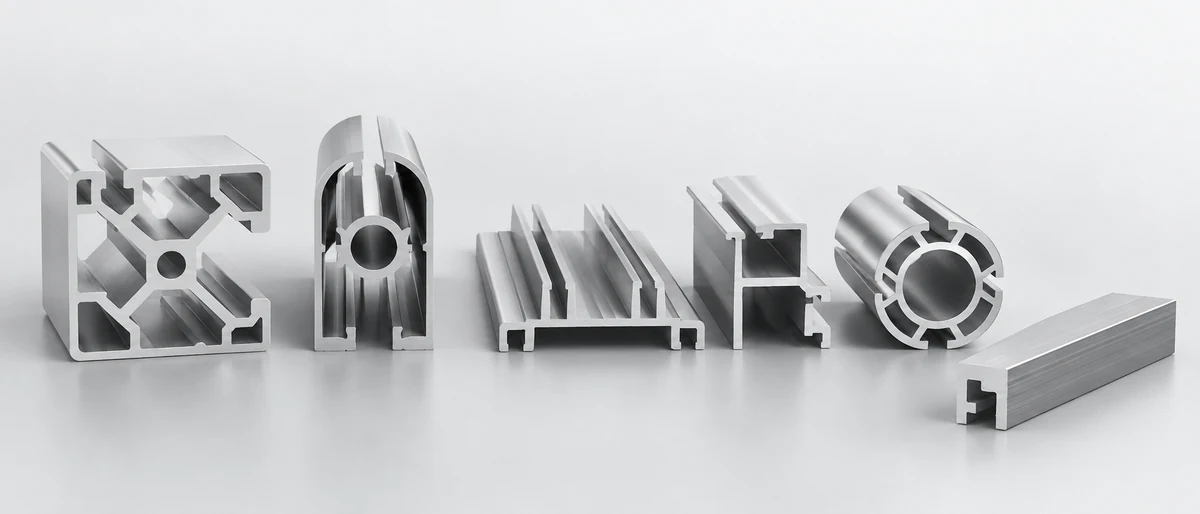
China Aluminum Extrusion Service
A custom extrusion starts with one cross-section, then adds alloy, temper, die terms, cut length, straightness, machining and finish. Send your profile drawing and each acceptance condition is reviewed on its own before you compare prices.
- Send the section drawing and the cut and feature drawings.
- State alloy, temper, forecast volume and straightness or twist limits.
- Include an existing profile part number if one could work.
- In-house production
- ISO 9001
- 24h quote response
- 80+ countries
What to define before an extrusion quote
Jump to the section, tooling or inspection question you need to settle first.
Extrusion Profiles
Define the delivered condition
Alloy and Temper
Grade, temper and certificates
Cross Section
Walls, passages, grooves and datums
Profile Design
Features that distort or need machining
Extrusion Tooling
Die cost, ownership and changes
Extrusion Production
From first sample to repeat supply
Straightness and Cutting
Length, twist and cut ends
Secondary Machining
Holes and slots from section datums
Surface Finishing
Anodizing, coating and color approval
Inspection Plan
What is measured, and over what length
Quote Inputs
What to send for a firm quote
Extrusion FAQ
Ten questions buyers ask first
Request a Quote
Send your profile drawing to Parker
Extrusion profiles by delivered condition
Define the profile as it will arrive: a raw length, a cut piece, a machined profile or a finished assembly member. Each one changes what is quoted and inspected.
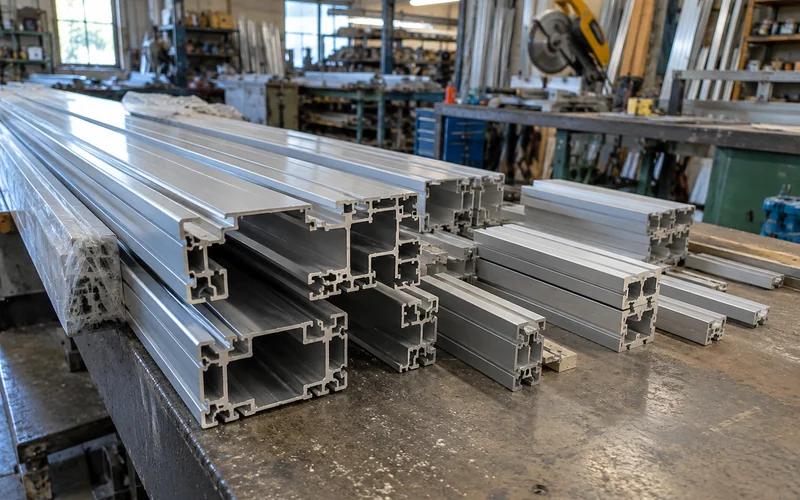
Raw and cut lengths
Mark the section features that locate another component. Straightness and surface protection matter as soon as the profile is cut and handled.
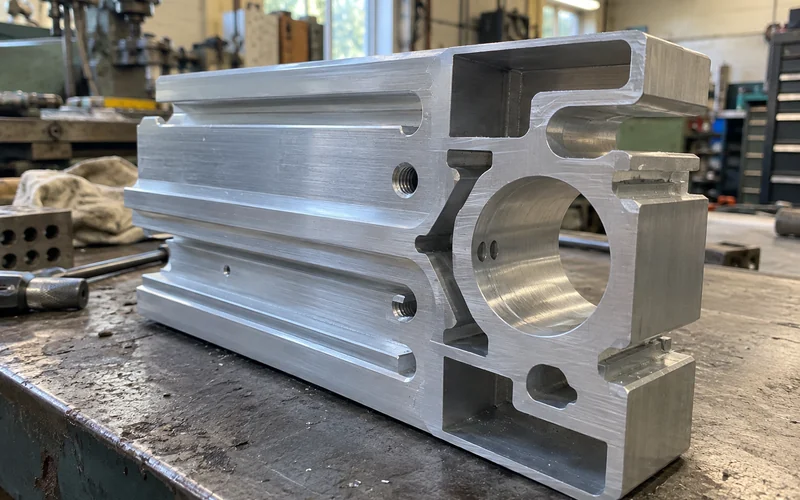
Machined profiles
Holes, slots and end faces are added after extrusion. Mark the section datums they are measured from.
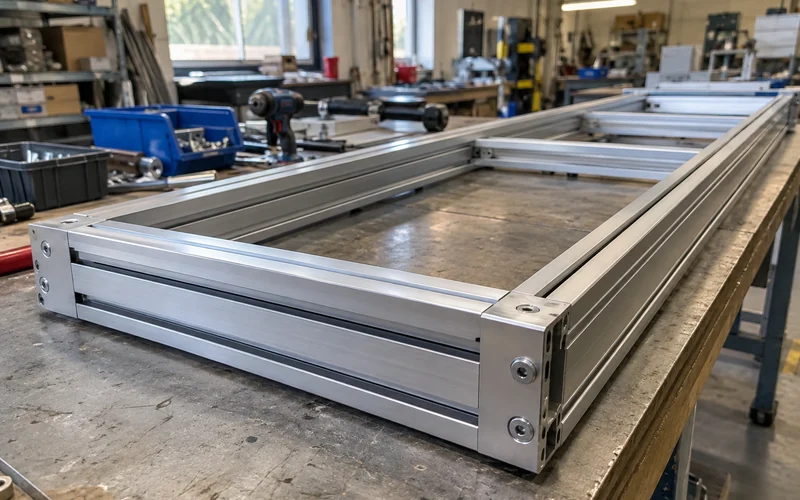
Finished assembly members
Mark the visible faces and the finish they need, plus the features that fit the rest of the assembly.
A section can be right at the die and still fail after cutting or handling if straightness and surface protection were left off the drawing. If your part is bent from flat sheet rather than extruded as one continuous section, see sheet metal fabrication.
Quote response within 24 hours for complete drawings.
Alloy and temper for the duty
Specify the alloy and temper that control strength, form, corrosion and finish, and define the stage at which the material is accepted.
Specify alloy and temper
Name the alloy and temper your design depends on. If they are still open, send the load, exposure, finish and machining needs so a proposal can be evaluated.
Review substitutions
A substitute alloy can change extrusion behavior, straightening and anodized appearance. Approve it before it reaches your profile.
Set the acceptance state
Define acceptance after aging, machining or finishing, not only at the raw profile. Agree material certificates and traceability if you need them.
Next: the section drawing that defines both die and product.
The cross-section drawing
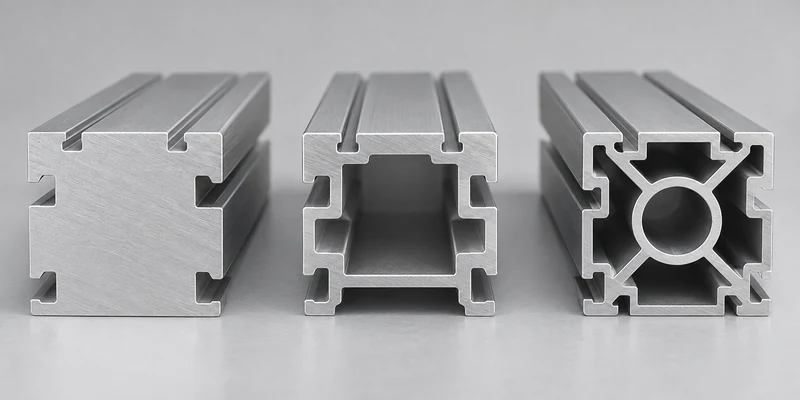
The section drawing defines both the die and the product. Mark wall thickness, hollow or semi-hollow passages, slots, mating grooves and datum surfaces.
Solid, semi-hollow and hollow sections can differ in die complexity and inspection needs. Review your actual geometry and projected volume before assuming a tooling cost or a feasible tolerance.
| Feature | What to mark | Why it matters |
|---|---|---|
| Wall thickness | Nominal walls and the ones that are critical. | Affects material flow and die design. |
| Hollow or semi-hollow passage | Each enclosed or partly enclosed opening. | Changes die complexity and inspection. |
| Slot or mating groove | Width, depth and the part it locates. | Controls fit with the mating component. |
| Datum surface | The faces the profile is located from. | Every later measurement refers to them. |
| Cut end or along length | Which dimensions are checked where. | They are produced and measured at different stages. |
What to mark Nominal walls and the ones that are critical.
Why it matters Affects material flow and die design.
What to mark Each enclosed or partly enclosed opening.
Why it matters Changes die complexity and inspection.
What to mark Width, depth and the part it locates.
Why it matters Controls fit with the mating component.
What to mark The faces the profile is located from.
Why it matters Every later measurement refers to them.
What to mark Which dimensions are checked where.
Why it matters They are produced and measured at different stages.
Profile design before the die
Wall thickness variation, sharp transitions and long unsupported features can affect material flow, distortion and straightening. Review them against the function before the die is designed.
Tell us how the profile is installed and used, so any local change can be judged against its function.
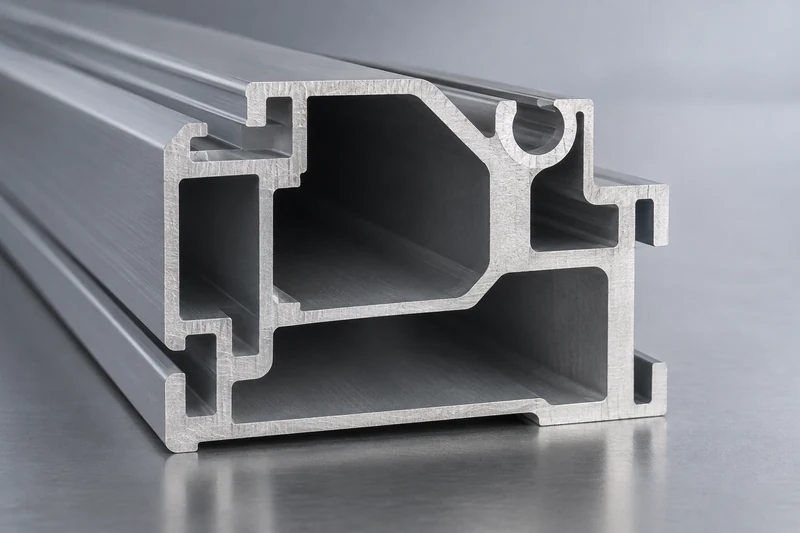
Wall thickness variation
Uneven walls can change material flow, cooling and distortion. Mark the walls that are critical to function.
Sharp transitions
Abrupt changes between thick and thin areas can affect flow and straightening. Show where a transition may be eased.
Long unsupported features
Long legs and fins can distort during extrusion and straightening. Show which ones carry load or locate a part.
Faces machined to size
Some functional faces may need machining to final size. Mark them so the extruded allowance is planned.
Extrusion tooling and die terms
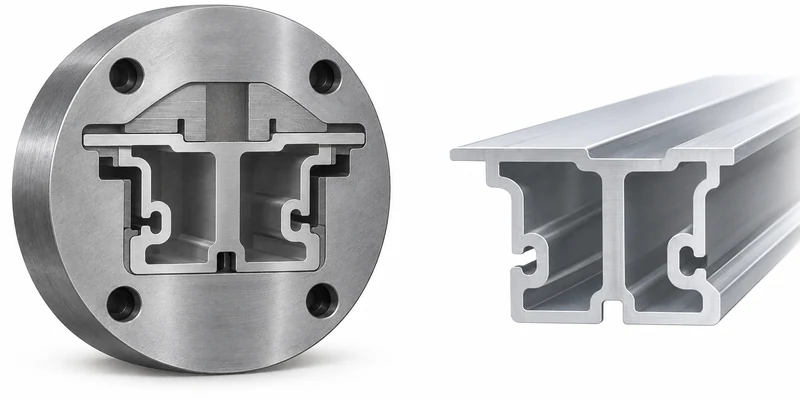
A custom cross-section generally needs a dedicated die, and may need setup or checking tools as well. Settle the die terms before you pay for tooling.
Ask the quote to separate die design, first samples, correction, maintenance and the recurring profile price. We keep the die in-house, and your quote states who owns it and what happens if the profile changes.
Die quotation
Die design, first samples and correction priced apart from the recurring profile price.
Ownership and custody
Who owns the die, who pays for maintenance and who approves repairs.
Change and transfer terms
What happens if the profile changes, and the transfer package if production moves.
A standard profile may do the job
If a proprietary section is not essential, a catalog profile with secondary machining can avoid a new die, and at low volumes that can change the project economics. Send the drawing and your demand pattern, and the review compares both routes before production is planned.
Extrusion production and first samples
First samples confirm the section, surface and length-dependent behavior before repeat supply. Ask for the production plan to name every step that can change the profile.
Extrusion, cutting, machining and finishing run in our own factory, so your profile stays with one team from billet to packed length.
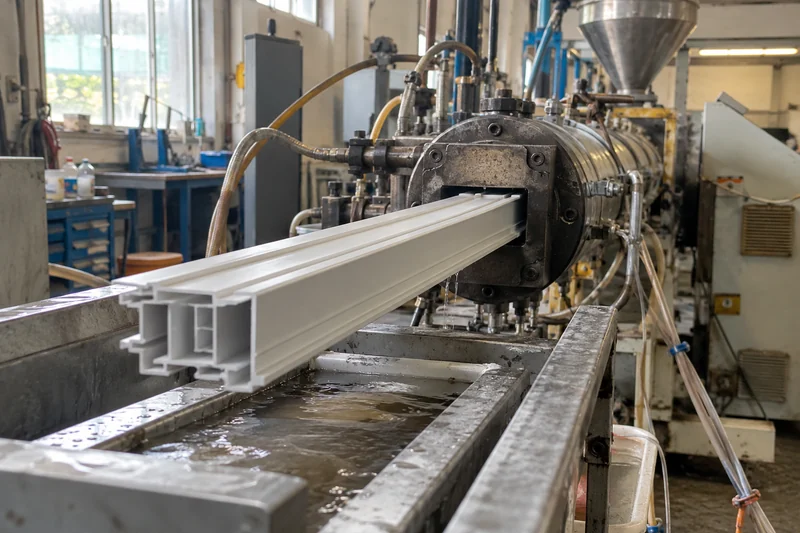
Alloy stock and press route
Name the alloy stock and the press route used for the approved sample, so repeat supply follows the same one.
Temper and straightening
Record the temper or aging step and the straightening method. Both affect strength and straightness.
Cut method and batch ID
State the cut method and how each batch is identified, so any result traces back to its run.
First sample sign-off
Approve first samples for section, surface and length-dependent behavior before repeat supply starts.
Sample sign-off before production.
Straightness, twist and cut length
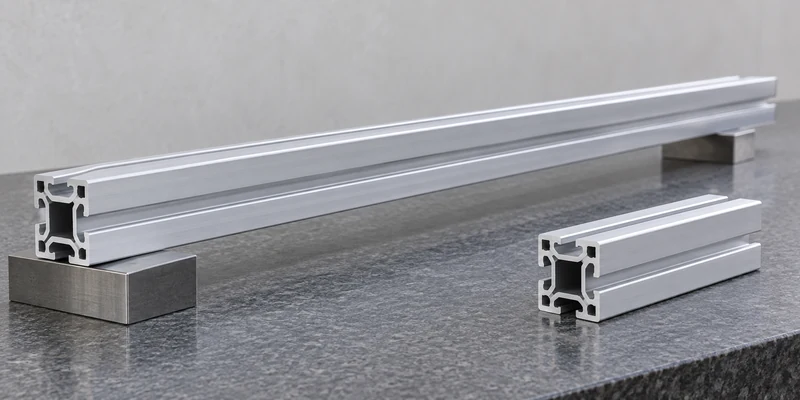
Specify straightness and twist over a measurement length that matches how the profile is used. A long rail and a short spacer may need different controls.
State whether the part is inspected as a full profile or after final cutting. Packing and support can preserve straightness and finish in shipment, especially for long, slender sections.
| Requirement | What to state | Note |
|---|---|---|
| Straightness | Limit over a stated measurement length. | Match the length to how the profile is used. |
| Twist | Limit and the measurement span. | State the support and the method. |
| Cut length | Nominal length and its tolerance. | Separate from section tolerances. |
| End squareness | Requirement for the cut face. | Checked on the cut piece. |
| Burr condition | Allowed burr on cut ends. | Stated for each cut end. |
| Machining allowance | Extra length left for later machining. | Only where ends are machined. |
What to state Limit over a stated measurement length.
Note Match the length to how the profile is used.
What to state Limit and the measurement span.
Note State the support and the method.
What to state Nominal length and its tolerance.
Note Separate from section tolerances.
What to state Requirement for the cut face.
Note Checked on the cut piece.
What to state Allowed burr on cut ends.
Note Stated for each cut end.
What to state Extra length left for later machining.
Note Only where ends are machined.
Long or slender profile? Tell us the installed length and how it is supported.
Secondary machining after extrusion
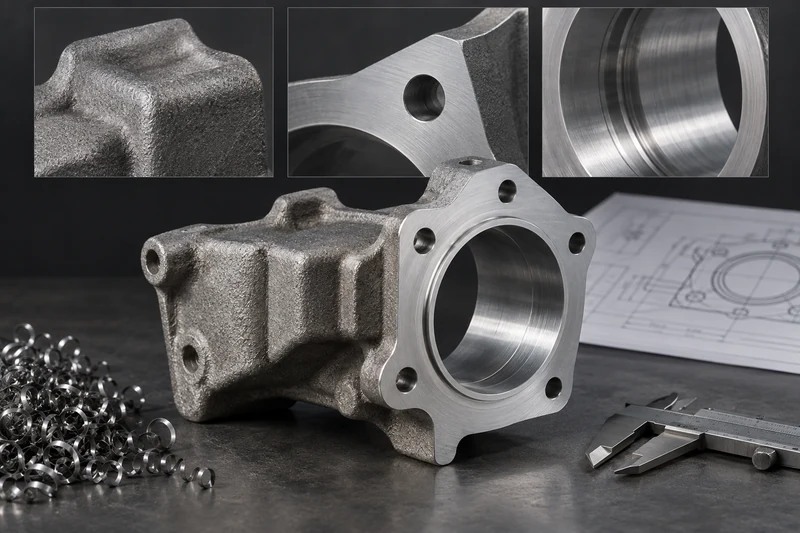
Holes, milled slots, end faces and threads can be added after extrusion. Dimension them from functional section datums, never from an arbitrary raw edge.
Profiles are machined on our own CNC machining line, a core HONGYI service. A long or hollow extrusion is still reviewed for fixturing, access and final tolerance before machining is quoted.
Datum from the section
Locate holes, slots and end faces from functional section faces or grooves that position the profile in its assembly.
Twist and wall variation
Twist or wall variation can move a feature's final location. Mark the features whose position matters most.
Delivered-state inspection
Setup and inspection reflect the profile as delivered, so feature positions are checked in their finished state.
Surface finishing and color
If anodizing, coating or brushing is required, define the finish by the faces it covers and the dimensions it must hold. Alloy and temper can change how a finish looks.
State with the finish
- Visible faces and the areas that must be masked.
- Color reference, ideally an approved physical sample.
- Surface condition expected before finishing.
- Critical dimensions that apply after the finish.
Agree before production
- The finish sequence relative to cutting and machining.
- The treatment proposed for your alloy and part length.
- How repeat lots are compared with the approved color sample.
For finish selection and its effect on fit and appearance, see surface finishing.
Inspection plan for extruded profiles
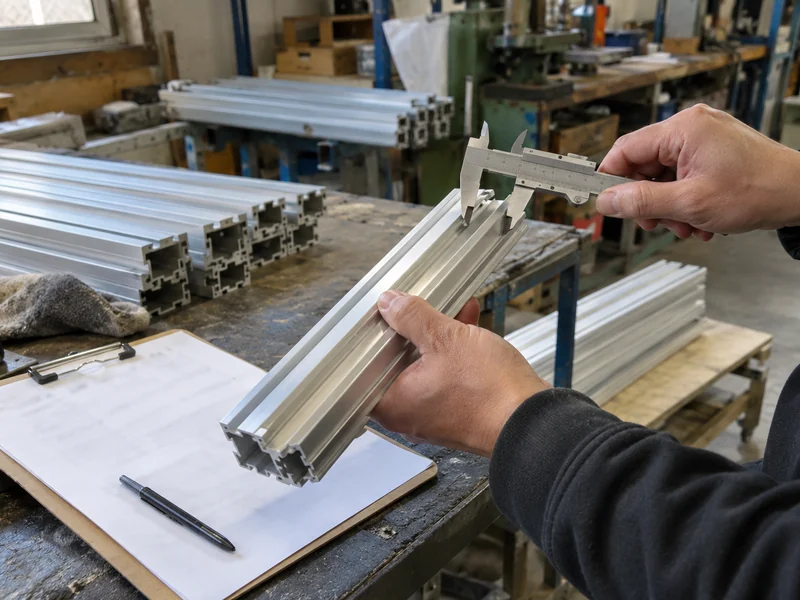
Check cross-section dimensions, length, straightness and twist, machined feature positions, finish and material condition. Agree the measurement length and datums so repeat readings compare.
A section gauge, fixture or coordinate measurement may suit, depending on the profile. The inspection record is agreed for each order, so list the checks and reports you need in the RFQ.
Cross-section
Section dimensions measured from the agreed datums, at the cut end or along the length as the drawing states.
Length, straightness and twist
Measured over the agreed span, with the support and method stated so readings repeat.
Machined features
Hole, slot and end-face positions checked in the delivered state of the profile.
Finish and material
Finish judged against the approved sample, and material condition against the certificate you requested.
Inspection record
The checks and report fields agreed for your order, for first samples and repeat lots.
Quote inputs for an extrusion
A complete request lets the extrusion route be assessed and questions raised before pricing. Send what you have and mark what is still open.
Include in the first request
- Section CAD and drawing, plus the cut and feature drawing.
- Alloy and temper.
- Annual volume and release quantity.
- Straightness and twist limits.
- Finish, secondary machining and packaging requirements.
- Any existing die or catalog profile option.
Ask the quote to separate
- Die and first samples.
- Raw extrusion and cut length.
- Machining, finish and inspection.
- The route from die to packed length.
- The ownership terms for each tool.
Quote response within 24 hours for complete drawings.
Aluminum extrusion FAQ
Short answers to the questions that usually come up before an extrusion quote.
Does a custom cross-section need its own extrusion die?
Usually. A new proprietary section needs a dedicated die. Compare your drawing with available profiles first, then confirm die cost, ownership and correction terms for the chosen route.
Should cut-length and cross-section tolerances be defined separately?
Yes. They are produced and measured at different stages. State section datums, cut length, end condition and final feature locations independently.
Why do solid, semi-hollow and hollow profiles have different tooling costs?
Their die structures and material-flow challenges differ. Review your actual cross-section and volume before setting a cost expectation.
How does uneven wall thickness affect extrusion and straightening?
It can change material flow, cooling and distortion. Mark the critical walls and agree design adjustments or a first-sample validation plan.
Who owns and repairs the extrusion die?
We keep and maintain the die in our own factory. The contract names the owner, the maintenance payer, repair approval and the transfer package; a die charge alone does not establish those rights.
Over what length should straightness and twist be measured?
Over a span that reflects the installed profile and the agreed delivery length. State the support and measurement method so results can be repeated.
How should anodized color variation be approved?
Against an approved physical sample of the specified alloy and finish, viewed under controlled conditions. Agree lot comparison and allowable variation before production.
What datum controls holes added after extrusion?
Functional section faces or grooves that locate the profile in its assembly. Define a fixture and a finished-state inspection method when twist or wall variation matters.
Could a standard profile be machined instead of making a new die?
Possibly. Compare geometry, volume, tooling cost, waste and final strength or appearance. Send the intended function and forecast for a meaningful comparison.
Does HONGYI actually own an extrusion press?
Yes. Extrusion runs in our own factory, together with cutting, machining and finishing, so your profile stays with one team from die to delivery.
Request an extrusion quote
Send the section drawing and tell us how the profile is used. Parker reviews it and replies with questions or a quote.

Parker
Your Aluminum Extrusion Contact, HONGYI
I'm Parker. Send me the section and cut drawings, the alloy and temper, the volume and the straightness and twist limits. Add the finish and any secondary machining.
Tell me whether a standard profile could work. My reply names the extrusion route, the die terms and the inspection plan, or lists the questions to settle first.
- Reply within 24 hours
- In-house production
- Drawings kept confidential