
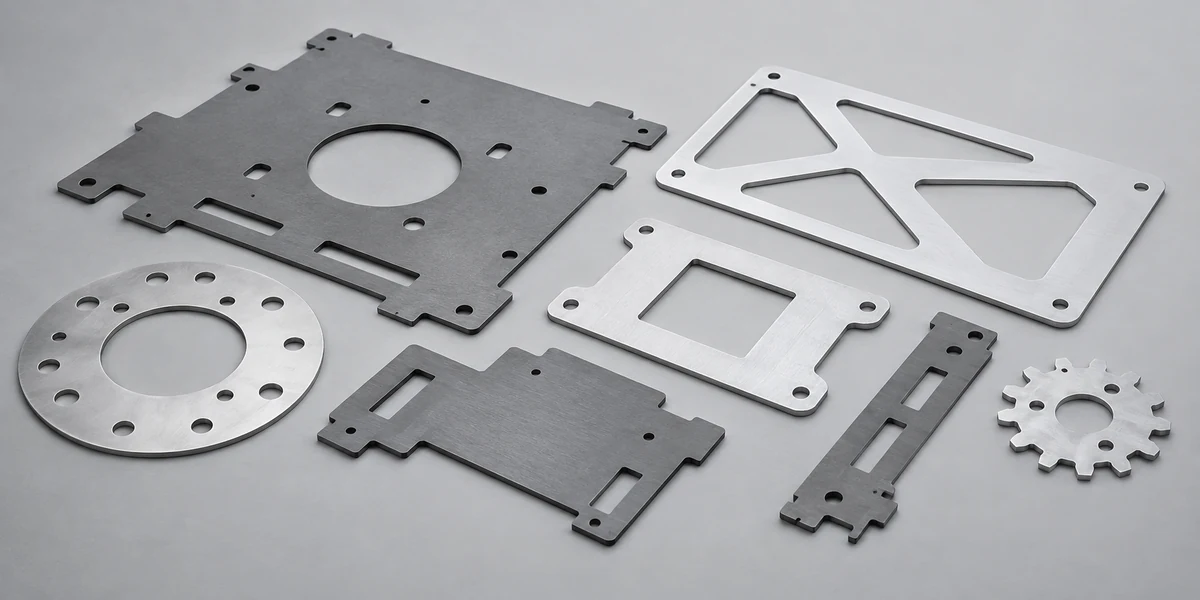
China Laser Cutting Service
Your purchase starts with the approved profile and ends with the edge and delivery condition. A DXF describes the geometry; the quote also needs material, thickness, quantity, acceptable burr and any later operation.
- Send a controlled DXF or drawing and mark the critical dimensions.
- State the material grade, thickness, forecast quantity and edge expectations.
- Say whether you need flat blanks or a bent, welded or finished component.
- In-house production
- ISO 9001
- 24h quote response
- 80+ countries
What to define before cutting
Jump to the profile, edge or inspection question you need to settle first.
Laser Cut Parts
Flat parts in delivered condition
Materials and Thickness
Grade, sheet condition and supplied stock
Cut Geometry
Webs, corners and slender profiles
Holes and Details
Small holes, slots and file checks
Edge Quality
Burr, dross and edge use
Secondary Processes
Deburring, film, tapping and next steps
Cutting Production
Route, nesting and first-off approval
Inspection Plan
First article and repeat lots
Quote Inputs
What to send for a firm quote
Laser FAQ
Ten questions buyers ask first
Request a Quote
Send your DXF to Parker
Flat parts, specified as delivered
Specify the flat part in the condition it must arrive. Mark any feature whose position drives assembly, and separate cosmetic edges from edges that will be welded, bent or coated.

Panels
Mark the holes and edges that locate the panel in the assembly, and the face that stays visible.
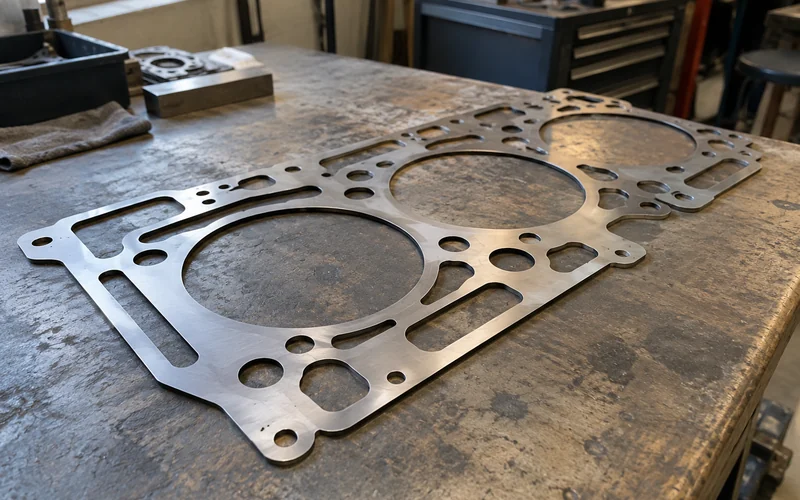
Gasket carriers
Mark the openings that must line up with the mating part and the edges that sit against the seal.

Blanks for forming
A bracket precursor or other formed-part input. Mark the edges that will be bent or welded, since they need different control from a cosmetic edge.
This page covers cut flat profiles and agreed edge work. If the part must also be bent, joined and delivered complete, see sheet metal fabrication. When recurring quantity and stable geometry justify a press tool, compare metal stamping.
Quote response within 24 hours for complete drawings.
Material grade and sheet condition
Grade, thickness and surface condition affect cut quality, flatness and cost. Name the actual grade and sheet condition, not only a broad alloy family.
| Input | What to state |
|---|---|
| Grade | The actual grade, not only the alloy family. |
| Thickness | The nominal sheet thickness. |
| Sheet condition | Surface condition and any protective film. |
| Grain direction | When it matters to later forming or appearance. |
| Visible faces | The faces that matter for appearance. |
| Substitute grade | Whether one is allowed, approved against end use and later processes. |
| Supplied stock | Rules for nesting yield, scrap and traceability. |
What to state The actual grade, not only the alloy family.
What to state The nominal sheet thickness.
What to state Surface condition and any protective film.
What to state When it matters to later forming or appearance.
What to state The faces that matter for appearance.
What to state Whether one is allowed, approved against end use and later processes.
What to state Rules for nesting yield, scrap and traceability.
Tell us the grade, thickness and sheet size you need. The review confirms whether your cutting route covers them before a price is given.
Not sure a substitute grade works downstream? Ask before you release the file.
Cut geometry to review before release
Geometry that is easy to draw can distort, lose stability in the nest or need a different cutting sequence. Review these features before you release the file.
Mark which dimensions are critical on the flat blank and which are set by later operations.

Narrow webs
A thin bridge between two cuts can distort. The quote should explain any proposal to widen a fragile feature.
Internal corners
A sharp internal corner may need a practical relief. Approve any geometry change before cutting.
Closely spaced cuts
Cuts packed close together may need a different cutting sequence. Mark which spacing is functional.
Long slender profiles
A long, narrow part can lose stability in the nest. Mark the features on it that are critical.
Kerf and the final outline
The kerf offset is programmed as a manufacturing method. The finished outline must still meet your released drawing.
Holes, slots and small details
Small holes, narrow slots and dense perforations need their own review against material thickness and the required edge.
Show critical hole-to-edge and hole-to-hole relationships on a 2D drawing. The DXF line alone is not the acceptance limit.
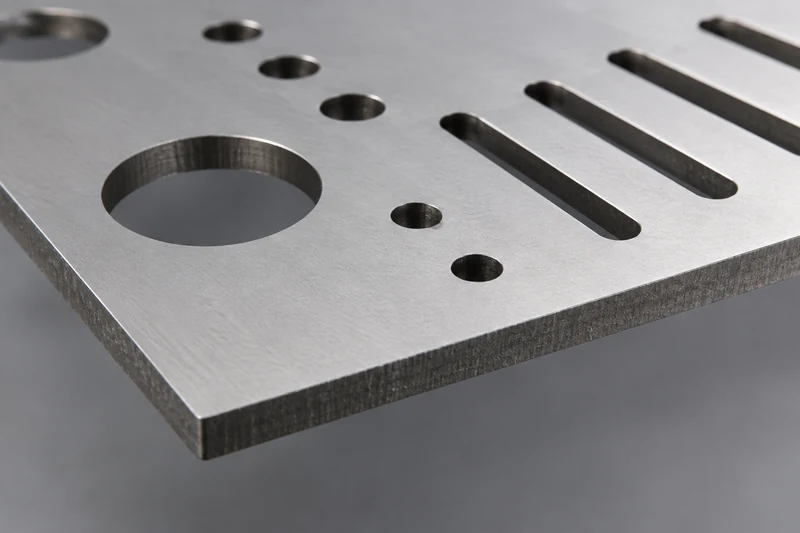
Features to mark on the drawing
- Small holes and narrow slots, relative to the material thickness.
- Areas of dense perforation.
- Holes that take a thread or precision fastener, and whether they are cut to finished size or machined later.
- Critical hole-to-edge and hole-to-hole distances.
File checks before nesting
- Duplicate contours.
- Open profiles.
- Ambiguous layers.
- Units and revision that match the drawing.
Specify what each cut edge must do
A weld edge, bend edge, visible edge and hand-contact edge can need different controls. State what each edge does before the limits are set.
Use a drawing note or an approved sample for any unusual appearance requirement, and sign off the sample before production.
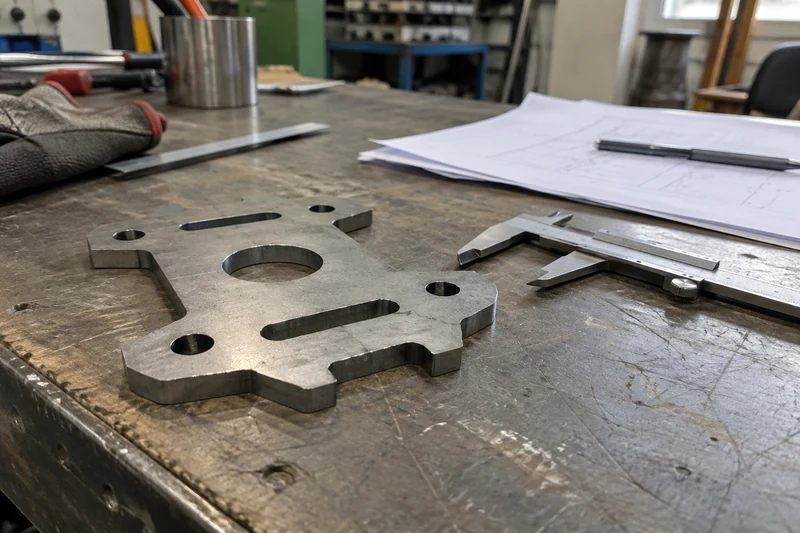
Edge use
Say which edges are welded, bent, visible or handled. Each one can need a different control.
Edge limits
State burr direction or allowable burr, discoloration limits, dross removal, sharp-edge protection and flatness after cutting.
Edge check
Inspection should cover the face and edge that matter in the next operation.
Sample sign-off before production.
Secondary processes and the delivered condition
Deburring, protective film, tapping, countersinking, bending or surface treatment may be part of what you receive. A cutting-only price is not comparable with a deburred, protected part.

List each operation
Name every operation in the delivered condition, from deburring and film to tapping, countersinking, bending or finish.
One factory, every step
Every operation after cutting, from deburring to finish, runs in our own factory, so one team owns the delivered condition.
Compare equal scopes
Compare quotes on the same delivered condition, never cutting-only against finished.
Protect what comes next
If the part goes on to bending or welding, share the datums and surface requirements early so the cutting route protects them.
For the bend itself, see metal bending. If you are buying a completed multi-operation component, use sheet metal fabrication for the full scope.
Cut and signed off in one factory
Profile, edges and extra work are now defined. We cut your part in our own factory from the cut file you approve, and you sign off the first part before the batch runs. Production and inspection come next.
Cutting production and traceability
Your production plan should cover material sourcing, nesting and revision control, first-off approval, batch identification and protection in transit. We cut every part in our own factory, so that plan is run by one team.

Cutting route
Your part is cut in our own factory, from the cut file you approved.
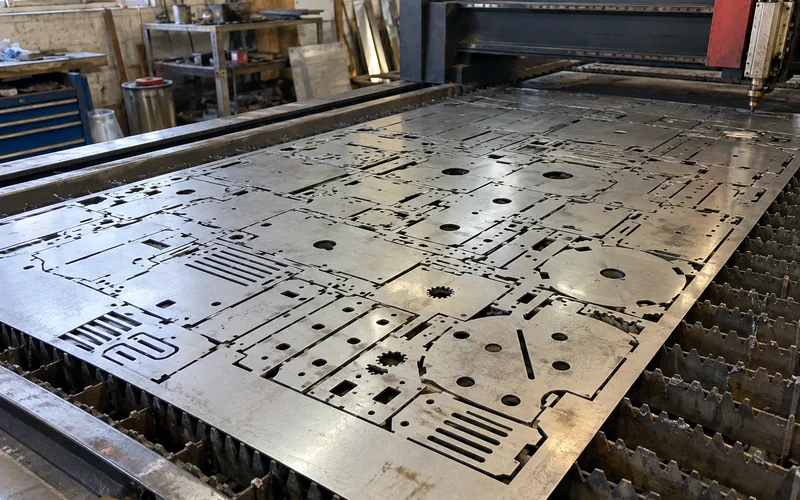
Nesting and traceability
When several part numbers share a sheet, keep orientation, material and finish side traceable, and identify each batch.

First-off approval
Approve the first cut part against your drawing before the batch runs, then agree how parts are protected for shipment.
Sample sign-off before production.
Inspecting the cut part
Check the first part against the drawing, then hold repeat lots to the approved revision and an agreed sample plan.

Material
Confirm that grade and thickness match the order.
Outline and hole patterns
Check the overall outline and the critical hole patterns.
Edge and flatness
Check the edge condition and flatness where the drawing calls for them.
Downstream fit
Check any fit that matters in the next operation or the assembly.
Finish stage
State whether drawing dimensions apply before or after deburring or coating.
Repeat lots
Use the approved revision and a defined sample plan. Ask how cut dimensions are checked and which records travel with the parts; the record is agreed for each order.
Quote inputs for a laser cutting RFQ
Send a concise, controlled package, and ask for cutting-only and finished-part prices separately.
Cut file and drawing
DXF, 2D drawing or a 3D model that can be flattened, with revision and units.
Material and stock
Grade, thickness, sheet condition and whether you supply the stock.
Quantities
Quantity per part number and the expected repeat volume.
Critical requirements
Critical dimensions, edge or flatness requirements and visible faces.
Delivered condition
Deburring, tapping, film, forming, finish and packaging scope.
Inspection
Your first-article and repeat-lot inspection expectations.
If you only have a 3D model, ask for a controlled flat pattern and approve it before cutting.
Quote response within 24 hours for complete drawings.
Laser cutting FAQ
Short answers to the questions that usually come up before a laser cutting quote.
Is a DXF without material data enough for a quote?
It can start a geometry review. A firm quote also needs the material grade, thickness, quantity, edge condition and any secondary work, with units and revision confirmed.
Should small holes in thick sheet be reviewed separately?
Yes. Feature size relative to thickness affects edge and dimensional quality. Mark critical holes and their function so a practical route can be proposed.
Who accounts for laser kerf in the finished dimension?
We do. The cutting program we prepare accounts for kerf so the part meets the approved drawing; your RFQ names who on your side approves the cut file and which dimensions are inspected on the finished blank.
How should edge discoloration and heat effects be specified?
Name the surfaces and the downstream function affected. Use an approved sample or written limits for color, oxide, dross and any heat-affected edge.
Can burr direction affect assembly?
Yes. A burr toward a mating face, seal or hand-contact edge can cause fit or safety problems. Mark critical faces and define deburring and inspection.
Are deburring, film and protective packaging included?
Only when the quote includes them in the delivered condition. List each operation and the surfaces to protect, and define packaging for the finish and part geometry.
Where does a cut-and-bent part belong?
When the finished bent part is what you buy, see sheet metal fabrication. This page covers flat cut profiles and agreed edge work.
Can nesting multiple parts change their orientation?
It can, if grain, finish side or directional geometry is not controlled. Put those constraints on the drawing and verify part identification after cutting.
What if I have only a 3D model and no DXF?
Send the model and the final drawing. A flat pattern can be proposed; approve its units, revision and critical dimensions before production.
How does first-article checking differ from repeat-lot checking?
The first article confirms the file, material, cutting route and key dimensions. Repeat lots use the approved revision, traceable material and a risk-based inspection plan, with the frequency agreed for your project.
Request a laser cutting quote
Send the DXF or drawing and tell us which features matter. Parker reviews it and replies with questions or a quote.

Parker
Your Laser Cutting Contact, HONGYI
I'm Parker. Send me the DXF or drawing with the material and thickness, quantity, critical dimensions and edge requirements.
Tell me about any deburring or later operations, and whether you need flat blanks only or a completed fabricated item.
- Reply within 24 hours
- In-house production
- Drawings kept confidential