

China Sand Casting Service
Sand casting forms metal parts with a pattern and, where needed, cores, before final machining and inspection. Your RFQ should separate the as-cast shape from the finished part, especially at internal passages and critical datums.
- Send the drawing, alloy and quantity.
- Mark critical machined datums, surface and defect standards, and inspection.
- If you own a pattern or core box, send its drawings and condition.
- In-house production
- ISO 9001
- 24h quote response
- 80+ countries
Plan your sand casting RFQ
Jump to the pattern, core, allowance, defect or inspection question you need to settle first.
Sand Cast Parts
Raw, heat-treated or fully machined
Alloy Requirements
Iron, steel or aluminum grade
Patterns and Cores
Outside shape, passages, ownership
Draft and Walls
Release, transitions and cored walls
Machining Allowance
Stock, datums and short castings
Sand Casting
Molding, pour, cleanup and lots
Defect Control
Defects by function and zone
Machining and Finishing
Final operations, one acceptance owner
Inspection Plan
As-cast, treated and machined checks
Quote Inputs
What to send for a firm quote
Sand Casting FAQ
Ten questions buyers ask first
Request a Quote
Send your drawing to Parker
Define the casting you receive
Define the delivered item by material, load, environment, finished interfaces and size. A raw casting, a heat-treated blank and a fully machined housing carry different prices and acceptance rules.

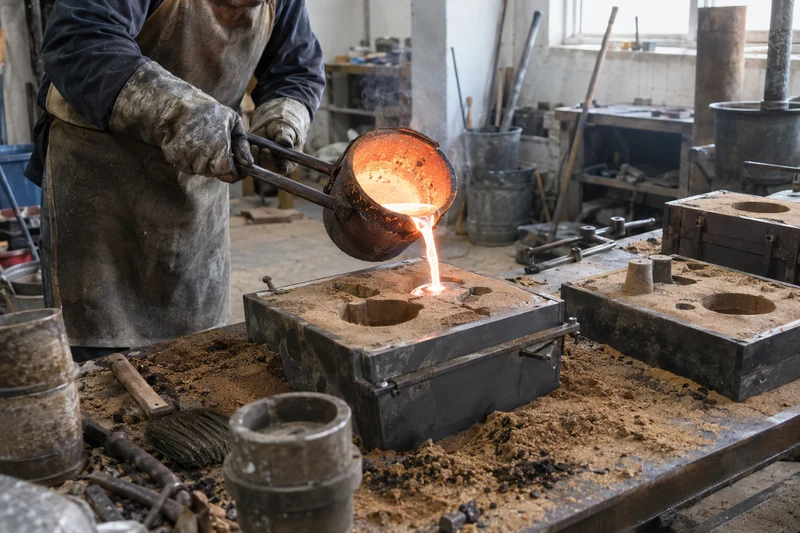
Raw casting
Cleaned and supplied as cast. Mark the areas that stay as cast or are only cleaned.
Heat-treated blank
Treated to a specified condition before machining. State the treatment and how it is verified.
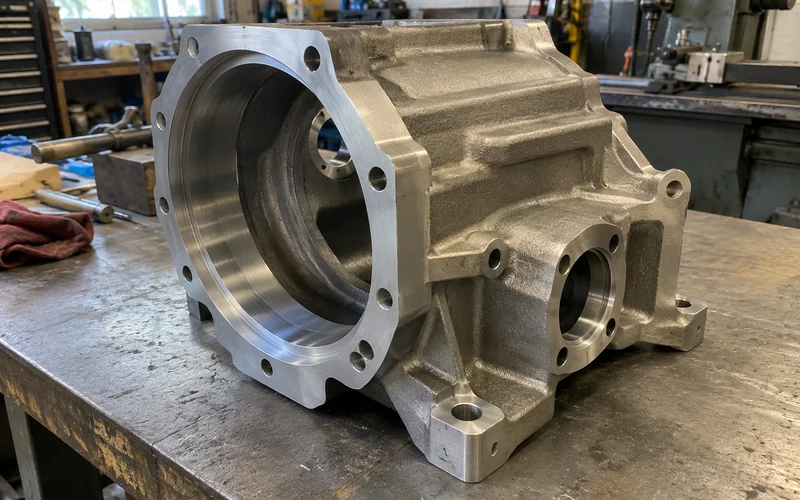
Machined housing
Machined to final size at bores, faces and threads. Mark every face machined to the finished drawing.
We sand-cast your part in our own factory, from pattern and cores to the finished part. To compare sand casting with other routes, see metal casting.
Next: the alloy family and grade.
Name the alloy family and grade
Say whether the part calls for a particular cast iron, cast steel or cast aluminum grade, with any treatment or certificate. State the duty that drives the choice.
No shared table
Iron, steel and aluminum castings behave differently and cannot share one tolerance or defect table.
Proposed alloys
If we propose the alloy, approve it against strength, corrosion, machinability and end use before pattern work.
Lot identity
Casting and machining run in one factory, and the material lot identity stays with each part from pour to final machining.
Next: the pattern and cores that shape the part.
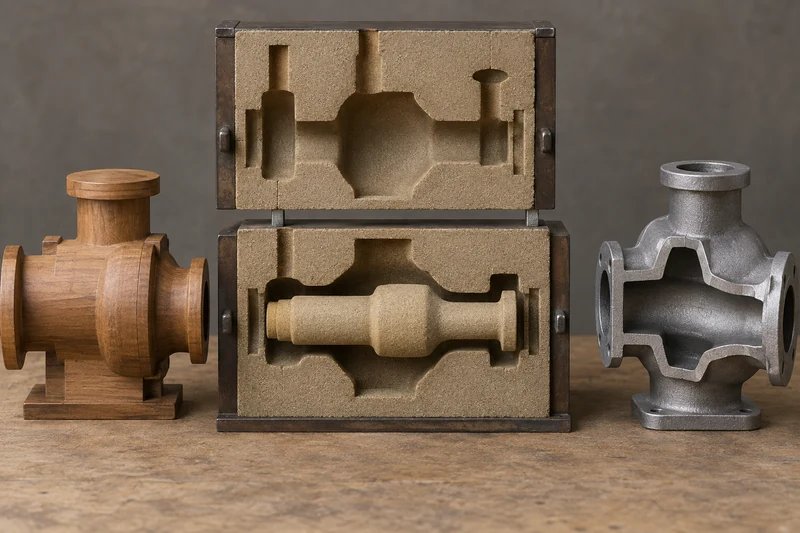
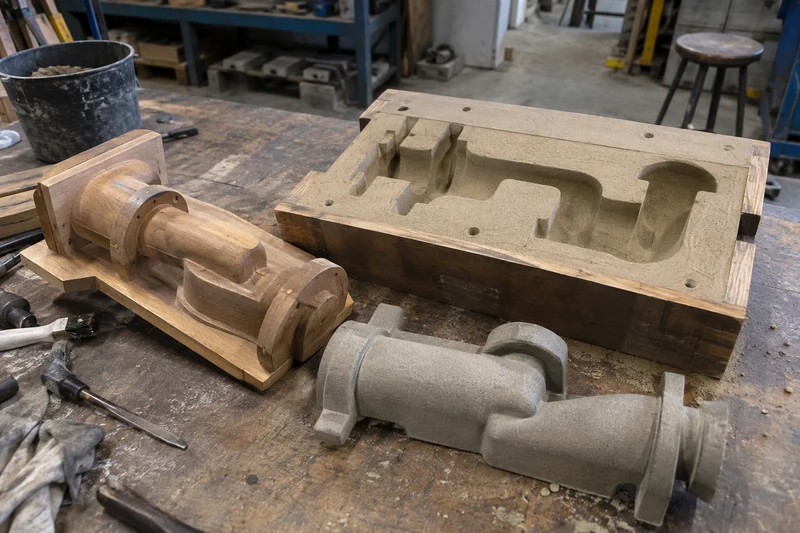
Patterns shape the outside, cores the inside
The pattern defines the outside shape; a core forms an internal passage or cavity. Review core location, support and shift risk wherever wall thickness or internal flow matters.
Review the cores
- Core location and support.
- Shift risk near critical walls or flow passages.
- The expected core prints.
- An inspection method for the finished passage.
Write into the quote
- Pattern and core box ownership.
- Storage and wear.
- Revision rules.
- Transfer terms.
We make and hold the pattern and core box. Your quote states who owns them; paying a tooling charge does not by itself define those rights.
Draft and wall transitions
Draft lets the pattern release from the sand mold. Wall transitions influence metal flow, cooling and local defect risk.
Separate the finished geometry you need from the proposed as-cast geometry, and approve any change that eases molding against machining stock and critical wall thickness.

Draft
Draft lets the pattern leave the mold. Mark the faces where draft could interfere with assembly or appearance.
Abrupt thickness changes
They change how metal flows and cools. Show the sections that carry load or seal.
Walls around cored passages
A core that shifts thins the wall beside it. Give the minimum wall thickness at each passage.
Design changes for molding
A change that eases molding must still leave machining stock. Approve it against the finished drawing.
Machining stock and locating datums
Identify every surface that needs final machining and the datums used to locate the casting. Allowance must cover casting variation, core shift and cleanup while leaving a stable clamping condition.
Set the as-cast and finished drawing revisions together. The part, the route and the final tolerance decide the allowance, not a universal value.
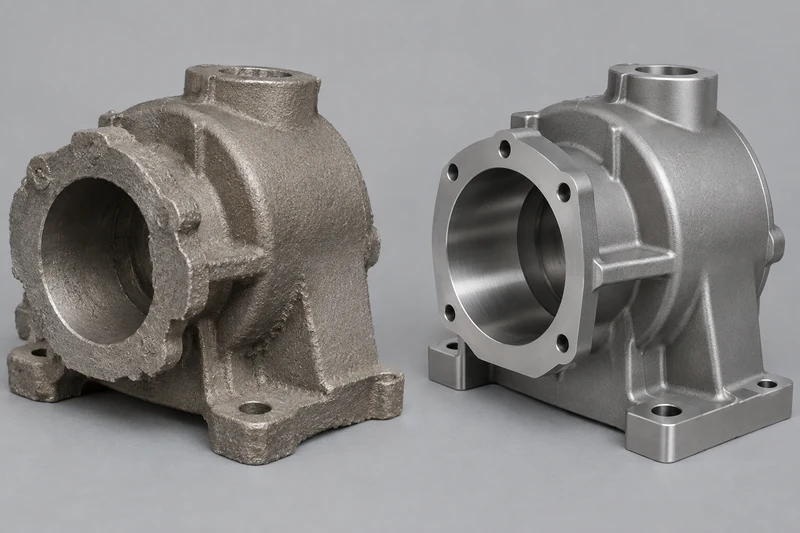
Machined surfaces
List every face machined to final size and the datum that locates the casting.
Variation and core shift
Stock must absorb casting variation, core shift and cleanup at each machined face.
Short-stock castings
Agree how a casting with insufficient stock is handled and how a defect found in machining is reported. Both steps run in our factory, so no second supplier is involved.
One owner for the finished casting
When a foundry and a machine shop split the work, a void found at machining turns into a dispute. We cast and machine your part in our own factory, so one team owns final acceptance. The next sections set the route, defect limits and inspection.
The sand casting route, step by step
The production route should identify molding, core making, melt, pour, shakeout, cleaning and any heat treatment. Ask how lots are marked and where a first article is checked.
A large casting also needs handling and shipping provisions that protect finished faces. Every step on this route runs in-house.
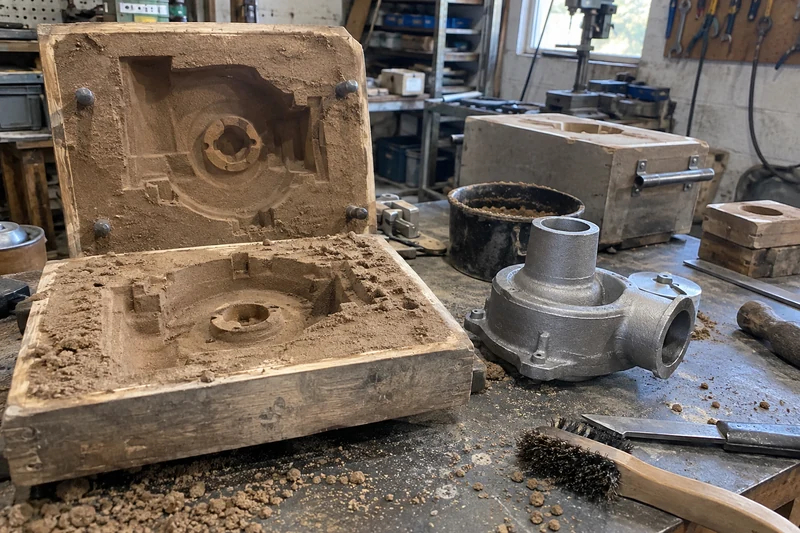
Molding and cores
The mold and cores are made from the pattern and core box.
Melt and pour
The alloy is melted and poured. Ask how each lot is marked.
Shakeout and cleaning
The casting leaves the sand and is cleaned. Agree the surface you accept.
Treatment and first article
Any specified heat treatment follows, then the first article is checked where agreed.
Next: the defect rules for each zone.
Define defects by function and zone
Surface roughness on a noncritical face differs from shrinkage at a loaded boss or an internal flaw near a pressure boundary. Set each rule where the function sits.
Core shift can thin a wall or misplace an internal channel without changing the outside profile. Specify the standard, critical areas, inspection method and repair rule; the defect records for your order are agreed with the quote.

| Condition | Where it matters | What to specify |
|---|---|---|
| Surface roughness | Noncritical faces | Surface standard for as-cast areas |
| Shrinkage | Loaded bosses and sections | Critical zone, method and limit |
| Internal flaw | Near a pressure boundary | Test method, coverage and limit |
| Core shift | Walls and internal channels | Minimum wall and passage location check |
| Repair | Any critical area | Whether repair is allowed and how it is verified |
Where it matters Noncritical faces
What to specify Surface standard for as-cast areas
Where it matters Loaded bosses and sections
What to specify Critical zone, method and limit
Where it matters Near a pressure boundary
What to specify Test method, coverage and limit
Where it matters Walls and internal channels
What to specify Minimum wall and passage location check
Where it matters Any critical area
What to specify Whether repair is allowed and how it is verified
Have critical zones on the drawing? Mark them and name the standard.
From sand casting to finished part
The finished part may need bored holes, milled mounting faces, threads, heat treatment or protective coating. Define the sequence and the final acceptance state.
Post-cast machining runs on our CNC machining line, a core HONGYI service. The route for your cast part and its alloy is confirmed in the project review.
Next: the checks at each stage.
Inspection at each casting stage
Separate alloy verification, as-cast dimensions, core or passage location, visible defects, heat-treatment checks and finished machined dimensions.
Internal soundness or pressure integrity may need a project-specific test. Define sampling, standard and acceptance limit on the drawing; the inspection reports for your order are agreed with the quote.

Casting record
Alloy verification, as-cast dimensions, passage location and visible defects.
Treatment check
The specified heat-treatment condition, verified as your drawing requires.
Final report
Machined dimensions, plus any internal soundness or pressure test you specify.
What a sand casting RFQ needs
A complete request lets patterns, casting and machining be assessed before pricing. Send what you have and mark what is still open.
Include in the first request
- As-cast and final drawings, when available.
- Alloy grade, quantity and end use.
- Pattern or core ownership.
- Critical machined datums.
- Surface and defect standard, and required tests.
- Overall size and weight estimates for handling.
Ask the quote to separate
- Pattern and core tooling.
- Casting.
- Heat treatment.
- Machining and testing.
- Packing.
- The inspection record for each stage.
Parker reviews the drawing before any price is set.
Sand casting FAQ
Short answers to the questions that usually come up before a sand casting quote.
Who holds the pattern and core box?
We hold and maintain them in-house. The agreement names the owner and the transfer terms; paying a tooling charge does not by itself define those rights.
How is as-cast roughness distinguished from a machined face?
Mark both zones on the drawing with their own surface, dimensional and defect criteria. A machined face is accepted after the specified operation, not by the as-cast appearance standard.
Which internal passages can core shift affect?
Any feature formed by a core can move relative to the outside mold. Identify the critical wall thicknesses and flow passages, then set an inspection method for their location.
Where should machining allowance appear?
On the as-cast and finished shapes, with the machining zones and datums shown. The route and the final tolerance set the required stock, not a generic table.
How is pattern cost treated on a small batch?
Ask for tool cost, maintenance and part price separately, and compare the total project cost across expected releases before choosing a route, for example against investment casting or die casting.
Can cast iron, cast steel and cast aluminum share one parameter table?
No. Alloy, mold design, shrinkage, heat treatment and acceptance differ, so each material and geometry needs its own process review.
How should distortion after heat treatment be accepted?
Define the treatment condition and final datums, then measure the part after treatment and machining as specified. Agree any permitted correction before production.
Who is responsible for a sand void found during machining?
We are, because the part is cast and machined in our own factory. The quote sets the defect-disposition rule, and the casting lot and machining record stay linked to the rejected part.
What packing is needed for a large casting?
Support the part on suitable surfaces, restrain movement and protect machined faces and openings. State the lifting or handling points and the receiving condition.
Which method checks internal defects?
Choose a method from the critical zone, alloy, geometry and applicable standard, and specify coverage and acceptance. Not every casting needs the same internal inspection.
Request a sand casting quote
Send the drawing and tell us what the casting must do. Parker reviews it and replies with questions or a proposal.

Parker
Your Sand Casting Contact, HONGYI
I'm Parker. Send me the drawing, the alloy, the quantity, any core or pattern information, the critical machined faces and your defect and inspection requirements.
Ask me for a proposal covering the foundry work, the machining and the testing, all done in-house.
- Reply within 24 hours
- In-house production
- Drawings kept confidential