
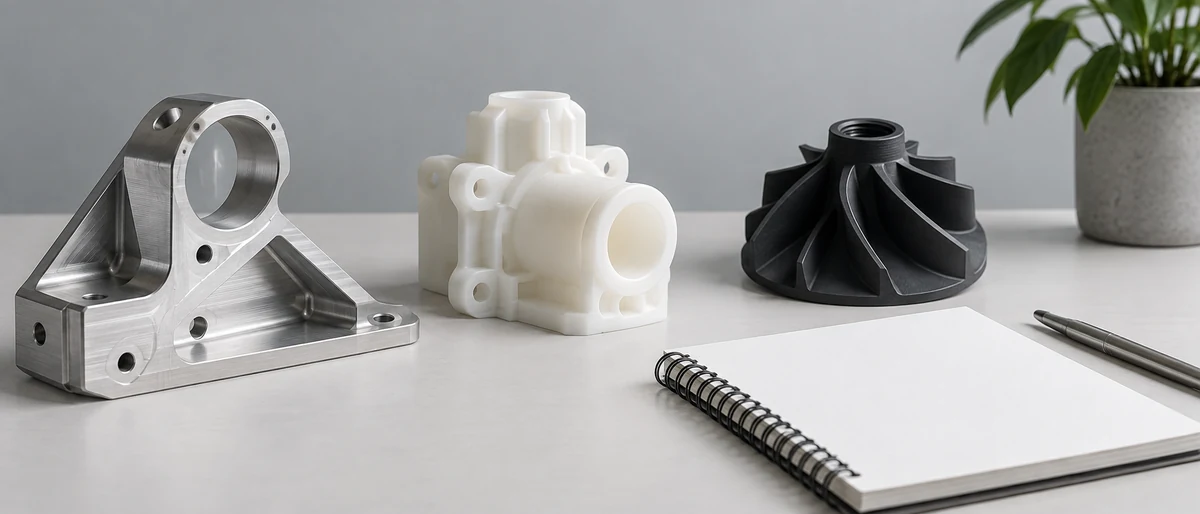
China Rapid Prototyping Service
Start with the decision your prototype must support. An appearance model, an assembly-fit sample and a functional test part can need different materials, accuracy and routes, so the goal comes before the process.
- State what the sample must prove: appearance, fit or function.
- Send the current CAD revision, the material fidelity you need and the sample quantity.
- Mark the features that must match production and those that may be approximated.
- In-house production
- ISO 9001
- 24h quote response
- 80+ countries
What your prototype must prove
Jump to the goal, material, validation or production question you need to settle first.
Prototype Goals
Appearance, fit, function or production intent
Process Options
Machined, printed, cast or molded
Prototype Materials
How close the material must be
Accuracy and Finish
Tight where measured, relaxed elsewhere
Design Review
Review, log and approve each revision
Prototype Production
Revision, route and sample scope
Validation Plan
Test, record and approve the sample
Move to Production
What carries forward, what needs a trial
Quote Inputs
What to send for a prototype quote
Prototype FAQ
Ten questions engineers ask first
Request a Quote
Send your CAD to Parker
Prototype goals come first
Write down the decision the sample must support. Each goal needs different features to be representative, and each purpose needs its own acceptance method.
For appearance, name the visible surfaces and the reference finish. For fit, name the mating parts and critical datums. For function, define the load, temperature, electrical, sealing or movement test. One sample can serve more than one goal when the requirements do not conflict.

| Goal | Must be representative | May stay provisional |
|---|---|---|
| Appearance | Shape, color, touch and visible finish. | Internal material or strength, if disclosed. |
| Assembly fit | Interfaces, datums and fastening features. | Hidden surfaces outside the mating path. |
| Functional test | Material behavior and loaded geometry. | Cosmetic finish that does not affect the test. |
| Production intent | Production material, route and critical features. | Little. Process differences need their own trial. |
Must be representative Shape, color, touch and visible finish.
May stay provisional Internal material or strength, if disclosed.
Must be representative Interfaces, datums and fastening features.
May stay provisional Hidden surfaces outside the mating path.
Must be representative Material behavior and loaded geometry.
May stay provisional Cosmetic finish that does not affect the test.
Must be representative Production material, route and critical features.
May stay provisional Little. Process differences need their own trial.
This page covers the learning cycle from design to a validated sample. For repeat orders once the specification is stable, see on demand manufacturing.
Quote response within 24 hours for complete drawings.
Process options for each goal
Pick the route that can answer your question, not the process with the best name. Each option handles material fidelity, accuracy and surface differently.
Whichever route your quote proposes, we make the sample in our own factory, so one team owns it from CAD to delivery.
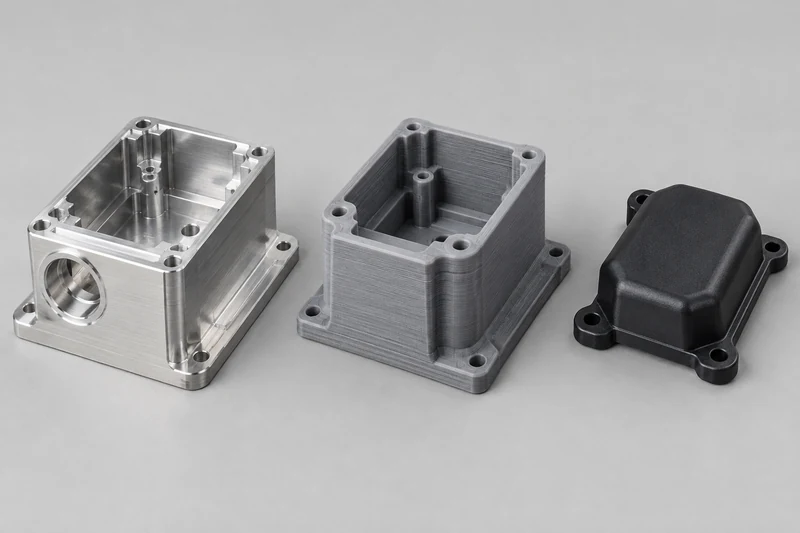
Machined samples
Machining works from a specified solid material, which helps when a precise interface or a material-dependent result matters. See CNC machining.
Printed samples
Additive routes explore geometry, but material behavior and surface depend on the printing process. See 3D printing for that decision.
Cast or molded samples
Cast or molded samples answer other geometry and appearance questions, while tooling and material fidelity vary. See vacuum casting.
Unsure which route answers your question? Send the CAD and the goal for a route comparison.
Prototype materials and fidelity
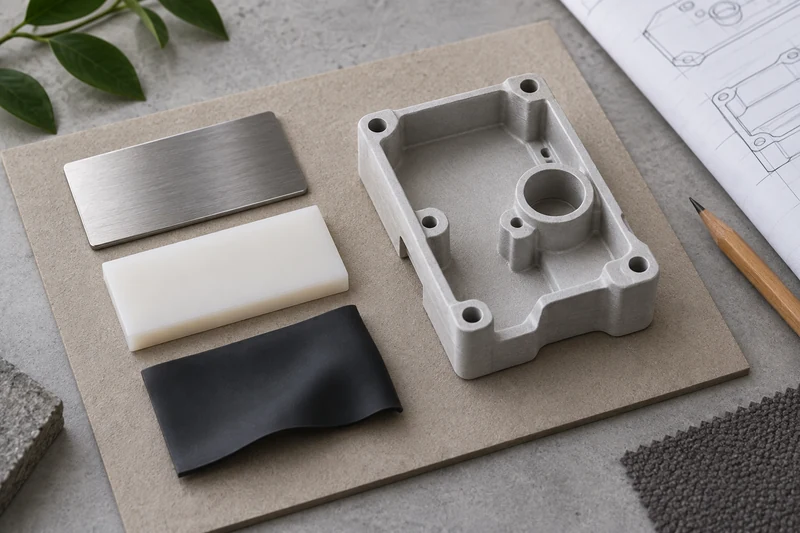
Name the production material when you know it, then decide how closely the sample must match it. The answer depends on the conclusion you want to draw.
If a specific grade is required for a functional test, send the specification and any allowed stock form.
When a substitute can work
- Appearance: shape, color and touch can be judged on a disclosed substitute.
- Fit: interfaces and fastening features can be checked when the geometry is right.
- Record it: note every substitution on the sample label and in the validation report.
When the real grade matters
- Strength or load: a substitute cannot support the conclusion.
- Heat or chemical exposure: results only transfer from a representative material.
- Grade not available in the route: change the process, change the test scope or accept a limited conclusion.
Accuracy and finish where it counts
Tolerances should follow the validation task. Tight limits belong on the features you will measure, and every other surface can stay general.
Precision the test does not need adds cost without improving the decision.
With the critical features marked, the next step is a design review of the model itself.
Mating faces and holes
Put tight limits on mating faces, hole locations and sealing features that the test will actually measure.
Appearance surfaces
Give visible surfaces a reference sample or a finish note rather than a dimensional limit.
Measurement method
Choose how each critical feature will be measured before you order the sample, so the result is comparable.
Before or after finishing
If a finish changes dimensions, state whether acceptance applies before or after finishing.
What carries forward
Where the sample process differs from production, record which dimensions and finishes carry forward and which need revalidation.
Design review and revision control
Review the design before the sample is made, and keep every revision traceable. A prototype can expose a CAD problem, but it cannot prove a later tool will behave the same.

Review the model
Check access, walls and ribs, unsupported geometry, assembly clearance and the proposed material before the sample is made.
Separate defect from limit
Decide whether a problem sits in the design or in the prototype process, so you only change what needs changing.
Log the revision
Record what changed, why it changed and which test must be repeated.
Approve, then remake
Approve the new drawing revision before a replacement sample is made, so every result traces to one configuration.
Pick the goal, not the process
Tell us what the sample must prove and which features must match production. The review proposes a route and material for that goal, and the next step is agreeing how the sample is made and checked.
Prototype production and scope
Before a sample is made, you should know how it will be made and what arrives. We make and check every sample in our own factory, and your quote names the route and the sample scope.

Revision and route
Ask for each sample to carry its design revision, material and process route, so every test result traces back to one configuration.
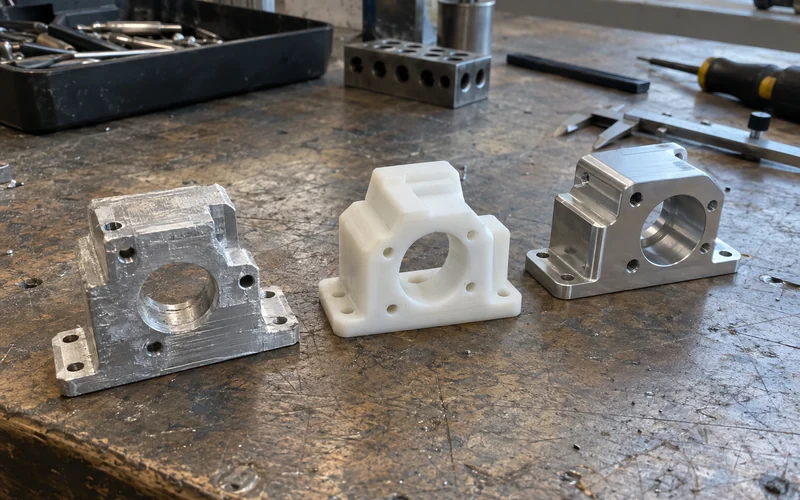
Sample count
Agree the number of units before work starts, including any samples that will be destroyed in testing.

Delivery condition
Agree the condition the samples arrive in. Timing depends on file readiness, material, process capacity and inspection scope, so it is stated in your quote.
Sample sign-off before production.
A validation plan for every sample
Define how the sample will be judged before it is made. A failed test is useful data when the feature, condition and next step are recorded together.
The records for your project are agreed at the quote stage, so the checks match the test that decides your next design step.
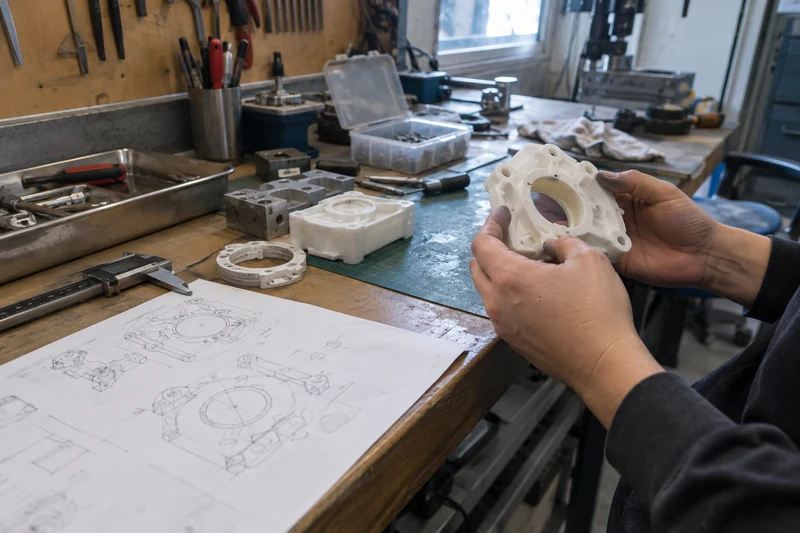
Test plan
Define the test or review, sample count, environment, measurement method and who has authority to accept the result.
Failure record
Record the feature, observed behavior, material and process, then the proposed design or test change. Keep failed samples or photos where you need traceability.
Approved sample
Link the approved sample to the released drawing revision, so it never becomes an unnamed reference on a shelf.
Move from prototype to production
Carry forward what the prototype established and be clear about what it did not. Where the production process differs, plan a first article or tool trial.
If production will use injection molding, metal stamping or another dedicated tool, early prototypes guide the design but cannot replace process validation.
Freeze the configuration
Lock the design revision, material, critical features and acceptance tests that the prototype approved.
- Approved CAD revision
- Material decision
- Critical features and accepted test results
Compare the processes
List every difference between the prototype route and the production route, and note which results each difference could change.
- Material or grade changes
- Tooling in place of machining or printing
- Finish applied by a different route
Plan a first article or tool trial
Where a difference affects the result, repeat the relevant check on a first article or tool trial part before volume production.
Hand off a complete package
Send production the approved files, test reports, open risks and change history, so nothing learned on the prototype is lost.
- Approved files
- Test reports
- Open risks and change history
Prototype quote inputs
A complete request lets the route, material and inspection scope be proposed before pricing. Send what you have and mark what is still open.
Include in your request
- CAD revision and the prototype goal.
- Production material if known, and any acceptable substitution.
- Sample quantity, including test and reference units.
- Critical dimensions, finish and the test method.
- Mating parts or reference samples that define fit and appearance.
- The date the decision must be made.
What your quote should state
- The proposed process and material.
- The scope of inspection.
- Any limits on what the sample can validate.
- That a design change after approval becomes a new revision, reviewed for cost and timing.
Quote response within 24 hours for complete drawings.
Rapid prototyping FAQ
Short answers to the questions that usually come up before a prototype quote.
Can an appearance sample prove production material performance?
Only if its material and process are representative for that specific test. Record any substitution, and do not carry strength, heat or chemical conclusions over from an appearance-only sample.
Should functional and assembly-fit samples be ordered separately?
Combine them when the same material and geometry support both tests. If the requirements conflict, separate samples with their own approval criteria are clearer.
How should I choose between printing, CNC and casting?
Compare geometry, material fidelity, required accuracy, quantity, finish and the validation purpose. Each process has different limits, and your quote confirms the proposed route before you commit. Whichever you choose, the sample is made in our own factory.
How many samples do I need?
Set the quantity from the tests: assembly trials, destructive tests, environmental exposure, reviews and retained references. Add spares only where the test plan justifies them.
Does every design change require a new quote?
A change that affects geometry, material, process, inspection or quantity can affect cost and timing. Issue a new revision and ask for a change assessment before more work starts.
Do key interfaces need full 2D tolerances?
Critical interfaces need datums, dimensions and a measurement method. The rest of the part does not need a dense tolerance scheme if the test concerns only a few features.
How should a failed test be recorded?
Keep the sample revision, material, process, test condition, observed failure and next action together. Label the corrected sample with a new revision before repeating the test.
Can a prototype directly approve the production process?
Only when the production route and material are representative and the required validation is complete. A different tool or process usually needs its own first article or trial.
Can a concept model receive a DFM review before full drawings?
Yes, as a preliminary feasibility review. Mark the open dimensions, material and acceptance requirements; a final production decision needs controlled specifications.
What should transfer from prototype into production?
The approved CAD revision, material decision, critical features, accepted test results, open risks and change history. Name the process differences that need new validation.
Request a prototype quote
Send the CAD and tell us what the sample must prove. Parker reviews it and replies with questions or a quote.

Parker
Your Prototyping Contact, HONGYI
I'm Parker. Send me your CAD and tell me what the prototype must prove: appearance, fit or function. Add the material fidelity you need and the number of samples.
Include the acceptance test if you have one. If the production process is still open, say so and tell me which decision this sample should support.
- Reply within 24 hours
- In-house production
- Drawings kept confidential