
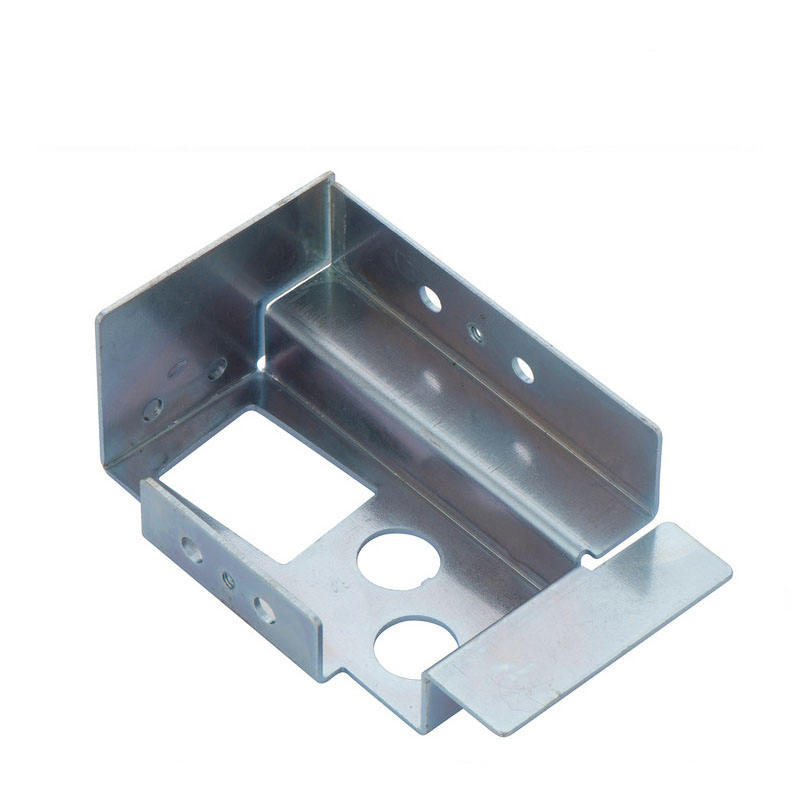
China Metal Stamping Service
Send your drawings, samples, or 3D files, and get precision-stamped metal parts built to your exact spec.
You stay in control of tooling risk, burr direction, springback, material consistency, and dimensional stability, all confirmed at sample approval before your order moves into production.
Before Production
Sample Sign-Off First
Everything You Need to Plan Your Metal Stamping Project
Jump to any part of the page. Project risks, design review, tooling, capabilities, quality, and exactly what to send for a quote.
Stamping Project Risks
The failure modes that derail stamping orders, and how we flag them early.
Is Stamping Suitable?
See if stamping fits your part, volume, and tolerance before you commit.
DFM Before Tooling
We review your drawings for manufacturability before any die is cut.
Tooling Support
Die design, build, and trials, with the tooling kept on record for you.
Stamping Capabilities
Press tonnage, part sizes, and the stamping processes we run in-house.
Materials and Finishes
Steel, stainless, aluminum, brass, plus plating and coating options.
Quality Control
Checks at every stage, from first article to pre-shipment inspection.
Inspection Documents
Dimensional reports, material certs, and the records shipped with your parts.
Production Process
What happens from sample approval to packed and shipped parts.
RFQ Requirements
What to send so your quote comes back accurate the first time.
Common Questions
MOQ, lead time, tooling cost, payment, and shipping, answered.
Get A Quote
Send your drawings, get pricing within 24h →
Stamping Project Risks Worth Catching Early
A good stamped part is about more than the final shape. Tooling design, material behavior, edge condition, and production consistency all shape how your parts perform and whether your supply holds steady, order after order.
We review every one of these with you before any die is cut, not after.
Is Metal Stamping the Right Process?
Not every metal part should be stamped. The right call comes down to geometry, quantity, tolerance, and what you actually need the part to do.
When Another Process May Be Better
Prototype quantities, designs that keep changing, complex three-dimensional structures, or thick solid metal parts often run better as CNC machining or another method. Send your drawings either way, and you get a straight answer, even when stamping is not the right one.
We Review the Project Before You Pay for Tooling
Tooling decisions get easier once the risks are on the table. Before any die is built, we go through your part design to check manufacturability, production stability, and cost, so you commit to tooling with the full picture in front of you.
We don't charge for tooling first. We evaluate your project first.

Material Selection
Material properties drive forming performance, springback, dimensional consistency, and how long your tooling lasts. We confirm your material spec before locking any tooling decision.

Part Geometry
We look at your bends, holes, formed sections, and overall shape to confirm each feature can be stamped reliably, run after run.

Tolerance Requirements
We check your tolerances against what stamping holds, and flag any dimension that needs tighter control or a secondary operation before it turns into a reject.

Tooling Feasibility
Your part structure and volume point to the right tooling approach, whether that is a single die or a progressive setup built for long-term efficiency.

Surface Finish Requirements
We review your surface treatment, coating, cosmetic standard, and edge condition up front, so finishing and post-processing don't trip up the order later.

Cost Optimization Opportunities
We look at part design, tooling strategy, and production method together to bring your cost down, without touching how the part functions.
Send your drawings or 3D files. We flag the risks before you spend on tooling.
From Tooling Strategy to Long-Term Stability
Good tooling is a process, not a one-off spend. We plan it, prove it on samples, refine it, and watch it over time, so your parts stay consistent well past the first order.
Send your part and volume. We map the tooling approach before you invest.
Stamping Capabilities Matched to Your Part
Flip through the processes we run, the materials we stamp, the parts we build, and the finishing we add. If your part lives somewhere in here, we can quote it.
Send your drawings, samples, or 3D files. We confirm the process and quote within 24 hours.
Materials Matched to Your Application
The material you choose drives forming performance, strength, corrosion resistance, conductivity, and how long your part lasts. We help you match it to both the application and how the part gets made.

Stainless Steel
Strong corrosion resistance and solid mechanical strength for structural and exposed parts.

Carbon Steel
A practical, cost-effective pick for general-purpose parts where strength matters most.

Aluminum
Light weight with good corrosion resistance, ideal when every gram counts.

Copper
High electrical and thermal conductivity for electrical and electronic parts.

Brass
Conductive, corrosion-resistant, and easy to form, well suited to terminals and precision parts.

Spring Steel
Built for clips, retainers, and any part that needs to flex and spring back.

Phosphor Bronze
Strength plus conductivity, a common choice for contacts and conductive parts.

Beryllium Copper
High strength with excellent conductivity and fatigue resistance, the go-to for demanding contacts, springs, and connectors.
Not Sure Which Material?
Tell us the application and your specs. We recommend the material and quote within 24 hours.
Finishes Picked for What the Part Has to Do
We pick your finish around how the part is used, not just how it looks. The right one shapes corrosion resistance, conductivity, appearance, wear, assembly fit, and how long the part lasts. Tell us the part and where it runs, and we'll match it.

Brushed
A directional satin surface for visible metal parts. Brushing evens out the look and helps hide minor handling marks, though corrosion protection still comes from the base material or an added finish.
Best For
Visible metal parts, panels, covers, decorative brackets

Chrome Plated
A bright, polished metallic look with added surface hardness and corrosion resistance. We factor in plating thickness and surface prep before your parts run, so the finish lands clean.
Best For
Decorative brackets, visible hardware, bright-finish parts

Electrophoresis
An even protective layer that reaches bends, holes, edges, and complex shapes more consistently than spray. A common choice for a black finish with solid corrosion protection.
Best For
Black stamped parts, corrosion protection, complex shapes

Gold Plated
Low contact resistance and stable, corrosion-free contact surfaces for reliable signal over time. We apply it only where the function needs it, to keep your cost in check.
Best For
Electrical contacts, terminals, connectors, conductive parts

Nickel Plated
Corrosion resistance, wear resistance, and a clean metallic finish in one. A versatile pick for functional hardware, contacts, brackets, and precision parts that need to hold up.
Best For
Contacts, brackets, hardware, durable metallic parts

Passivation
Cleans the surface and lifts long-term corrosion resistance on stainless parts, with no real coating thickness, so your dimensions stay put and the stainless look stays.
Best For
Stainless brackets, covers, clips, exposed parts

Powder Coated
A durable colored layer for parts that need to look consistent and resist corrosion. We watch coating build-up around holes, threads, tight fits, and grounding points.
Best For
Colored brackets, exposed parts, industrial components

Zinc Plated
A practical, low-cost corrosion finish for carbon steel parts. Clear, blue, yellow, or black chromate options let you match the look and corrosion level you need.
Best For
Carbon steel brackets, clips, mounting parts, hardware
Tell us the part and where it's used. We recommend the finish and quote within 24 hours.
Quality Checks at Every Stage
Quality is not a final step you hope clears. We check your part from drawing review to pre-shipment, so problems get caught early, not after the parts reach you.
Send your drawings and quality requirements. We confirm the inspection plan with your quote.
Key Quality Risks We Watch For
Different parts carry different critical requirements. We set inspection priorities around what your part actually does and where it's used, so the checks that matter to you get the attention.
| Quality Concern | Why It Matters to You |
|---|---|
| Burrs | Can throw off assembly, create safety or conductivity issues, or hurt how the part performs. |
| Dimensional Accuracy | Critical dimensions decide whether your part fits and assembles the way it should. |
| Springback | Left unchecked, it shifts your bend angles and the overall geometry of the part. |
| Surface Condition | Scratches and marks can fail a cosmetic part or interfere with how a functional one works. |
| Material Consistency | Variation in the material changes forming behavior and how long the part holds up. |
| Production Repeatability | Steady production keeps batch-to-batch variation down, so part one and part 10,000 match. |
Burrs
Can throw off assembly, create safety or conductivity issues, or hurt how the part performs.
Dimensional Accuracy
Critical dimensions decide whether your part fits and assembles the way it should.
Springback
Left unchecked, it shifts your bend angles and the overall geometry of the part.
Surface Condition
Scratches and marks can fail a cosmetic part or interfere with how a functional one works.
Material Consistency
Variation in the material changes forming behavior and how long the part holds up.
Production Repeatability
Steady production keeps batch-to-batch variation down, so part one and part 10,000 match.
The Documents That Ship With Your Parts
What you need depends on your industry, application, and project spec. We provide supporting documents to your requirements, so you get the paperwork your supply chain asks for, no more and no less.
Send your documentation requirements with your drawings. We confirm what we can provide upfront.
From Drawing to Production
Every project runs through one structured workflow, from manufacturability review and tooling validation through quality checks to production release. You always know which stage your parts are in.

Step 01 / 07
Drawing Review
We start with your drawings, material requirements, quantities, tolerances, and application, and review it all before we quote or plan the project.

Step 02 / 07
DFM Evaluation
We evaluate part geometry, manufacturability, tooling feasibility, and production factors to surface the risks before you commit to tooling.

Step 03 / 07
Tooling Preparation
We set the tooling approach around your part, your volume, and your goals, so the die fits the job from day one.

Step 04 / 07
Sample Production
We run first samples to verify dimensions, forming, surface condition, and overall manufacturability before anything scales.

Step 05 / 07
Sample Approval
You review the samples and inspection records against your requirements and sign off, before we release anything to production.

Step 06 / 07
Production
We manufacture to the approved spec with defined quality controls running through the whole production, not just at the end.

Step 07 / 07
Final Inspection & Shipment
We verify, pack, and prepare your finished parts for shipment to your project requirements, ready to land on your line.
Send your drawings, samples, or 3D files. We start at drawing review and quote within 24 hours.
Send Your Inquiry Straight to Parker
Send your drawings, samples, or 3D files with your quantity and target spec. The more you share, the sharper your quote, and you'll hear back within 24 hours.

Parker
Your Stamping Contact, HONGYI
Hi, I'm Parker. I handle stamping inquiries here myself. Send me your drawings or samples and I'll come back with a clear quote: tooling, material, finishing, and lead time all spelled out.
If stamping isn't the right process for your part, I'll tell you straight. No spam, no chasing, just a real answer from someone who works with these parts every day.
- I reply within 24 hours, often sooner
- 15+ years working with stamped parts
- Your drawings and files stay confidential
- Straight talk on tooling, tolerances, and lead time
Tell Me About Your Part
Helpful to include: material, thickness, quantity, key tolerances, and finish. Fields marked * are required.
Questions Buyers Ask Before They Order
Sourcing, design review, quoting, cost, quality, and documentation. If your question isn't here, send it to Parker and you'll get a straight answer.
How do I know if my part is suitable for metal stamping?
It comes down to your material, part geometry, volume, tolerances, and goals. Send your drawings and Parker will tell you whether stamping is the right call, or whether CNC or another process fits your part better.
Can you review my design before tooling begins?
Yes. We review your part geometry, material spec, bend features, hole locations, tolerances, and production factors before any tooling decision, so risks get caught while changes are still cheap to make.
What information do you need for an accurate quote?
Part drawings, material spec, quantity, surface finish, tolerances, and any special quality or documentation requirements. The more you send, the sharper and faster your quote comes back.
Can you help reduce the cost of an existing stamped part?
Often, yes. Send your current part and we'll look for savings in design, material selection, tooling strategy, process, or fewer secondary operations, all without touching how the part functions.
What has the biggest impact on stamping cost?
Usually material, part geometry, tooling complexity, volume, tolerances, secondary operations, and surface finishing. Tell us which of these you have flexibility on and we'll quote around your priorities.
How are critical dimensions controlled during production?
Your critical dimensions are identified during project review and then monitored through defined inspection activities to your requirements, so the dimensions that matter to you get the focus.
Can inspection reports be provided with production parts?
Yes, to your requirements. That can include dimensional reports, first article inspection reports, material certificates, certificates of conformity, and other supporting records when you specify them.
What if a design change comes up after tooling has been discussed?
Send it over as early as you can. Changes can affect tooling, production method, cost, and timeline, so the sooner we review it together, the less it costs you in time and money.
How is tooling maintained during production?
Tooling condition is monitored through the production run to hold dimensional consistency, forming performance, and overall stability, so wear gets addressed before it reaches your parts.
How do you keep production consistent with the approved sample?
This is the question that matters most, and the answer is control: controlled tooling condition, material verification, defined processes, and inspection activities set during planning, so part 10,000 matches the sample you approved.
Can you support specific quality documentation requirements?
Yes. We review your documentation needs during planning. That can cover dimensional reports, material certificates, certificates of conformity, traceability records, and other project-specific paperwork your industry requires.
Can existing tooling be transferred to your facility?
Often, yes. Send the details and we'll review your existing tooling on condition, design, and production goals before we commit to running it here.
Send your drawings, samples, or 3D files. You'll get a clear answer and a quote within 24 hours.