

China Spring Manufacturing Service
A spring is bought for its force and movement in your assembly, not for its free shape. Send the working loads, deflection, cycle duty, material and end configuration, and the review settles them before you compare unit prices.
- Give the force at each working position and the travel.
- Describe the cycle duty and the service environment.
- Say whether you need a coil spring, a wire form or a stamped spring part.
- In-house production
- ISO 9001
- 24h quote response
- 80+ countries
What to define before a spring quote
Jump to the load, geometry or testing question you need to settle first.
Spring Types
Load direction, ends and motion
Load Requirements
Force at the working positions
Material Selection
Grade, service conditions, substitutes
Spring Geometry
Envelope, travel and buckling
End Configurations
Hooks, ends and torsion legs
Forming Process
What decides the forming route
Heat and Finishing
Final condition after treatment
Spring Production
Linking each lot to the sample
Spring Testing
Force, dimensions and duty tests
Quote Inputs
What to send for a firm quote
Spring FAQ
Ten questions buyers ask first
Request a Quote
Send your spring drawing to Parker
Spring types and load direction
Compression, extension and torsion springs carry load in different directions and use different end forms. Identify the type, the installed space and the motion before any design is proposed.

Compression springs
Push back as they are shortened. State the free length, the installed length and the force at each working position.
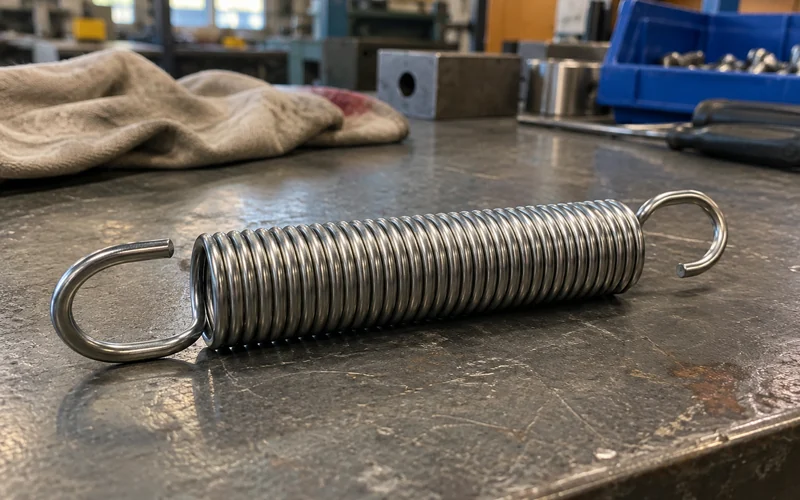
Extension springs
Pull back as they are stretched. Show the hook or loop attachment, the initial position and the maximum extension.

Torsion springs
Resist rotation through their legs. Show how each leg is held, the working angles and where the legs make contact.
A stamped spring clip or leaf-like part follows a different route, with its own tooling and material behavior. For parts formed from strip, see metal stamping. We make your springs in our own factory, and your quote confirms the route for the type you need.
Quote response within 24 hours for complete drawings.
Load requirements at working positions
A spring can match its free dimensions and still miss the working force. Give the force at one or more working positions, with the lengths and travel that define them.
Agree a test plan that names the loading direction, fixture, rate and acceptance range. When you only know the target function, send the assembly context and ask for a proposal with its assumptions stated.

| Input | What to state | Why it matters |
|---|---|---|
| Free length | Length with no load applied. | The reference for every working position. |
| Installed length | Length in the assembly, plus any preload. | Sets the force at rest. |
| Working positions | Force at each position and its allowed range. | Size alone does not fix the force. |
| Maximum travel | The furthest deflection in use. | Checked against solid height and over-travel. |
| Cycle duty | Operating cycles, frequency and environment. | Needed whenever fatigue matters. |
What to state Length with no load applied.
Why it matters The reference for every working position.
What to state Length in the assembly, plus any preload.
Why it matters Sets the force at rest.
What to state Force at each position and its allowed range.
Why it matters Size alone does not fix the force.
What to state The furthest deflection in use.
Why it matters Checked against solid height and over-travel.
What to state Operating cycles, frequency and environment.
Why it matters Needed whenever fatigue matters.
Know the function but not the force? Send the assembly and ask for a proposal.
Material selection for the service
Specify the wire or strip grade whenever corrosion, heat, fatigue or conductivity matters, and state the condition the spring must be in after all treatment.
Specify the grade
Name the wire or strip grade and the final condition you need. Surface and heat treatment can change force and fit, so state the result after them.
Undecided? Share conditions
Give the operating temperature, exposure, cycle expectation and load curve. A material is then proposed against those conditions.
Review substitutes
A substitute is reviewed for mechanical response and service environment. Approve it before tooling or sample tests are treated as final.
Next: the dimensions that must work with that force.
Spring geometry within the envelope
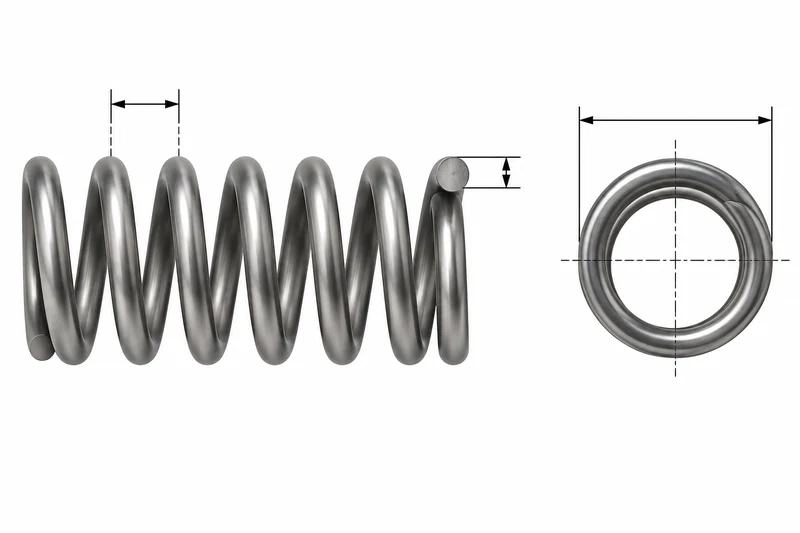
Spring dimensions have to be checked together with force and package space. Mark the dimensions that control assembly and those free to change to meet the load curve.
End configurations and fit
Hooks, loops, ground or closed ends and torsion legs affect installation and stress. Define how the spring is seated or pulled and where contact occurs.
Send the mating hardware or a drawing of it, so the ends are designed for how the spring is actually held.

Extension hooks and loops
The hook can become the fatigue-critical area even when the coil body is fine. Show the attachment and the load it carries.
Compression ends
Ground or closed ends decide how the spring seats. Show the seat and where contact occurs.
Torsion legs
The legs apply the torque. Show how each leg is held and where it touches the mating part.
End position and fit
A small end-form change can alter working length and load. Check end position and fit on the first article.
Forming process and route
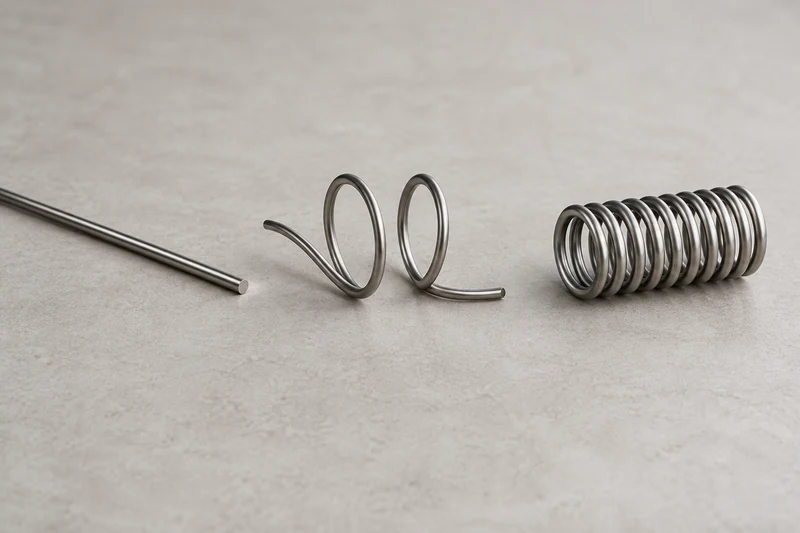
The forming route depends on wire or strip, spring type, end geometry, batch quantity and the force variation you allow. Send those five inputs and the route is proposed from them.
Operations such as stress relief, grinding or setting are confirmed against your material and function, not added by default. Forming runs in-house, and your quote states the route and any tooling or setup terms.
| Factor | What it decides | What to send |
|---|---|---|
| Wire or strip | Coiled or formed spring, or a stamped part. | Material form and grade. |
| Spring type | Forming method and load direction. | Compression, extension, torsion or stamped. |
| End geometry | Extra forming steps and setup. | End-form drawing and mating hardware. |
| Batch quantity | Setup and tooling terms. | First order and forecast quantity. |
| Force variation | Secondary steps and lot checks. | Allowed force range at each working point. |
What it decides Coiled or formed spring, or a stamped part.
What to send Material form and grade.
What it decides Forming method and load direction.
What to send Compression, extension, torsion or stamped.
What it decides Extra forming steps and setup.
What to send End-form drawing and mating hardware.
What it decides Setup and tooling terms.
What to send First order and forecast quantity.
What it decides Secondary steps and lot checks.
What to send Allowed force range at each working point.
Heat treatment and finishing
Heat treatment, shot peening, passivation or coating may be specified. Whether one suits your spring depends on material and route, so define each by what it must do.
Define by function
Specify the treatment by its purpose, and state the final dimensions and force after all treatment is complete.
State the exposure
If corrosion resistance matters, name the exposure and the test. A coating note written for appearance says nothing about fatigue or corrosion.
Re-test after changes
Review any change of treatment against the approved load test before it reaches a repeat lot.
For coating options and their effect on fit, see surface finishing.
Fix the force acceptance before samples
Force is measured on the finished spring, after heat treatment and coating. Put the working points and allowed ranges on the drawing now, so the first article and every repeat lot are judged the same way.
Spring production and lot control
A small change in wire source or process can alter force even when the spring looks the same. Link every lot back to the first article you approved.
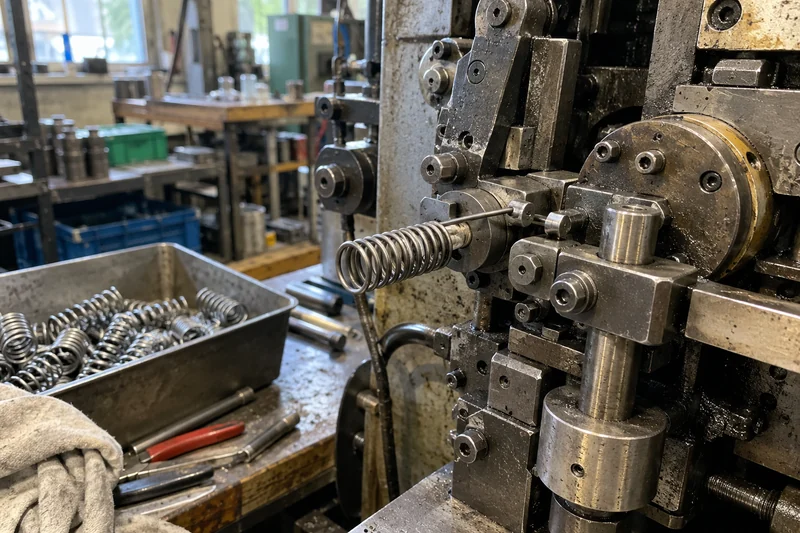
We coil, form or stamp your spring in our own factory. Ask for the four points below on the production record.
Material lot
Record the wire or strip lot. A new source can shift force with no visible change to the spring.
Tool setup
Record the setup used for the approved sample, so a repeat lot starts from the same point.
First-article force
Sign off force readings at the working points on the first article before the lot runs.
Repeat-lot sampling
Agree the sampling frequency and force points, and compare each lot with the approved first article.
Sample sign-off before production.
Spring testing and records
Measure force at the specified working deflections, the free dimensions and the end configuration. For high-cycle duty, define the fatigue test condition and its acceptance criterion.
A life value quoted without stroke, load, frequency and environment tells you nothing. Specify the sample frequency and report fields for the first article and repeat lots. The test record is agreed for each order.
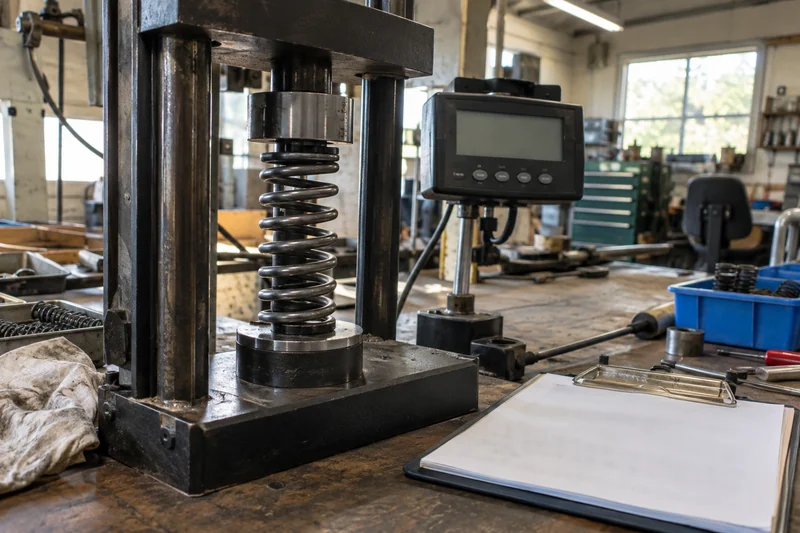
Load at working points
Force at each specified deflection against its allowed range, on the first article and on sampled lot parts.
Free dimensions and ends
Free length, diameters and end position against the drawing, with end fit checked on the first article.
Fatigue or corrosion test
Run only when the application calls for it, under the stroke, load, frequency and environment you define.
Quote inputs for a spring
A complete request lets the spring route be assessed and questions raised before pricing. Send what you have and mark what is still open.
Include in the first request
- Spring drawing or installation envelope.
- Spring type: coil spring, wire form or stamped part.
- Force at each working deflection, and the travel.
- Cycle duty and service environment.
- Material and finish requirement.
- Forecast quantity, plus mating parts or an installation sketch.
Ask the quote to list
- The prototype tests and what each one checks.
- Tooling or setup terms.
- Heat treatment and finishing included.
- Lot inspection and sampling.
- The route for your spring type.
If your part may be a stamped spring rather than a coil, say so on the RFQ so the right route is confirmed.
Quote response within 24 hours for complete drawings.
Spring manufacturing FAQ
Short answers to the questions that usually come up before a spring quote.
Are free length and outside diameter enough to design a spring?
No. Several springs can share both and behave differently under load. Give the working load, travel, installation, cycle duty and environment as well.
At how many deflections should force be measured?
Choose points that represent installation and the operating extremes, and state the allowed force range at each. Add points where the full load curve matters.
Are compression springs and stamped clips part of one verified supply range?
Both are made in our own factory, each on its own route: compression springs are coiled, and clips are stamped from strip. Your quote confirms the process for each part before they are combined in one order; strip parts are covered under metal stamping.
How does hook shape affect fatigue?
A hook can concentrate stress or rub where it attaches. Define the mating geometry and cycle load, then test the full spring with the intended end form.
Can plating or heat treatment change spring force?
Yes. Treatment and process sequence can change final dimensions and response, so set the force acceptance after the specified final treatment.
Can fatigue life be guaranteed without operating conditions?
No. A life commitment means nothing without the load range, stroke, frequency, environment and failure definition. Send those conditions so a test plan can be proposed.
What should the first spring samples be tested for?
Free dimensions, end fit and force at the required working positions. Add fatigue, corrosion or other tests only when the application calls for them.
How is force variation checked in repeat lots?
Agree the sample frequency, force points, material lot and acceptance range. Compare lot data with the approved first article and investigate any process change.
What information is needed for corrosion exposure?
The environment, chemicals or humidity, service time and applicable test. Material and finish are then selected against those conditions.
How is a substitute wire material approved?
Document the grade and source change, compare the load curve and relevant durability tests, then release a new approved configuration before repeat production.
Request a spring manufacturing quote
Send the drawing and tell us the working loads. Parker reviews it and replies with questions or a quote.

Parker
Your Spring Manufacturing Contact, HONGYI
I'm Parker. Send me the spring drawing or installation envelope, the force at each working deflection, the travel and the quantity. Add the material and finish if you know them.
Tell me the cycle duty and the environment, and whether the part is a coil spring, a wire form or a stamped spring part. My reply confirms the route for that type, or lists the questions to settle first.
- Reply within 24 hours
- In-house production
- Drawings kept confidential