
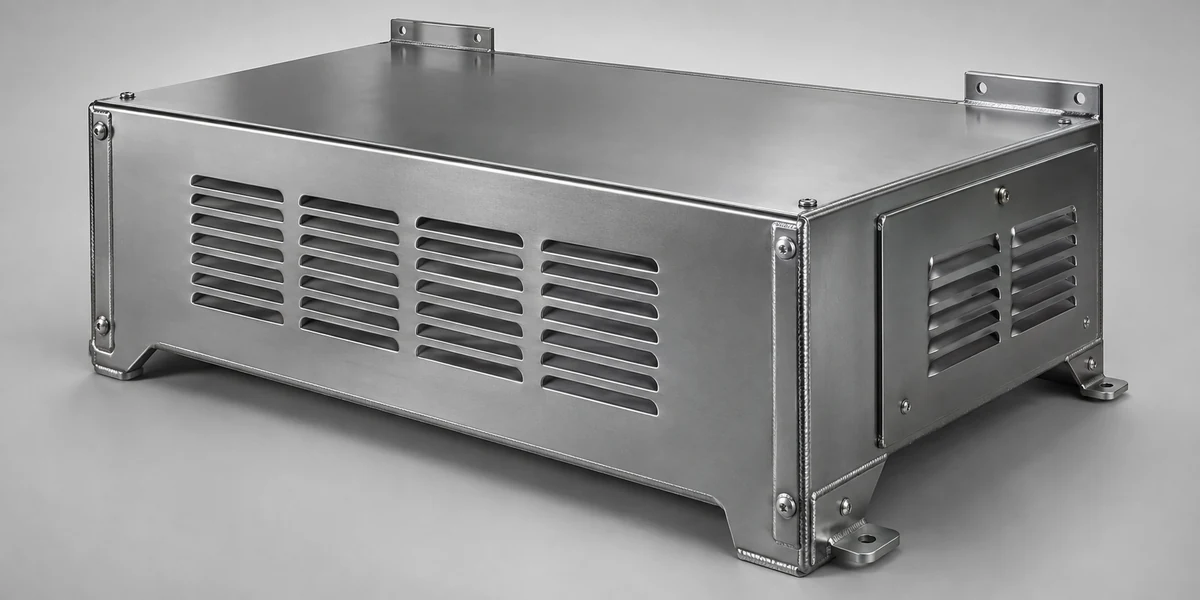
China Sheet Metal Fabrication Service
You are buying one finished component, not a list of cutting and bending jobs. Send your formed-part drawing and we review the route, material, finish and assembly interfaces as one deliverable.
- Send the formed-part drawing or 3D model, plus the flat pattern if you have one.
- State the material, thickness, finish and joining requirements.
- Mark the interfaces that must fit, and say whether hardware and assembly are included.
- In-house production
- ISO 9001
- 24h quote response
- 80+ countries
What to settle before quoting
Jump to the part, process step or inspection question you need to settle first.
Fabricated Parts
Choose the delivery level first
Process Route
Sequence from finished part to blank
Materials and Thickness
Grade, thickness and supplied stock
Cutting Operations
Blank features that matter after forming
Bending and Forming
Bend order, visible faces and datums
Welding and Assembly
Joints, hardware and post-weld fit
Surface Finishing
Finish, masking and post-finish checks
Fabrication Production
Every operation, run in-house
Inspection Plan
What is checked, and when
Quote Inputs
The complete fabrication package
Fabrication FAQ
Ten questions buyers ask first
Request a Quote
Send your drawing to Parker
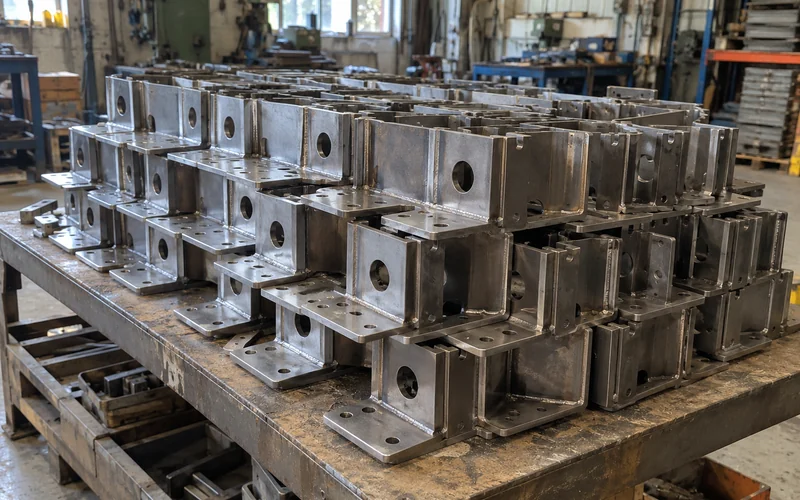
Fabricated parts in their delivered condition
A bracket, chassis, cover or enclosure may pass through several operations, but you accept it once. Define the final geometry, finish and assembly interfaces together.
Mark the mating faces, access openings, visible surfaces, threaded features and weld locations on the finished-state drawing. Then choose the delivery level, because it sets both the quote and the inspection plan.
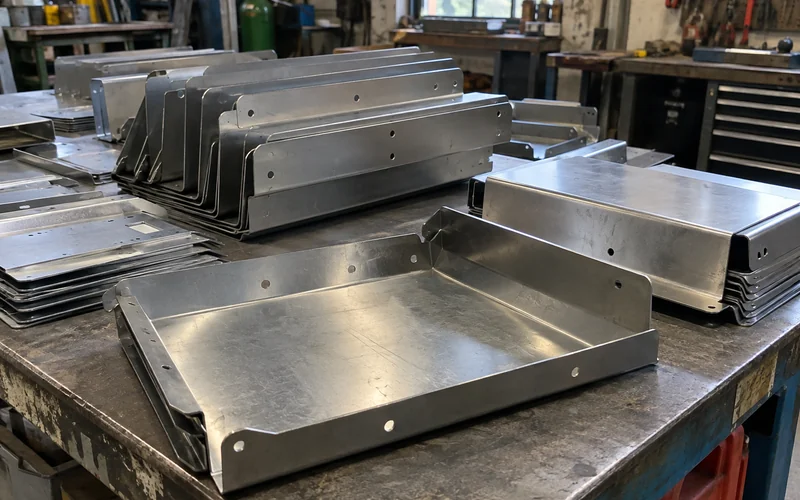
Loose formed parts
Cut and bent parts delivered unjoined. The finished-state drawing sets the fit, so mark the mating faces and visible surfaces.
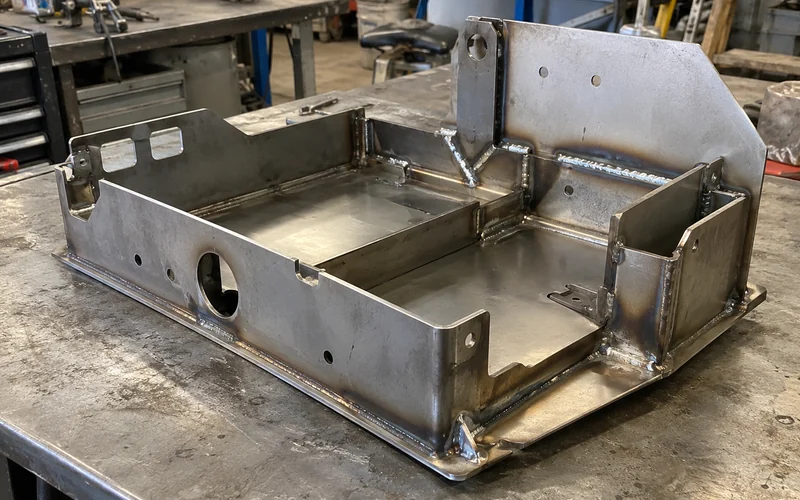
Welded subassembly
Parts joined before delivery. Show each weld location and the interfaces that must still fit after joining.
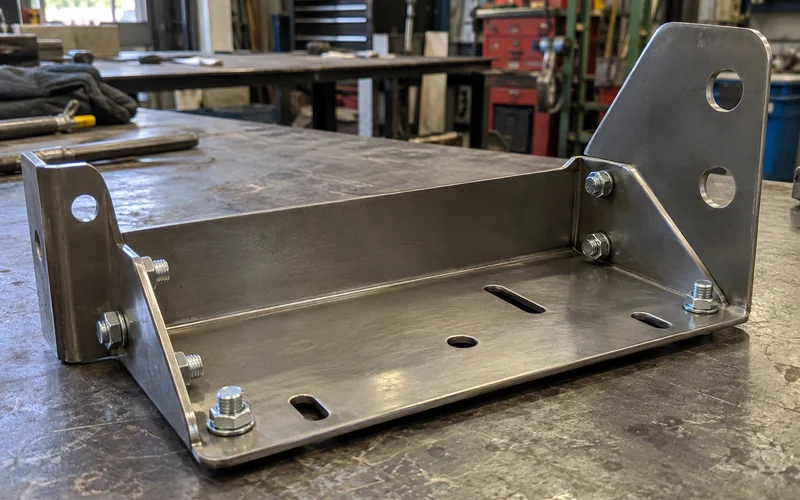
Installed hardware
Rivet nuts or threaded hardware fitted before shipment. List each item in the bill of materials and say whether you supply it or we source it.
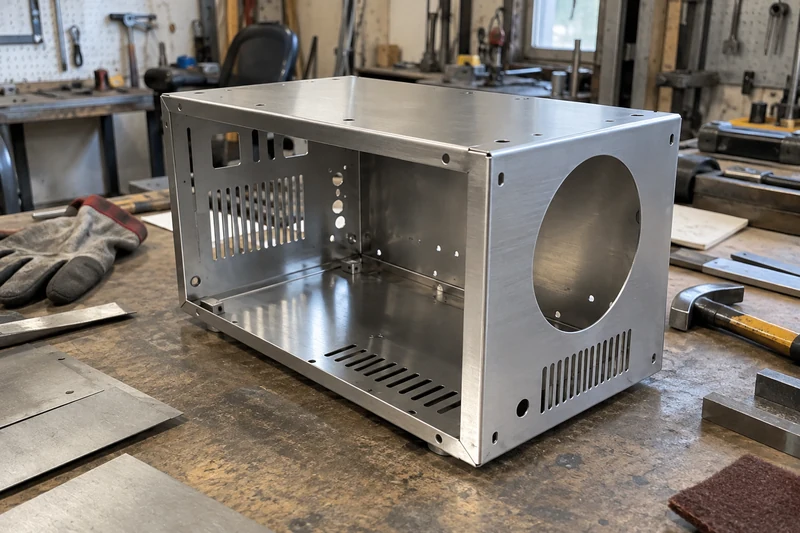
Tested enclosure
A complete enclosure accepted as one unit. State the checks it must pass before shipment; the final check runs in our own factory.
If repeatable press-tool production is your main question, compare this route with metal stamping. This page covers parts that need several operations before delivery.
Quote response within 24 hours for complete drawings.
Plan the route back from the finished part
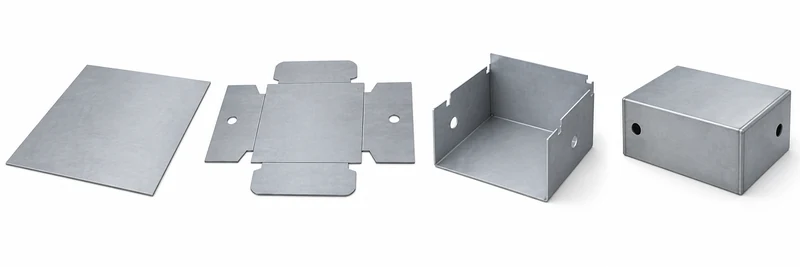
Work from the finished drawing back to the blank. The route has to keep the functional datums and protect surfaces that become hard to reach later.
Typical decision points are the cutting method, deburring, bends, hardware insertion, welding, surface treatment and final assembly. Each one raises a question your drawing should answer.
| Route decision | Question to resolve |
|---|---|
| Flat blank | Is the supplied pattern approved, or only a design reference? |
| Forming | Which bends set the critical envelope and mating faces? |
| Joining | Will welding distort a finished feature or block tool access? |
| Finish | Which surfaces, holes and threads need protection? |
| Final acceptance | Are dimensions checked before finish, after finish or in assembly? |
Question to resolve Is the supplied pattern approved, or only a design reference?
Question to resolve Which bends set the critical envelope and mating faces?
Question to resolve Will welding distort a finished feature or block tool access?
Question to resolve Which surfaces, holes and threads need protection?
Question to resolve Are dimensions checked before finish, after finish or in assembly?
Sequence changes can move cost and final tolerance. If the part must be bent after welding, or finished before assembly, say why, so the route can be checked for access, distortion and damage risk.
Have a sequence that must stay fixed? Send it with the drawing for review.
Material grade and sheet thickness
A material family alone is too broad when bendability, corrosion resistance, conductivity or appearance matters. State the exact sheet, and agree substitutions before you ask for a price.
What to state about the sheet
- Grade: the sheet grade, plus its temper or condition.
- Thickness: the nominal thickness. Variation changes bend radius, fit and installed hardware.
- Direction and surface: any grain direction or surface requirement.
- Visible faces: faces that must stay scratch-free, with the handling requirement noted on the drawing.
What to agree before quoting
- Substitution: acceptable alternatives. A different material can change bend behavior and the finish result.
- Supplied stock: lot traceability and protective film when you provide the sheet.
- Scrap allowance: how trial and scrap loss are treated on supplied stock.
Grade and thickness also shape the cutting route, covered next.
Cut the blank for the formed part
The cutting route is chosen for material, thickness, quantity, edge condition and feature geometry. What matters to you is how the blank behaves in the operations that follow.
Supply a controlled flat pattern if you have one, but keep the formed-state drawing as the authority for final fit. If the flat file and the formed model disagree, resolve the revision before any parts are made.
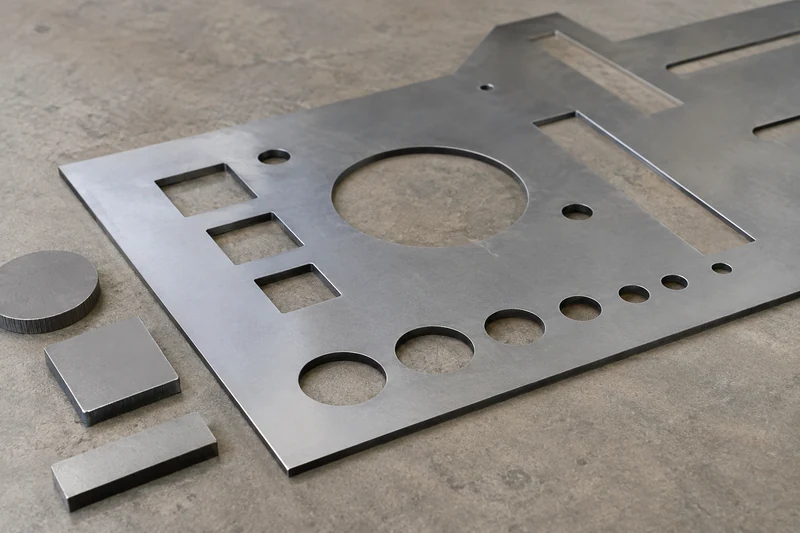
Features after forming
Define the hole and slot dimensions that matter once the part is bent, not only on the flat blank.
Edge condition
Burrs, cut taper or heat effects can affect later bends, welds or coating adhesion. Mark the edges where that matters.
One revision
The flat pattern and the formed model must describe the same part. Approve a revised flat pattern that produces the finished drawing.
Here, cutting is one step in a finished-part route. For flat profiles bought as the end product, see laser cutting for flat parts.
Bending and forming to the finished shape
Bend direction, inside radius, flange length and hole proximity decide whether the flat design can reach the formed shape you need.
For parts where the bend itself is the main question, see metal bending for radius, springback and hole-to-bend detail.
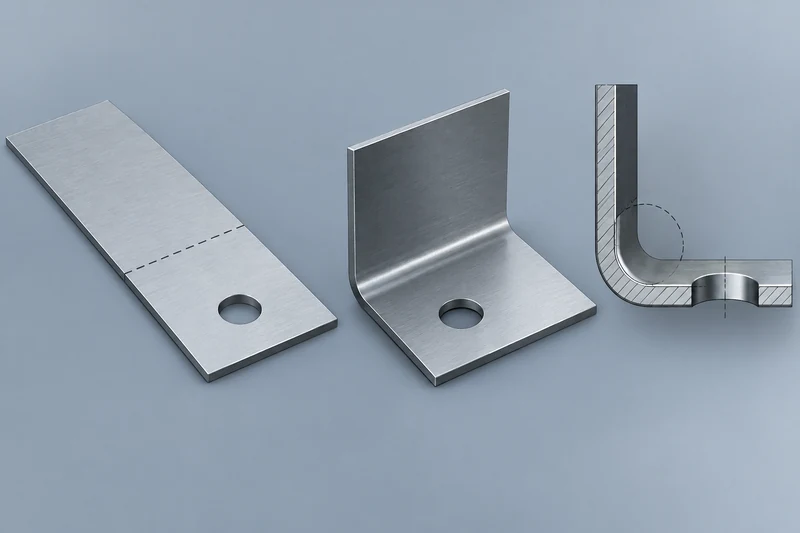
Visible faces
Tool contact can mark a visible face. Mark the faces that must stay clean before tooling is chosen.
Bend order
Short flanges, return bends and enclosed shapes can restrict tool access. Discuss the bend sequence early.
Finished-state datums
Dimension the formed part from usable datums rather than a stack of isolated bend angles.
Assembly check
When the mating assembly controls the result, a fit check can tell you more than angle readings alone.
Where each dimension is checked
State which dimensions are inspected after all forming and which can be checked on a first article.
Joining the part without losing the fit
Weld heat can move holes and flanges. Define each joint and the surfaces that must stay flat, so the review can plan a fixture and a post-weld check where the fit is tight.
If the deliverable includes rivet nuts, threaded hardware or an assembled enclosure, show those parts in the bill of materials and say whether you supply them or we source them.
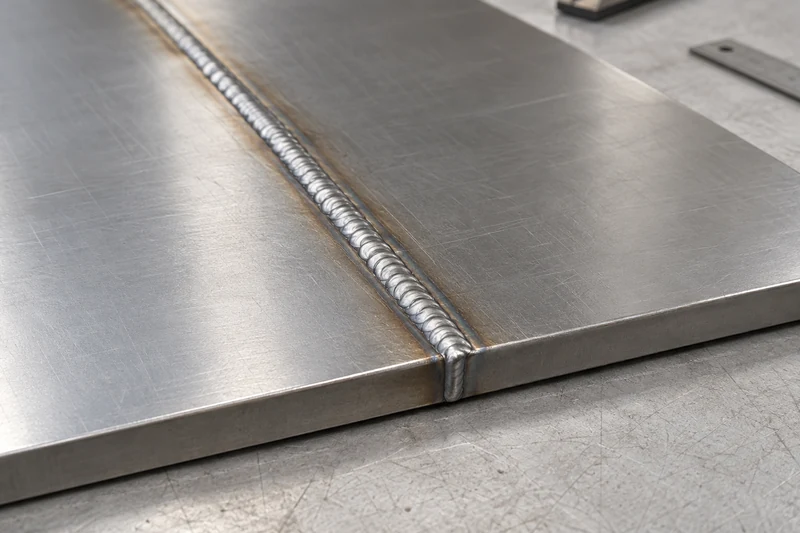
| Item | Define on the drawing or BOM |
|---|---|
| Joint | Location, and whether it carries load or seals. |
| Weld appearance | The appearance permitted on visible faces. |
| Flat surfaces | Faces that must stay flat after welding. |
| Grinding | Whether weld grinding is permitted. |
| Inspection stage | Whether the weld is inspected before or after finish. |
| Hardware | Part numbers, and whether you or we supply each item. |
Define on the drawing or BOM Location, and whether it carries load or seals.
Define on the drawing or BOM The appearance permitted on visible faces.
Define on the drawing or BOM Faces that must stay flat after welding.
Define on the drawing or BOM Whether weld grinding is permitted.
Define on the drawing or BOM Whether the weld is inspected before or after finish.
Define on the drawing or BOM Part numbers, and whether you or we supply each item.
When the joint itself is the main question, see metal welding for welded parts. Wider mechanical, electrical or functional integration belongs with assembly; this section stays with the joining that completes the sheet metal item.
Tight interface near a weld? Send the drawing with the joint marked.
Specify the finish by function
Define the finish by what it must do and how it must look, then decide which dimensions are checked after coating.
An approved sample is the clearest way to set visual quality, especially for brushed metal or powder coat.
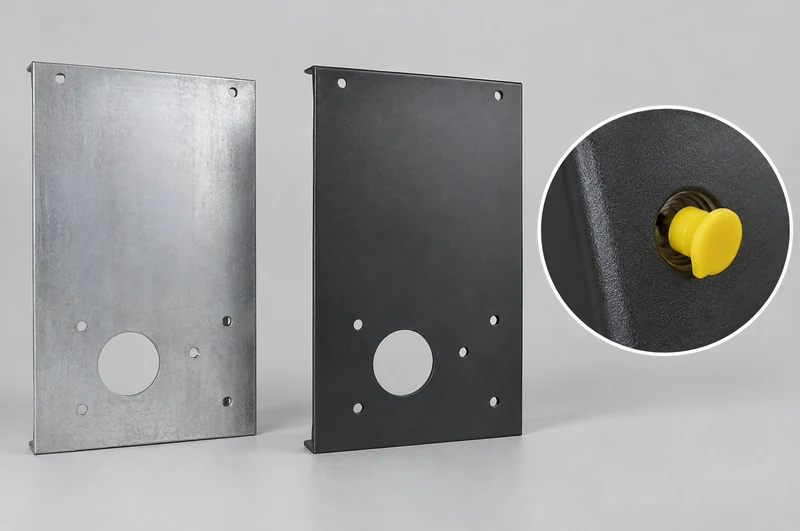
Finish and reference
State the finish type, the color or texture reference and the corrosion environment.
Coverage
Define the acceptable coverage at edges and welds.
Masking
Mask threads, ground points, contact areas and fit-critical holes where coating buildup would interfere.
Sample and final check
Approve a finish sample and state whether final thickness and mating dimensions are checked after finish.
One factory from flat blank to finished part
We cut, bend, join, finish and inspect your part in our own factory, so one team signs off the delivered part. When you compare prices, check that each quote lists the same included operations. Production and inspection come next.
Fabrication production in one factory
A multi-operation order needs one owner for every operation and for final conformity. Every included operation runs in our own factory, so that owner is us.
Revision control, part flow between operations and any nonconformance found after finish stay with the same team.
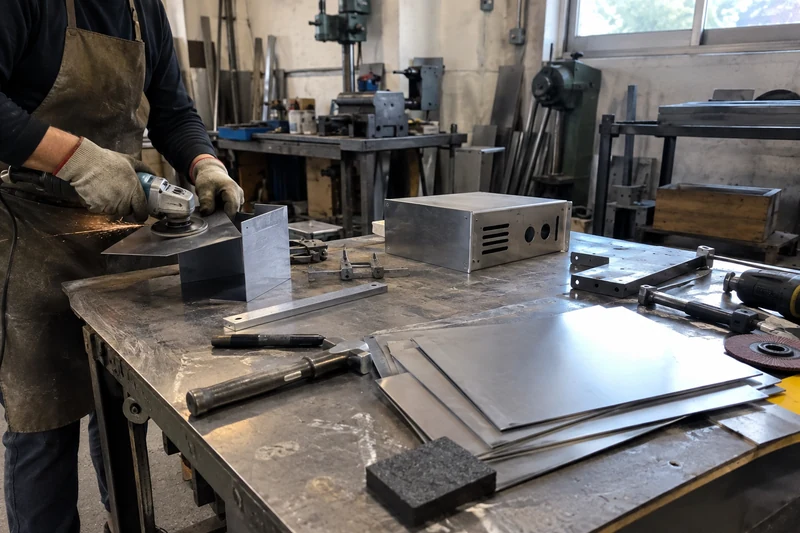
In-house operations
We cut, form, join and finish your part in our own factory, working to one controlled drawing revision.
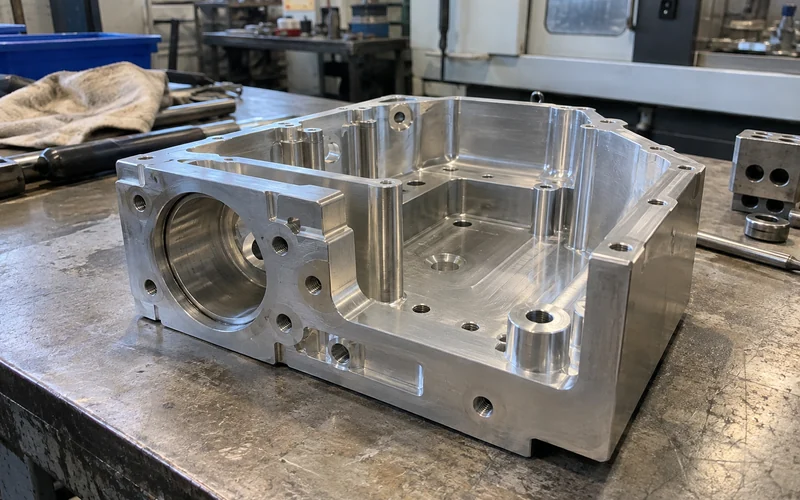
First-off samples
First-off samples are checked in our own factory. Approve a sample before volume production starts.
Later lots
Ask how later lots are compared with the approved sample. A problem found after finish is resolved by the same team.
Sample sign-off before production.
Inspection plan for the delivered part
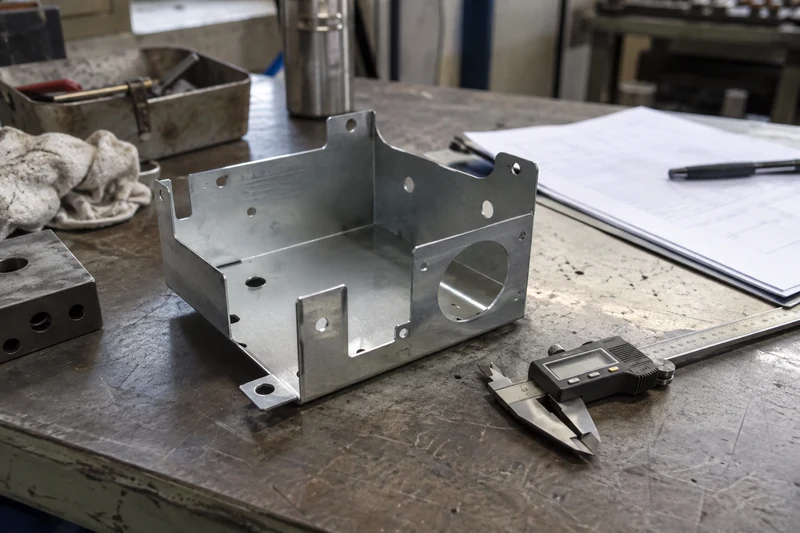
Inspect the delivered state against the released drawing and the assembly function. A first-article check confirms the route; lot checks then follow risk and volume.
Material and blank
Confirm material identity and the blank features that carry into the finished part.
Bends
Check bend geometry against the finished-state datums.
Welds and hardware
Check weld condition and that every hardware item is present.
Finish
State which dimensions are measured before coating and which after.
Final mating dimensions
Measure the interfaces that must fit, using the agreed datums and fixtures.
Shipment records
Agree the records that travel with each shipment. The inspection record is set for each order, matched to the features your assembly depends on.
Quote inputs for a fabrication RFQ
Send a complete package so every operation is priced. A price gap between quotes often reflects a different delivery level, or a finish or hardware item left out.
Formed-state model and drawing
The 3D model and 2D drawing of the finished part, plus a controlled flat pattern if you have one.
Material and quantity
Material grade and thickness, whether you supply the stock, and the quantity forecast.
Finish specification
The finish, the visible surfaces and the areas to mask.
Joining and hardware
Welds, hardware, fasteners and the assembly bill of materials.
Critical dimensions
The mating dimensions that matter, plus your inspection and report requirements.
Delivery and samples
Delivery condition, packaging constraints and the sample approval plan.
Your quote lists each included operation and the final inspection, all run in our own factory, so you can compare like with like.
Quote response within 24 hours for complete drawings.
Sheet metal fabrication FAQ
Short answers to the questions that usually come up before a fabrication quote.
Which file controls if the flat pattern and formed drawing disagree?
Resolve the revision conflict before quoting or cutting. The finished-state drawing is the acceptance authority unless your project documents say otherwise; approve a revised flat pattern that produces it.
Who owns the tolerance chain across cutting, bending and welding?
We do, because cutting, bending and welding all run in our own factory. Define the final datums and critical dimensions, then set intermediate checks that keep each operation on course.
How is scrap handled when I supply the sheet material?
Agree the incoming stock condition, nesting yield, trial allowance, normal scrap, replacement and return of offcuts in the quote. Keep the material lot traceable where required.
Are inserted nuts and hardware included in the fabrication price?
Only when they are on the drawing or bill of materials and the quote includes them. Specify part numbers, installation method, inspection and whether you supply the hardware or we source it.
Should visible scratches be judged against a photograph or a sample?
An approved physical sample with written viewing conditions is the stronger control. Photographs can support the record, but they can distort color, lighting and surface texture.
Can welding before bending change the process route?
Yes. A weld can block tooling or distort the material, and bending can alter a welded joint. Review tool access, heat distortion and final datums before fixing the sequence.
How are holes and threads protected during powder coating?
Mark the surfaces to mask, define the allowable coating buildup and specify the post-coat inspection. Thread protection and rework rules are agreed for each part.
Who provides the final inspection report if operations are subcontracted?
We do. Operations are not subcontracted: cutting, bending, joining, finishing and final inspection all run in our own factory, and the report scope is agreed for each order.
Is a complete enclosure an Assembly project or a fabrication project?
If fabrication, hardware and joining produce the delivered sheet metal item, this page covers it. If the project adds wider mechanical, electrical or functional integration, see assembly for that extra scope.
When should a fabricated part move to a dedicated stamping tool?
Compare total demand, geometry stability, tool investment, cycle cost and expected changes. A stable, high-volume part may justify tooling; the decision needs your actual drawing and volume forecast.
Request a fabrication quote
Send the finished-state drawing and tell us what the part must fit. Parker reviews it and replies with questions or a quote.

Parker
Your Sheet Metal Fabrication Contact, HONGYI
I'm Parker. Send me the completed-state drawing or model with the material and thickness, target finish, forecast quantity, and any weld and hardware requirements.
Add your final inspection criteria. If you only have a flat pattern, tell me the finished dimensions and interfaces the part must meet.
- Reply within 24 hours
- In-house production
- Drawings kept confidential