
China Investment Casting Service
Investment casting builds a metal part from a wax pattern and a ceramic shell, often in a shape that is hard to machine from one blank. Your RFQ still sets the alloy, functional surfaces, finishing and defect acceptance.
- Send the CAD, drawing, alloy grade and annual quantity.
- Mark critical machined areas, surface and defect requirements, and any heat treatment.
- Say whether you need the part as cast or fully finished.
- In-house production
- ISO 9001
- 24h quote response
- 80+ countries
Plan your investment casting RFQ
Jump to the alloy, tooling, shell, finishing or inspection question you need to settle first.
Cast Part Types
Shapes that favor investment casting
Alloy Requirements
Grade, condition, traceability, substitutes
Casting Geometry
Walls, sections, passages, transitions
Tooling and Wax
Wax tool cost, terms and ownership
Shell and Casting
Shell, pour, cleanup and as-cast state
Casting Production
Traceability from wax tool to part
Machining Allowance
Stock at bores, faces and datums
Heat and Finishing
Treatment, cleaning and surface sequence
Inspection Plan
Alloy, defects, dimensions and records
Quote Inputs
What to send for a firm quote
Casting FAQ
Ten questions buyers ask first
Request a Quote
Send your drawings to Parker
Parts that suit investment casting
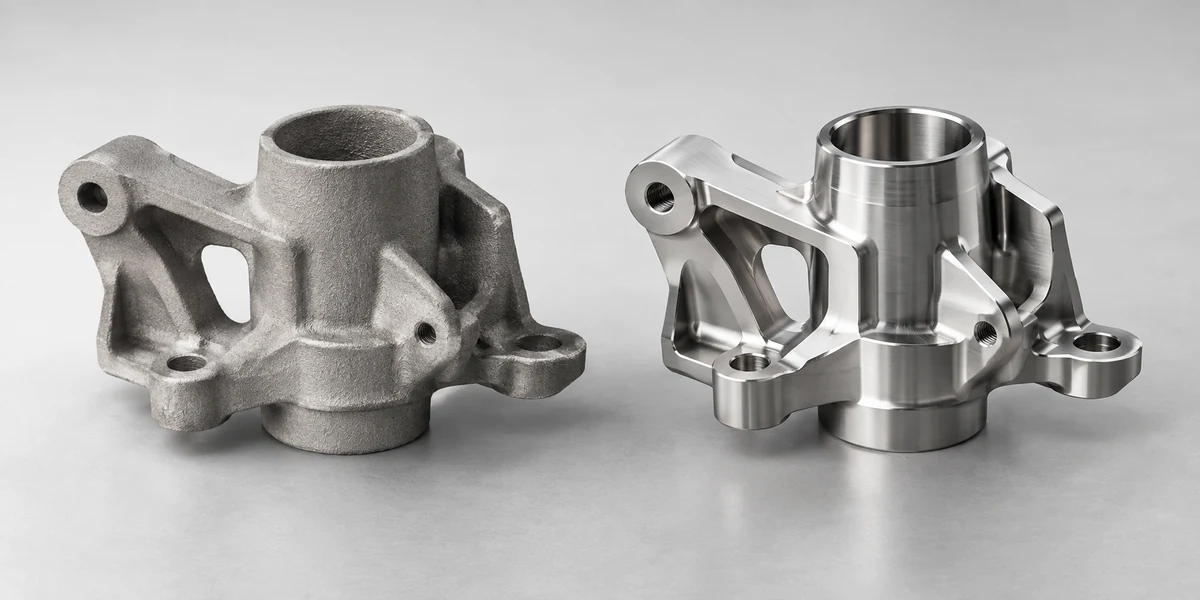
Complex shapes, curved passages and integrated features may favor an investment-cast route. Check that choice against size, wall thickness, quantity and the integrity your part needs.
Complex shapes
Curved or sculpted forms that are hard to machine from a single blank. Mark the machined interfaces and the faces you accept as cast.
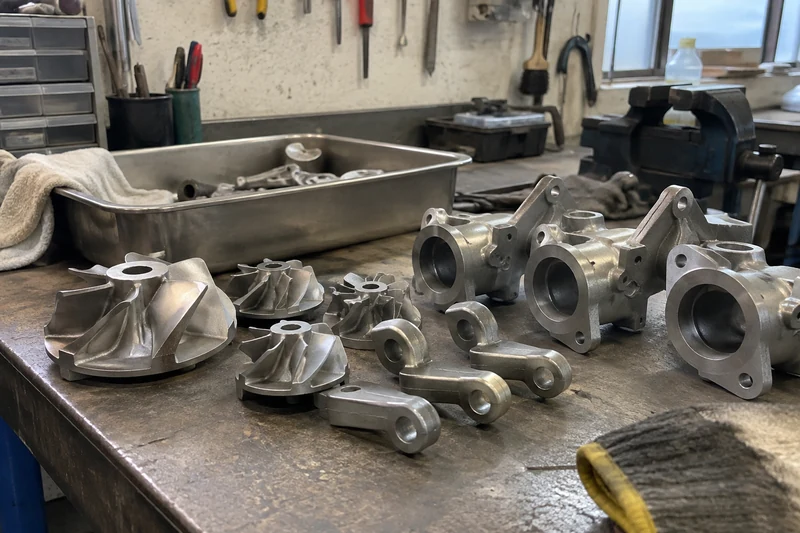
Curved passages
Internal channels that follow the part. Mark the sealing zones and the passage dimensions your function depends on.
Integrated features
Bosses, ribs and brackets cast as one piece. Mark the load paths and the features that locate mating parts.
We make your investment castings in our own factory, from wax tooling to the finished part. If the volume or part size points elsewhere, compare die casting, sand casting or the full metal casting route overview.
Next: the alloy and the duty it must meet.
State the alloy and its condition
Name the alloy grade, the mechanical or corrosion properties you need and the heat-treatment condition. If the grade is open, describe the environment and approve the proposed alloy before tooling is fixed.
Castable grades
Castable and wrought grade names are not interchangeable. Have any claimed equivalence reviewed before you accept it.
Traceability and certificates
Say which material records your application needs, from lot traceability to the certificate format.
Explicit substitutions
An alloy change can alter shrinkage, shell behavior, heat treatment and machining. Any substitute must be stated and approved, never assumed.
Next: check the geometry against the wax, the shell and the pour.
Check castability for walls and passages
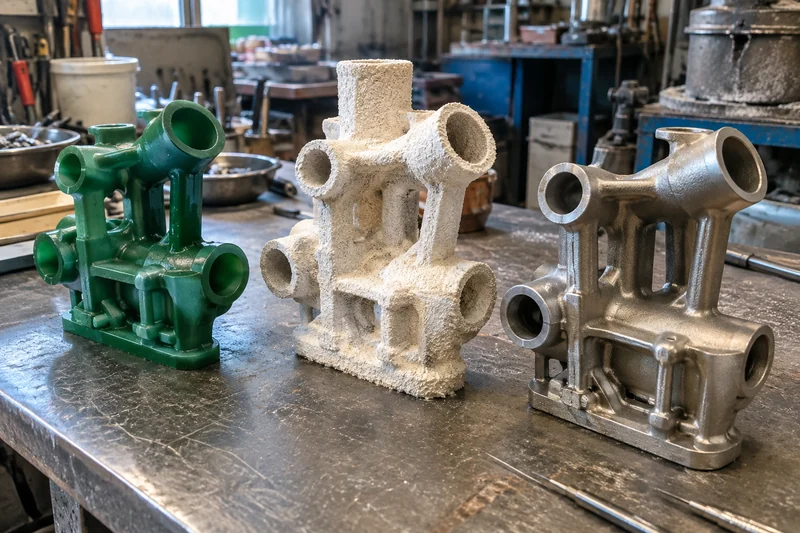
Thin walls, isolated thick sections, narrow passages and sharp transitions deserve a castability review. The wax pattern and shell must be makeable, the metal must fill, and the part must be cleanable and inspectable.
If your drawing was made for machining, some features may need radii or allowances specific to this process.
Thin walls
They affect wax integrity, shell strength, metal fill and defect risk. Give the minimum section and the alloy.
Isolated thick sections
A heavy section next to thin walls needs a castability review. Show whether that mass is functional.
Narrow passages
The shell has to form inside them and the part has to be cleaned afterward. Mark the passage sizes that matter.
Sharp transitions
Corners drawn for machining may need process-specific radii. Say which edges must stay sharp after machining.
As cast or machined
Mark which surfaces are accepted as cast and which are machined. A change at a critical boss or flange changes both tooling and inspection.
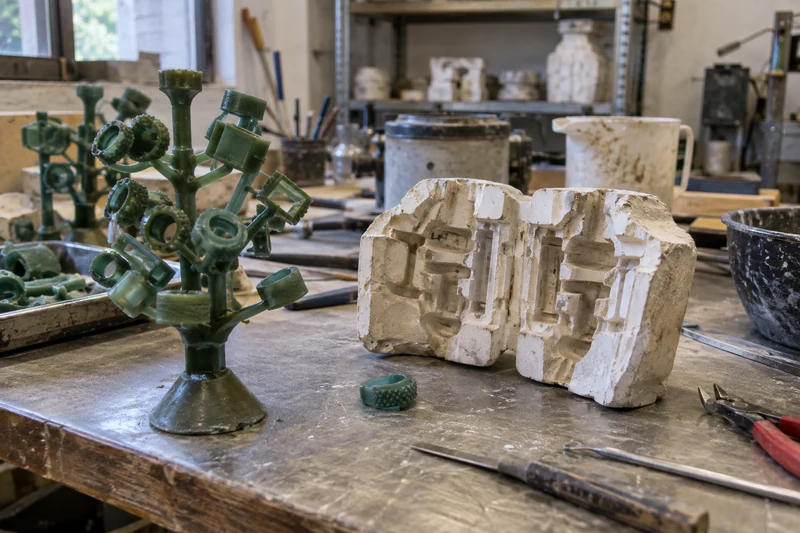
Wax pattern tooling and who owns it
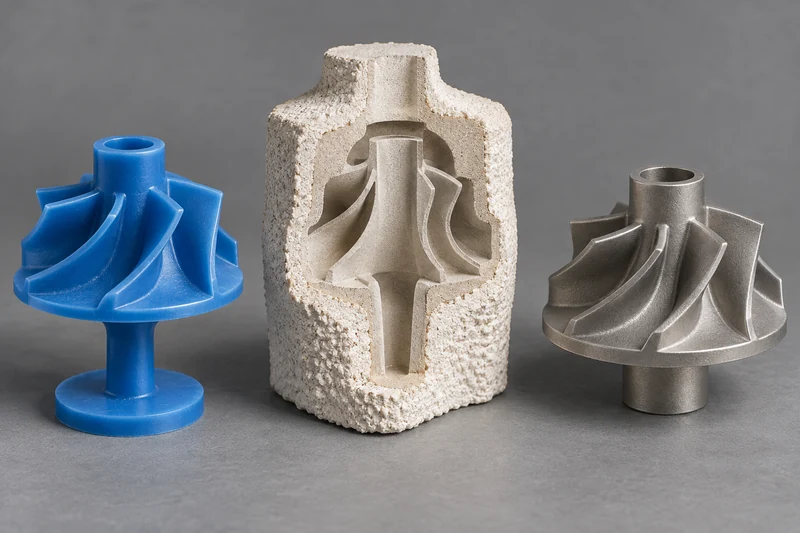
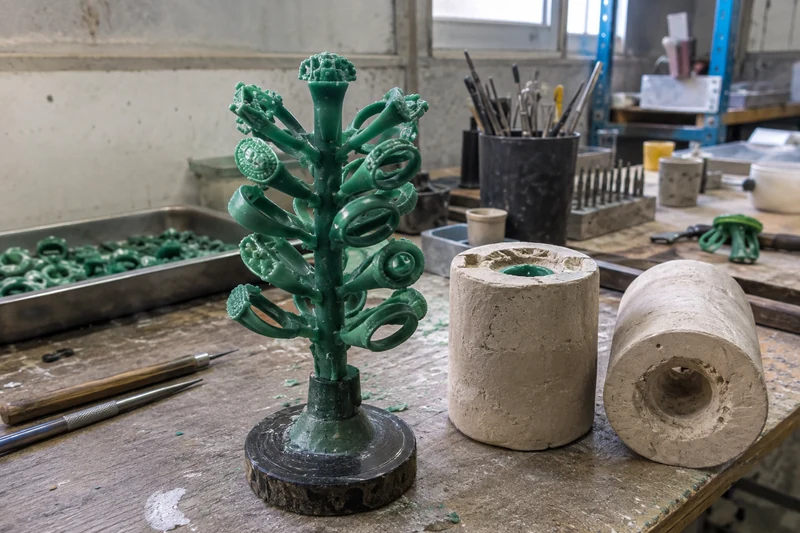
A reusable tool makes each wax pattern. Review its split, wax injection, tree assembly, change terms and ownership before you commit to the tool.
The quote should separate the one-time tool cost from the recurring cast-part cost.
| Review point | What to ask | Why it matters |
|---|---|---|
| Pattern split | Where the tool parts around your geometry | Decides where split lines fall |
| Wax injection | How the wax patterns are made | Pattern quality carries into the casting |
| Tree assembly | Where patterns are gated onto the tree | A gate can land on a functional face |
| Changes | Which design changes the tool can absorb | Late changes add rework and trials |
| Ownership | Who owns the tool, and the upkeep terms | Payment alone does not settle these terms |
What to ask Where the tool parts around your geometry
Why it matters Decides where split lines fall
What to ask How the wax patterns are made
Why it matters Pattern quality carries into the casting
What to ask Where patterns are gated onto the tree
Why it matters A gate can land on a functional face
What to ask Which design changes the tool can absorb
Why it matters Late changes add rework and trials
What to ask Who owns the tool, and the upkeep terms
Why it matters Payment alone does not settle these terms
We build, hold and maintain the wax tool, and your quote states the ownership and change terms.
Comparing tool offers? Ask for tool cost and part cost on separate lines.
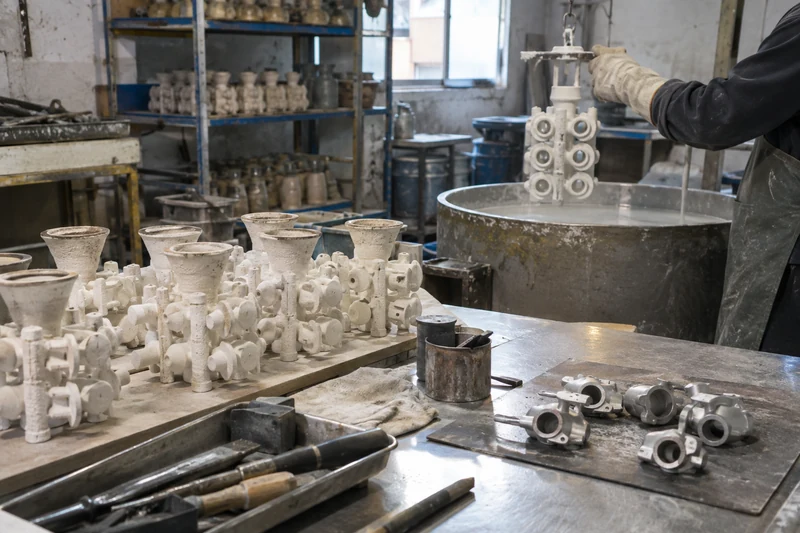
From ceramic shell to cleaned casting
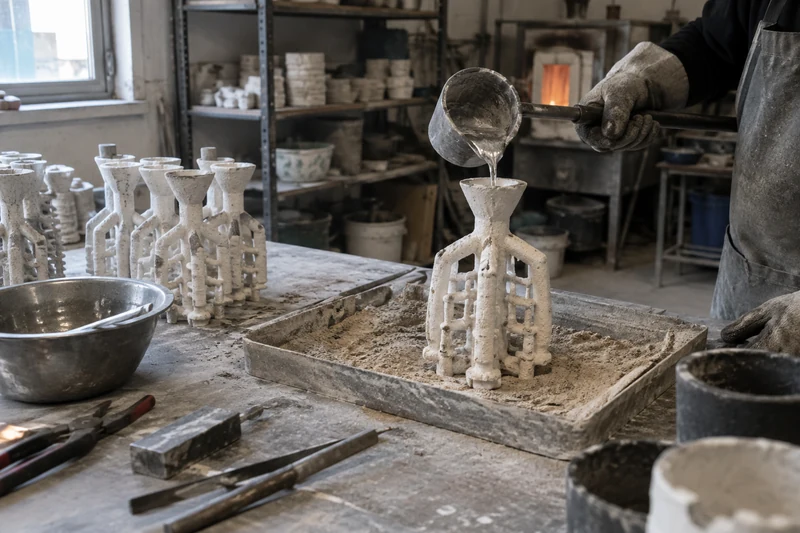
Shell building, dewaxing, pouring, cooling and shell removal shape the part's form, surface and defect risk. Ask how the route supports your alloy, section sizes and critical areas.
Define the accepted state after casting and cleanup, including any remaining witness marks and the rules for surface repair.
Shell building
The shell carries the pattern's shape and surface into the metal. Ask how it is built for your section sizes.
Dewax and pour
Confirm that the route supports your specified alloy and your critical areas.
Cool and remove shell
Gate and feeder stubs are cut away here. Review their positions where removal could touch a functional face.
Clean and accept
Agree the as-cast state you accept, including witness marks and any surface repair rule.
Next: how each lot stays traceable in production.
One traceable chain from tool to part
Production planning should connect the wax tool, alloy lot, shell batch, cast lot, heat treatment and final machining. A first article confirms both the as-cast and the finished condition.
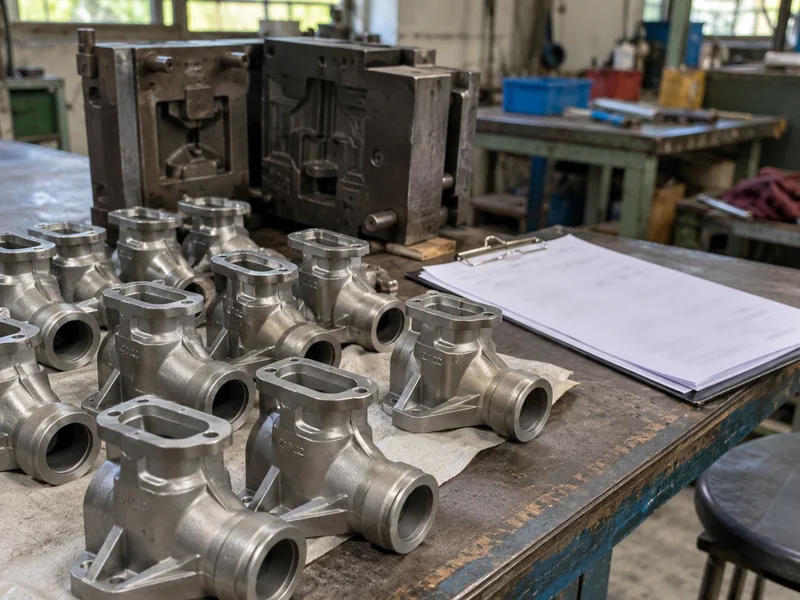
Wax tool
The approved tool revision that made the patterns.
Alloy lot
The melt or lot identity that links to your material record.
Shell batch
The shell batch used for that cast lot.
Cast lot
The lot identity that follows each casting downstream.
Heat treatment
The treatment batch, when your drawing requires one.
Machining and first article
Machining to the finished drawing, then a first article that confirms both conditions.
Every link in this chain runs in our own factory, so one team owns the delivered part and the disposition of any defect.
The casting is not yet your finished part
Critical fits, bores and sealing faces may still need machining, treatment or both. Mark which faces are accepted as cast and which are machined, and the next sections set the stock, finish and inspection for each.
Machining stock on critical features
Critical bores, sealing faces and mounting datums may need stock left for machining. Define the as-cast model and the finished drawing separately.
Check that the allowance covers process variation without overloading cost or distorting thin sections.

Define on the drawings
- The as-cast model and the finished drawing as separate revisions.
- Every bore, sealing face and mounting datum that is machined.
- Thin sections where extra stock could cause distortion.
Agree before production
- Who approves the as-cast datum.
- How a part with insufficient stock is handled.
- How a defect found during machining is traced to the cast lot and reported before more work is done.
We machine the casting on our own CNC machining line. Its fit for your cast alloy and geometry is confirmed in the project review.
Heat treatment and finishing sequence
Heat treatment, cleaning, blasting, polishing or coating may follow casting. Their order relative to machining changes dimensions and surface condition.
Name the exact treatment and acceptance standard wherever function depends on it. Heat treatment and finishing are done in-house, and your quote lists each step on your route.
| Operation | Where it sits | What to specify |
|---|---|---|
| Heat treatment | Before or after machining | Treatment, condition and dimensions checked after |
| Cleaning and blasting | After casting | Surfaces covered and the expected look |
| Polishing | On appearance faces | Areas and the finish standard |
| Coating | Relative to machined fits | Coating, masked areas and final dimensions |
| Cast texture and machined faces | On the same part | Zones and acceptance for each |
Where it sits Before or after machining
What to specify Treatment, condition and dimensions checked after
Where it sits After casting
What to specify Surfaces covered and the expected look
Where it sits On appearance faces
What to specify Areas and the finish standard
Where it sits Relative to machined fits
What to specify Coating, masked areas and final dimensions
Where it sits On the same part
What to specify Zones and acceptance for each
Use an approved sample for appearance-critical cast surfaces.
Inspection evidence for each stage
Set separate checks for alloy identity, as-cast geometry and defects, finished machined dimensions and any specified treatment.
Internal defects in critical regions may need a specific nondestructive method. State the method, coverage and acceptance threshold rather than a vague no-porosity note. The first-article and lot records for your order are agreed with the quote.
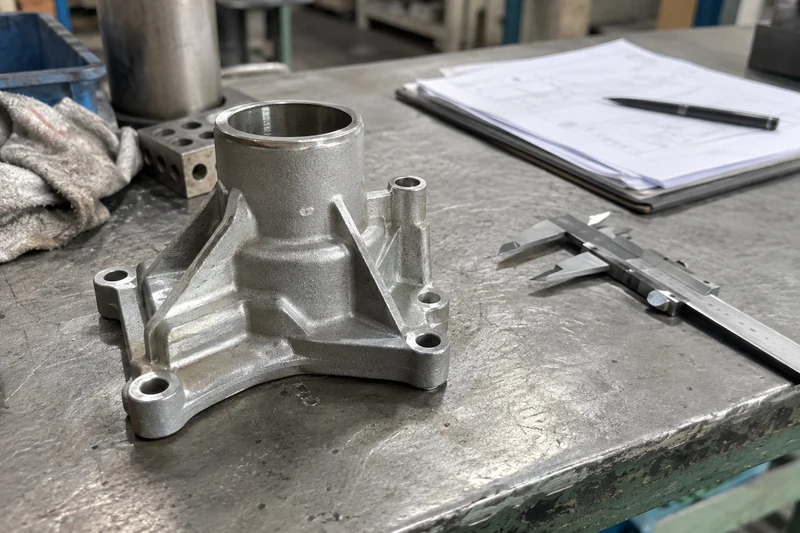
Alloy identity
Grade and lot traceability, with the certificate format you specified.
Geometry and defects
As-cast dimensions, surface defects and the internal checks set for critical zones.
First article and lots
Machined dimensions and treatment checks on the first article, then on each lot.
What an investment casting RFQ needs
A complete request lets tooling, casting and finishing be assessed before pricing. Send what you have and mark what is still open.
Include in the first request
- CAD and a finished drawing.
- Alloy grade and forecast quantity.
- As-cast and machined areas.
- Cosmetic standard and defect acceptance.
- Heat treatment and required certificates.
- Any existing tooling.
Ask the quote to separate
- Wax tooling cost and ownership.
- Casting price.
- Treatment, machining and testing.
- The inspection record for each stage.
Parker reviews the drawing before any price is set.
Investment casting FAQ
Short answers to the questions that usually come up before an investment casting quote.
Can investment casting meet all functional dimensions without machining?
Some dimensions may be accepted as cast, but critical fits, bores or sealing faces may need machining. Mark those features and agree the process and inspection method for each.
How are wax tooling and shell costs separated?
The quote should state one-time pattern tooling, recurring shell and cast-part costs, maintenance and ownership. Do not assume the same tool terms across suppliers.
Why do thin walls need a separate review?
They affect wax integrity, shell strength, metal fill and defect risk. Check the actual alloy, geometry and minimum section before you approve a tool.
Should heat treatment occur before or after machining?
It depends on the alloy, the required properties, distortion and the final tolerance. Set the sequence in process planning and define which dimensions are checked after treatment.
How should internal defects be accepted?
Use the part's duty and critical zones to pick a standard, an inspection method and an acceptance threshold. A cosmetic surface rule says nothing about internal soundness.
Can an alloy certificate accompany shipment?
Specify the grade, lot traceability and certificate format in your RFQ. Your quote confirms which certificate the selected route provides.
Who owns and maintains the wax-pattern tool?
We keep and maintain the wax-pattern tool in our own factory. The agreement names the owner, the change rules and the transfer package; payment alone does not settle those terms.
How are cast texture and machined faces distinguished?
Mark the zones on the drawing and set separate finish and dimensional criteria. Use approved samples for appearance-critical cast surfaces.
Is an assembly made from several castings covered here?
This page covers individual investment-cast parts and their finishing. A delivered multi-part assembly needs a BOM, joining and final functional acceptance as a separate scope.
How are sample-to-batch dimensional changes recorded?
Keep the approved tool and drawing revision, material, first-article measurements and lot checks. A process or tool change should trigger a defined reapproval review.
Request an investment casting quote
Send the drawings and tell us what the casting must do. Parker reviews them and replies with questions or a proposal.

Parker
Your Investment Casting Contact, HONGYI
I'm Parker. Send me the finished drawing, plus the as-cast drawing if you have one, with the alloy, quantity, critical machined surfaces, heat treatment and defect standards.
Ask me for a proposal covering the wax tool, the casting, the machining and the inspection, all done in-house.
- Reply within 24 hours
- In-house production
- Drawings kept confidential