
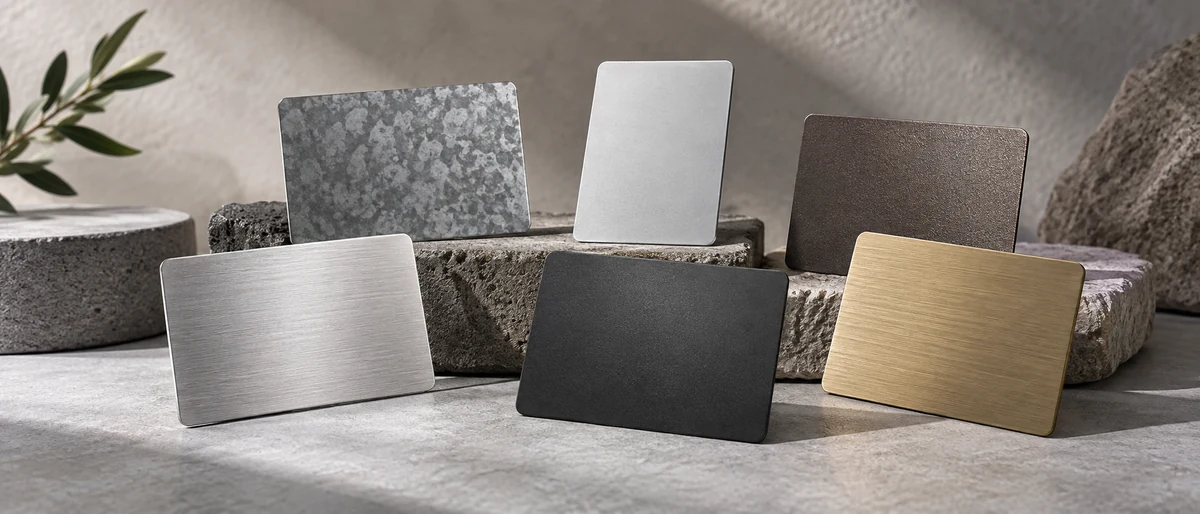
China Surface Finishing Service
A surface finish is part of the component specification. Define why it is needed, where it applies and how the finished part is accepted, because one treatment name can behave differently across materials, shapes and suppliers.
- Send the base material, the drawing and the function the finish must serve.
- Add the finish specification or a reference sample, the masking areas and the dimensions after treatment.
- No treatment name yet? Describe the performance and appearance you need.
- In-house production
- ISO 9001
- 24h quote response
- 80+ countries
What a finish quote needs
Jump to the material, appearance, masking, dimension or inspection question you need to settle first.
Finishing Goals
What the finish must do
Base Materials
Grade, condition and material history
Finish Options
Choose by function, not by name
Appearance Standards
Color, gloss and marks by zone
Masking Areas
No-finish zones and boundaries
Critical Features
Fits, edges and contacts at risk
Dimensional Effects
Before or after treatment
Finishing Control
One team treats, checks and ships
Inspection Plan
Properties checked, and against what
Quote Inputs
What to send for a finish quote
Finishing FAQ
Ten questions buyers ask first
Request a Quote
Send your drawing to Parker
Finishing goals start with function
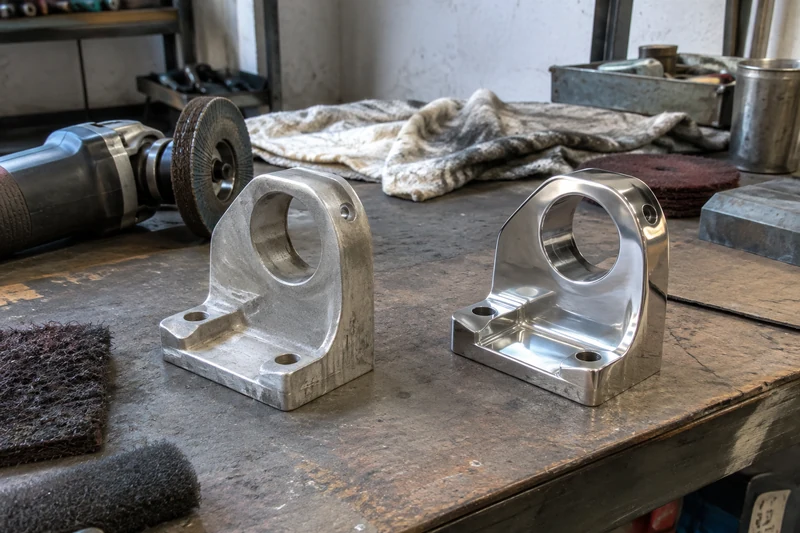
Decide what the finish must achieve before you name a treatment. Two finishes that look alike in a photo can perform very differently on your part.
This page covers the finish specification and how it is verified. How the base part is made belongs to the process that makes it.
Name the function
Say whether corrosion resistance, wear, appearance, conductivity, sealing, cleanliness or another function comes first.
Describe the conditions
Name the environment, the expected contact and any lifespan criteria that affect which finish is selected.
Identify the finished part
The prior process affects surface quality and masking access, whether the part comes from CNC machining, metal stamping or injection molding.
Quote response within 24 hours for complete drawings.
Base materials and material history
A treatment that works on one alloy or polymer may not give the same adhesion, color or dimensional effect on another, so surface preparation starts from the full material history.
What to state about the base material
- Grade: the specified alloy or polymer.
- Condition: temper or other material condition.
- Current coating: any finish already on the part.
- Heat treatment: whether and when it happens.
What to state for mixed materials
- Every exposed component: list each material that will see the treatment.
- Compatibility: adhesives, seals, electronics or threaded inserts the treatment could damage.
- Sequence: whether parts are finished before assembly.
- Protection: how untreated mating surfaces are kept clean.
When the deliverable is an assembled unit rather than single parts, see mechanical assembly.
Finish options for your part
Treatment families include coating, plating, conversion treatment, mechanical texture and polishing. The right one depends on your base material and the function you need.
Your quote names the treatment proposed for your part, and we apply it in-house, with the same team that inspects and ships the part.
| Decision | Information needed |
|---|---|
| Protective function | Exposure, service life and applicable test. |
| Appearance | Color, gloss, texture and approved sample. |
| Electrical behavior | Conductive or insulating zones. |
| Assembly fit | Masking, film thickness and finished dimensions. |
Information needed Exposure, service life and applicable test.
Information needed Color, gloss, texture and approved sample.
Information needed Conductive or insulating zones.
Information needed Masking, film thickness and finished dimensions.
Do not switch processes because a finish looks similar in a photograph. Ask for a proposed route against your actual part and specification.
Have a finish in mind but not the route? Send the part and the specification for review.
Appearance standards by zone
Set appearance rules by the area that matters in use. A physical sample viewed under controlled conditions is more dependable than a screen image for subtle color or texture.

Zone the surfaces
Separate visible faces from hidden surfaces on the drawing, so each zone gets its own rule.
Set criteria per zone
Define color, gloss, texture, allowable marks and edge coverage for the areas a user will see.
Approve a physical sample
Record the sample's base material, treatment, date and revision, and view it under agreed conditions.
Control repeat lots
Define how new lots are compared with the sample and when a color or process change needs reapproval.
Masking areas on the drawing
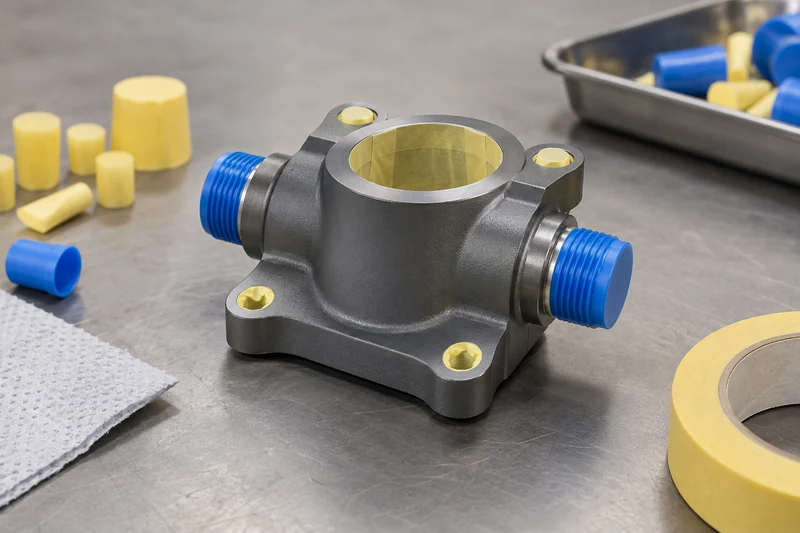
A general note to "mask critical areas" is too vague for a repeatable result. Mark each no-finish zone, and decide how its boundary is judged.
The masking method changes cost and edge quality, so it is agreed for your part before treatment.
No-finish zones
Mark threads, bores, electrical contacts, ground points, sealing lands and mating faces that must stay untreated.
Boundary and rework
Decide whether the masking boundary may show a transition and whether rework is permitted.
Hidden functions
Show the coated and uncoated faces, plus assembly context when a surface has a hidden electrical or sealing function.
Critical features a finish can change
Identify the dimensions and functions a finish could change before it is applied. Some features need their own sequence instead of the same finish on every face.

List what the finish can change
Mark thread fits, hole diameters, sliding surfaces, sharp edges, grooves and contact resistance that a finish could affect.
Check narrow features
If a coating or texture is required on a narrow feature, confirm access and coverage on representative samples.
Set the sequence
Some features need a different order, such as machining after treatment or protecting a bore during coating.
Review with the base-part drawing
Decide face by face against the base-part drawing, so each feature gets the treatment it can accept.
Dimensional effects of a finish
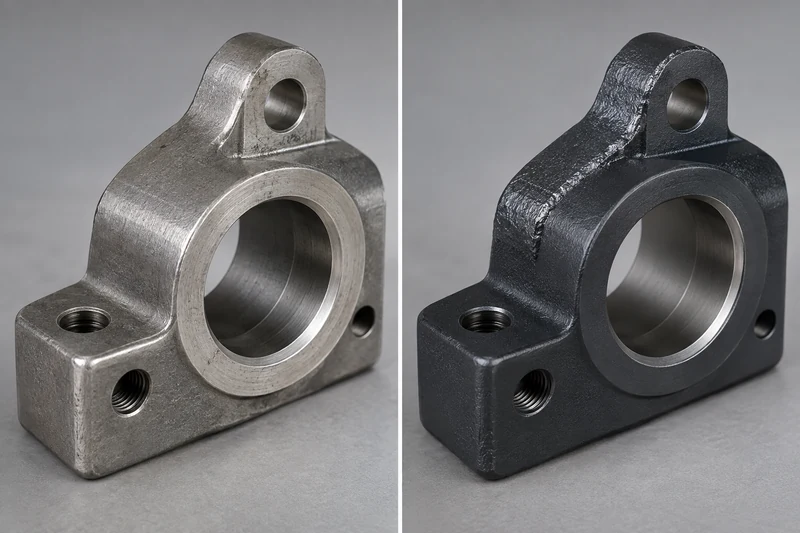
A deposited layer, a conversion process or mechanical removal can change the finished size or surface profile. No finish name alone predicts the final dimension.
Settle these four points once material and treatment are fixed, so the finished part is measured the way it was designed.
Choose the controlling state
Say whether drawing dimensions apply before or after treatment.
Locate the measurement
Define where layer thickness is measured and by which method.
Check both sides of the fit
A layer on either mating part changes the fit, so review both parts together.
Get a process allowance
Ask us for a process-specific allowance and test method for your material and treatment.
For fits that must hold tight tolerances after finishing, see precision machining.
Describe the outcome, not the treatment name
If the treatment is still open, send the function, appearance and final dimensions you need. The review proposes a route for your base material, and the next section shows how we treat, inspect and ship the part in our own factory.
Finishing control and responsibility
We prepare, treat, inspect and ship your part in our own factory, so one team owns the finish from bare part to packed shipment. Your quote lists each step for your part.
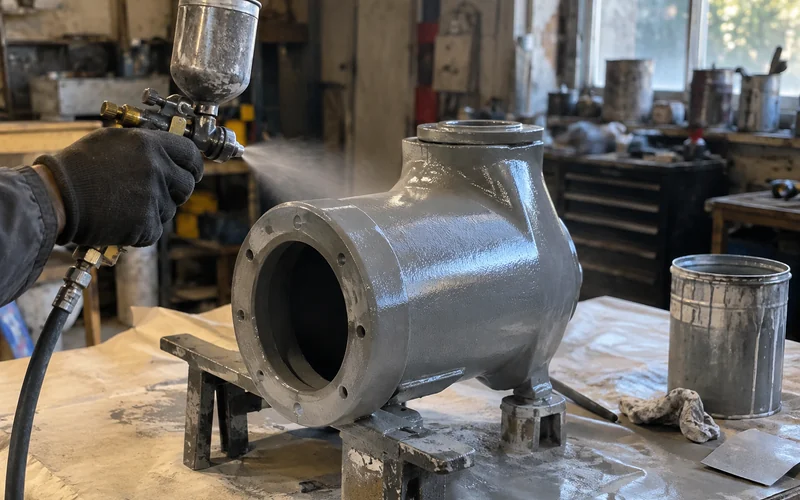
Preparation and treatment
Surface preparation and treatment run in-house, so your part stays with one team between steps.
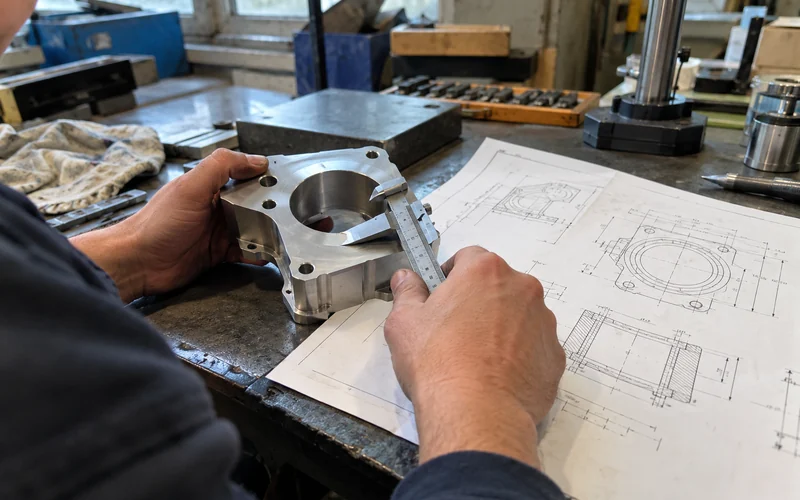
Final conformity
We own final conformity, rework and records for the finished part, so you deal with one point of acceptance.
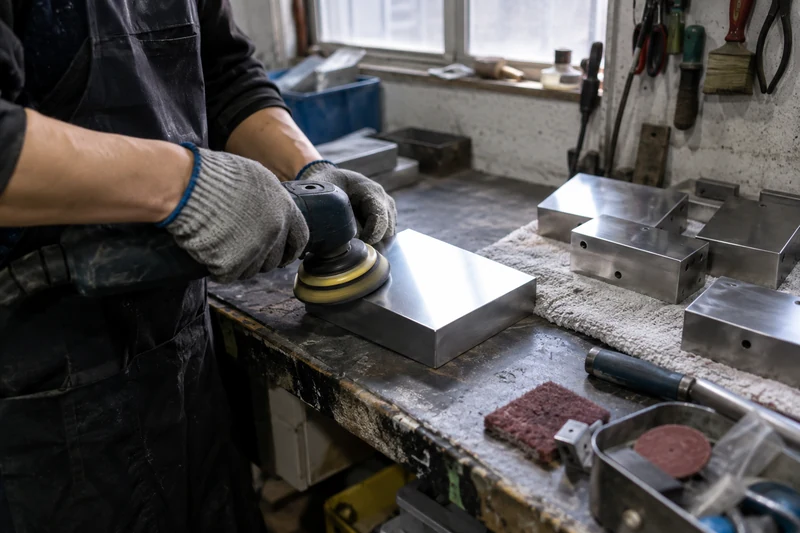
Handling and packing
On a visible surface, handling and packaging matter as much as the treatment. Agree how finished faces are protected.
Sample sign-off before production.
Finish inspection plan
Inspect the properties your specification names for this part. Method and frequency follow the specification and the environment the part will see.
Each record should carry the base material, part revision, treatment lot, inspection conditions and any rework. The inspection record is agreed for each order, so the checks match the properties that matter to you.

| Property | Check against | Agree in the RFQ |
|---|---|---|
| Appearance | Approved reference sample. | Zones and viewing conditions. |
| Masking boundary | Masking map on the drawing. | Allowed transition and rework. |
| Finished dimensions | Drawing, in the agreed state. | Measurement stage and method. |
| Coating thickness | Specification, where it applies. | Location and method. |
| Adhesion | The specified test. | Method and frequency. |
| Corrosion or other performance | The specified test. | Duration and acceptance limit. |
Check against Approved reference sample.
Agree in the RFQ Zones and viewing conditions.
Check against Masking map on the drawing.
Agree in the RFQ Allowed transition and rework.
Check against Drawing, in the agreed state.
Agree in the RFQ Measurement stage and method.
Check against Specification, where it applies.
Agree in the RFQ Location and method.
Check against The specified test.
Agree in the RFQ Method and frequency.
Check against The specified test.
Agree in the RFQ Duration and acceptance limit.
Finish quote inputs
A complete request lets the treatment route and its checks be proposed before pricing. Send what you have and mark what is still open.
Include in your request
- Part drawing and base material.
- Current surface condition.
- Finish specification or the function you need.
- Visible-area map and an approved sample if you have one.
- Masking map and critical final dimensions.
- Quantity and test requirements.
- Whether you supply the base part or it must be included.
What your quote should state
- The exact treatment route.
- Preparation, masking, inspection and packaging.
- The rules for defects and rework.
- Any substitution, described against your specification rather than by treatment name alone.
Quote response within 24 hours for complete drawings.
Surface finishing FAQ
Short answers to the questions that usually come up before a finishing quote.
Will the same finish look and perform the same on different materials?
Not necessarily. Base material and preparation influence color, adhesion and function, so approve representative samples and tests for each material where the result matters.
Should threads and close-fit holes be masked?
Review the final fit and the specified treatment. Mark no-finish zones clearly, or define a post-treatment operation if masking is not suitable.
How is coating thickness included in the final dimension?
State whether the drawing controls the untreated or the treated part, apply a process-specific allowance, and measure the finished feature by the agreed method.
Is a physical color sample necessary?
For appearance-critical work, a controlled physical sample is usually the clearest reference. Specify base material, gloss, texture and viewing conditions alongside it.
Does treatment sequence relative to heat treatment matter?
It can affect surface preparation, distortion, hardness and finish compatibility. Send the full process history so the sequence is reviewed before the finish is selected.
Can salt-spray or adhesion performance be promised in advance?
Only against a defined material, finish specification, test method, duration and acceptance limit. We apply the finish ourselves and confirm those limits for your part before we commit.
Who owns rework if the treatment is outsourced?
It is not outsourced. We finish your part in our own factory and own inspection, disposition, rework and replacement, so the finished part has one acceptance owner.
Can a mixed-material assembly be treated as one item?
Review every exposed material, adhesive, seal and contact first. Often the treatment must happen before assembly or with selective masking, verified on the actual design.
How should visible and hidden faces have different standards?
Mark the zones on the drawing and set separate appearance or coverage rules. Use a physical reference for visible areas and functional tests for hidden critical areas.
How is color consistency checked across repeat lots?
Each lot is compared with the approved master under controlled conditions, and material, treatment and inspection data are recorded. Agree the allowable variation before production.
Request a finishing quote
Send the base-part drawing and tell us what the finish must do. Parker reviews it and replies with questions or a quote.

Parker
Your Surface Finishing Contact, HONGYI
I'm Parker. Send me the base-part drawing, the material and what the finish must do. Add a cosmetic reference, the masking plan and the dimensions that apply after finishing.
Tell me the quantity, and include any formal standard or test requirement with its exact revision. If the treatment is still open, describe the outcome you need.
- Reply within 24 hours
- In-house production
- Drawings kept confidential