

China Vacuum Casting Service
Vacuum casting turns an approved master into resin copies through a silicone mold, for appearance, assembly or limited functional review. It is not metal casting, and a substitute resin does not automatically behave like your production plastic.
- Send the CAD and say what the copies must prove.
- State the quantity, appearance and material fidelity you need.
- Tell us whether an approved master already exists.
- In-house production
- ISO 9001
- 24h quote response
- 80+ countries
Plan your resin prototype copies
Jump to the master, mold, resin, finish or inspection question you need to settle first.
Vacuum Cast Parts
Copies defined by validation goal
When to Use
Copies before a production tool
Master Pattern
Approve the shape every copy repeats
Silicone Molds
Split, vents, copy count, mold terms
Material Options
Resin fidelity and its limits
Vacuum Casting
Fill, cure, demold, trim, approve
Color and Finish
Appearance reference and approval
Prototype Inspection
Checks that serve the objective
Quote Inputs
What to send for a firm quote
Vacuum Casting FAQ
Ten questions buyers ask first
Request a Quote
Send your CAD to Parker
Define the copy by what it must prove
A vacuum-cast copy is judged against its validation goal. Decide first whether it must look right, fit right or survive a limited functional test.
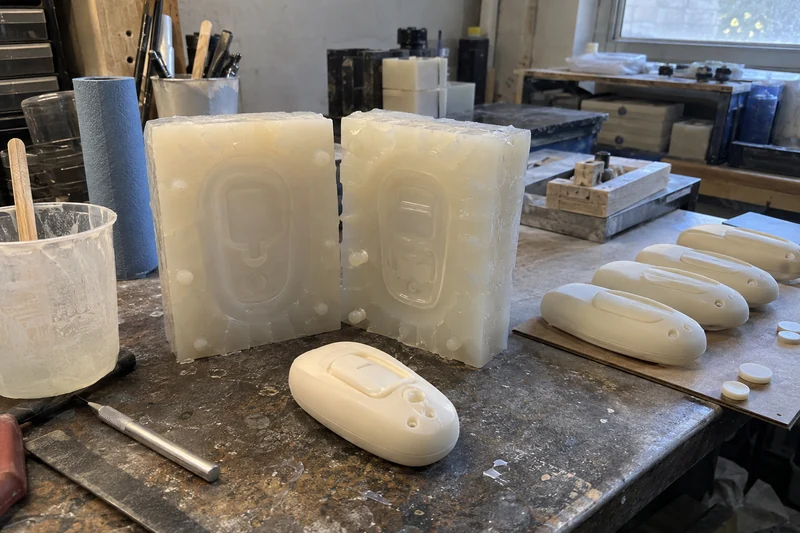
Display housings
Color and surface come first. Name the visible faces and the appearance reference.
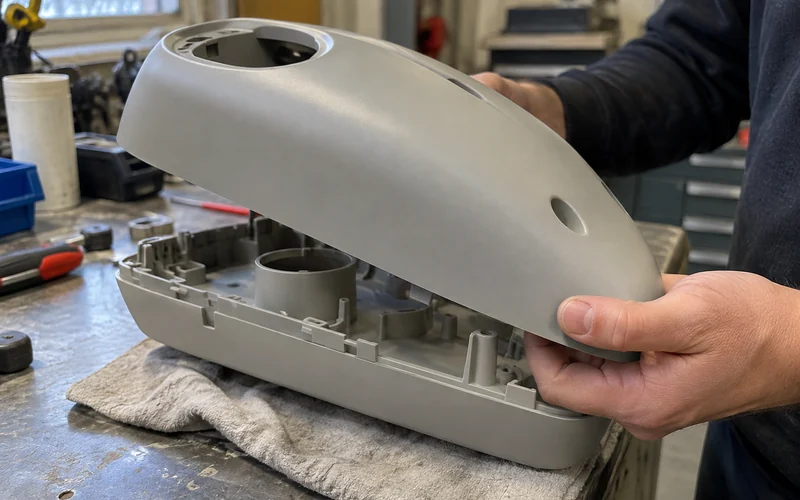
Assembly samples
Clips and mounting locations come first. Mark the interfaces that must fit mating parts.

Limited functional samples
A specific stiffness or heat condition may be beyond a general-purpose replica resin. State the test before the resin is chosen.
We make the master, the silicone mold and the resin copies in our own factory, so one team controls the whole copy chain. For metal parts, start with metal casting instead.
Next: when this route beats the alternatives.
When silicone mold copies make sense
Consider the route when you need several copies of an approved prototype before you commit to a production tool. Compare quantity, geometry, appearance and material fidelity with the other routes.

Several copies of one master
An approved master is copied several times for review, fit checks or presentation.
Before a production tool
Copies let you check appearance and assembly before you invest in a production mold.
Not a production asset
Silicone molds wear and copies vary, so the mold is not a permanent production tool.
Compare the route with machining, 3D printing and injection molding. To choose among all prototype routes, start with rapid prototyping; this page assumes a master-and-silicone-mold copy chain is already under review.
Next: the master that every copy repeats.
The master sets every copy
The master determines the replicated shape and much of the visible surface. A flaw in the master is copied into every part, so approve it before a silicone mold is made.
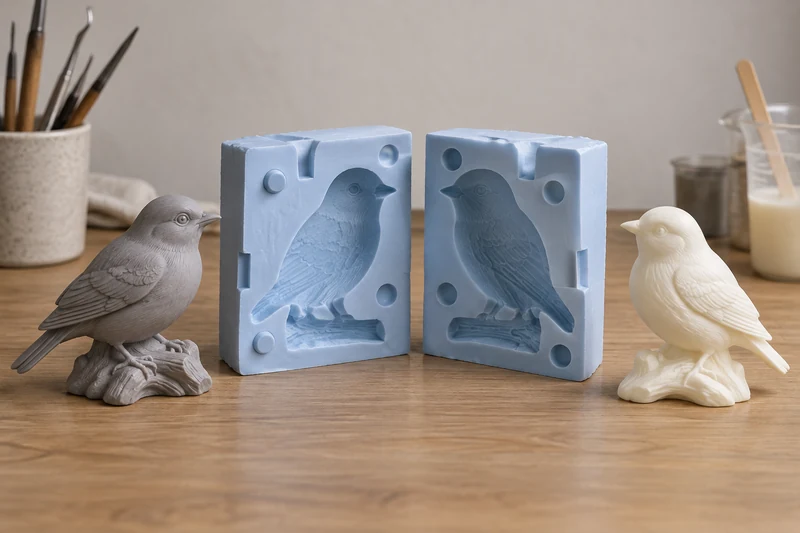

Approve before molding
- Drawing revision.
- Dimensions.
- Surface finish.
- For a supplied or printed master: surface treatment, stability and any distortion.
Agree who holds it
- Whether we make the master or you supply it.
- Who owns it.
- Who retains it after molding.
- Who covers damage, repair and replacement.
We make the master in our own factory, or accept and check one you supply.
What the silicone mold decides
The mold's split, gates and vents decide seam location, air release and part appearance. Review the visible faces and the features that need trimming.
Clarify the tooling fee, ownership, storage and replacement once the mold degrades. We make and hold the silicone mold.
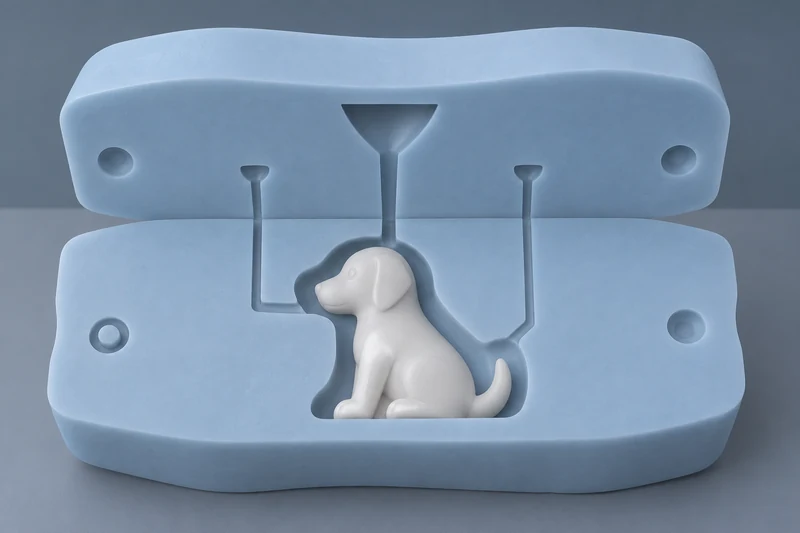

| Mold feature | What it affects | What to mark or ask |
|---|---|---|
| Mold split | A seam on every copy | Faces where a seam is not acceptable |
| Gates and vents | Air release and trim marks | Where a gate mark can sit |
| Trimmed features | Fit after trimming | Features where trimming could affect fit |
| Copy count | Resin, geometry, cure and handling | A count proposed for your part |
| Mold replacement | Wear and quality drift | Replacement terms before the mold is made |
What it affects A seam on every copy
What to mark or ask Faces where a seam is not acceptable
What it affects Air release and trim marks
What to mark or ask Where a gate mark can sit
What it affects Fit after trimming
What to mark or ask Features where trimming could affect fit
What it affects Resin, geometry, cure and handling
What to mark or ask A count proposed for your part
What it affects Wear and quality drift
What to mark or ask Replacement terms before the mold is made
Replica resin and its limits
Replica resin can approximate color, flexibility or appearance, but it is not equivalent to a specified production thermoplastic without validated evidence.
State which property matters to the prototype decision and which differences you can accept.
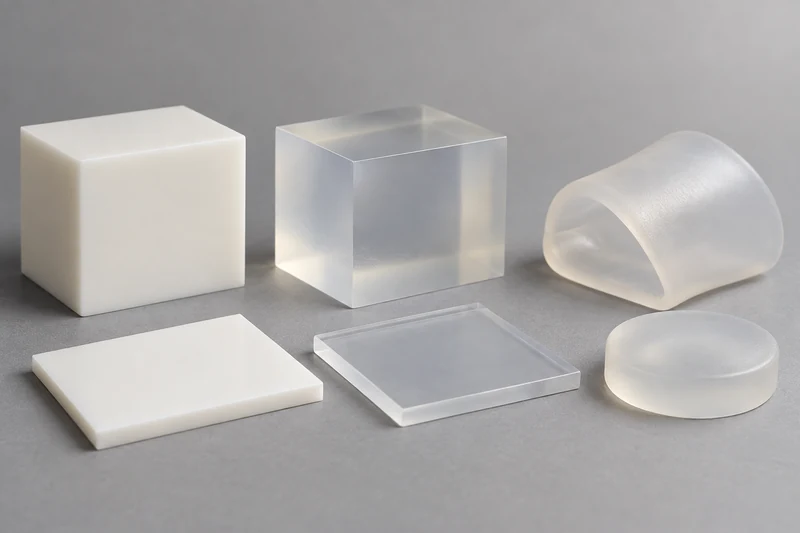
Name the property
Color, flexibility or appearance: say which one the prototype decision depends on.
Ask for resin data
Request the proposed resin's data and the actual process condition before copies are made.
Control lot changes
If lots will be compared, fix the material source and approval rules. A resin change may need a new reference sample and test.
A copy that looks right may not behave right
Resin copies support appearance and fit checks when dimensions are representative; load, heat or snap-life conclusions need the actual resin and process validated. Tell us what the copies must prove, and the next sections set casting, finish and inspection around that goal.
From resin fill to approved copy
The process route should define resin preparation, mold filling, cure, demolding, trimming and final finish, with agreed acceptance rules for bubbles, shrink marks and seam flash.
Identify the number of samples in each trial and who approves them. We cast every copy in-house.

Resin preparation
Confirm the resin grade and batch used for your copies.
Mold filling
Bubbles can form during filling. Agree where a bubble is acceptable and where it is not.
Cure and demold
Shrink marks can appear as the resin cures. Mark the visible and functional faces.
Trim and finish
Seam flash is trimmed and the finish applied. Agree the look of trimmed areas.
Next: the color, texture and finish you approve.
Color, texture and finish approval
Specify the visible surfaces, texture, color master and acceptable seam or gate areas, and say whether painting or another post-cast finish is included.
Next: the checks that accept each copy batch.
Inspect what the prototype must prove
Check the features that serve the prototype objective: assembly interfaces, visible surfaces, selected dimensions and any limited functional test.
A part that looks correct may still differ in stiffness or temperature behavior from the future production part. The inspection and material records for your copies are agreed with the quote.

| Check | What to confirm | Record to agree |
|---|---|---|
| Assembly interfaces | Fit with mating parts | Fit check result |
| Visible surfaces | Appearance against the reference | Approval against the sample |
| Selected dimensions | The dimensions your test depends on | Dimensional record |
| Limited functional test | The condition under test | Test result and its limits |
| Traceability | Master revision, resin, mold and copy batch | Batch record |
What to confirm Fit with mating parts
Record to agree Fit check result
What to confirm Appearance against the reference
Record to agree Approval against the sample
What to confirm The dimensions your test depends on
Record to agree Dimensional record
What to confirm The condition under test
Record to agree Test result and its limits
What to confirm Master revision, resin, mold and copy batch
Record to agree Batch record
What a resin copy RFQ needs
State whether the copies only support appearance and assembly review or must meet a functional condition. The quote should name any material or process difference from the intended production part.
Include in the first request
- CAD and drawing revision.
- Prototype objective and quantity.
- Master status.
- Desired color and material behavior.
- Visible surfaces and critical interfaces.
- Planned tests.
Ask the quote to separate
- Master preparation.
- Silicone mold.
- First copies.
- Later copies.
- Finish.
- Inspection.
Parker reviews the CAD before any price is set.
Vacuum casting FAQ
Short answers to the questions that usually come up before a resin copy quote.
Is a polyurethane copy the same as a production injection-molded part?
No automatic equivalence exists. Compare the exact material and process for the properties under test, and record any limit on the conclusions drawn from the copy.
Can I supply the master pattern?
Yes, or we make it in our own factory. Either way, the master needs a controlled revision and surface and dimensional approval before molding; for a supplied master, agree who covers damage, repair and replacement.
Can the silicone mold copy count be guaranteed without conditions?
No. It depends on resin, geometry, cure and wear. Ask for a project-specific expected count and terms for mold replacement or quality drift.
How should color and softness be specified?
Provide a physical reference and the functional property requirement where relevant. Name the viewing and test conditions; a visual match does not prove mechanical equivalence.
How do bubbles or shrink marks affect appearance approval?
Mark visible and functional zones, define an acceptable defect size or reference samples, and agree the inspection conditions before copies are made.
What assembly tests can resin copies support?
Fit and access checks, when dimensions are representative. Load, heat or snap-life conclusions need validation of the actual resin and process.
What should be checked when the master is 3D printed?
Dimensions, surface steps, stability, sealing and any post-processing. Approve the finished master rather than the printed CAD file alone; 3D printing covers the printed part itself.
When should the project move to a production injection mold?
Compare recurring quantity, material fidelity, part stability and tool investment. A validated prototype does not remove the need for mold and production-part approval; see plastic injection molding.
How should a metal vacuum-casting inquiry be handled?
Clarify the intended material and process first. This page covers resin copies from a silicone mold; a metal part belongs in a separately reviewed metal casting route.
Will a substitute resin behave identically across repeat batches?
Do not assume it. Control the grade, supplier, processing and reference sample, and repeat the relevant tests if the material or mold changes.
Request a vacuum casting quote
Send the CAD and tell us what the copies must prove. Parker reviews it and replies with questions or a proposal.

Parker
Your Vacuum Casting Contact, HONGYI
I'm Parker. Send me the CAD, the sample objective, the number of copies, the master status, the color and material fidelity, the critical interfaces and your planned tests.
Ask me for a proposal covering the master, the silicone mold and the casting, all made in-house.
- Reply within 24 hours
- In-house production
- Drawings kept confidential