
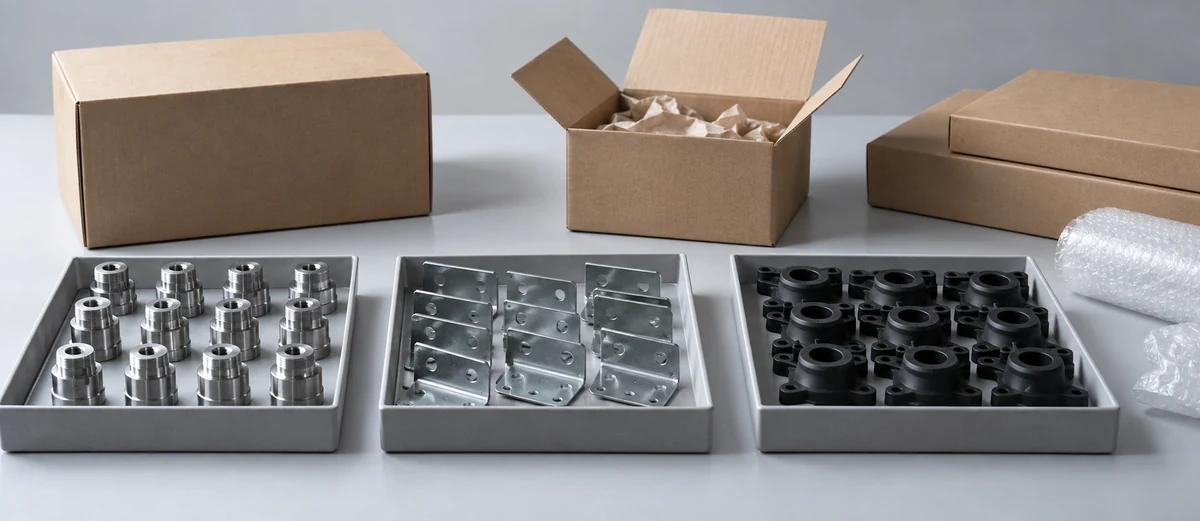
China On Demand Manufacturing Service
On demand manufacturing is a supply arrangement for specified parts as your demand changes. It works when each part has an approved revision, a realistic quantity, a process route, quality records and agreed repeat terms.
- Send the part list, drawings and current quantities.
- Describe the likely repeat pattern and any inspection or packaging needs.
- Mark which parts are released for repeat supply and which are still being validated.
- In-house production
- ISO 9001
- 24h quote response
- 80+ countries
How your order model works
Jump to the order, revision, quality or delivery question you need to settle first.
Order Model
Batch, repeat, releases or set
Project Fit
Released parts versus changing designs
Process Selection
Route each part by drawing and volume
Low Volume
One-time costs and first articles
Repeat Orders
What stays fixed between orders
Version Control
Revisions, open work and stock
Process Coordination
Ownership across a multi-part order
Quality Records
First article and repeat-lot records
Delivery Planning
Releases, packing and kit rules
Quote Inputs
What to send for an order quote
On Demand FAQ
Ten questions buyers ask first
Request a Quote
Send your part list to Parker
Order models for custom parts
Decide what kind of purchase this is before you compare prices. Each model raises different questions about setup cost, material, tooling, inspection and changes between releases.
| Model | Control to agree |
|---|---|
| One-time batch | Approved drawing and quantity for this order. |
| Repeat order | Revision, material, tooling and inspection baseline. |
| Scheduled releases | Forecast, release notice, packaging and stock ownership. |
| Multi-part set | Part-level lead times and complete-set delivery rule. |
Control to agree Approved drawing and quantity for this order.
Control to agree Revision, material, tooling and inspection baseline.
Control to agree Forecast, release notice, packaging and stock ownership.
Control to agree Part-level lead times and complete-set delivery rule.
Minimum order and stock terms depend on the part and its process, so they are proposed per project. This page covers ordering once the part is defined. To test a design before release, see rapid prototyping.
Quote response within 24 hours for complete drawings.
Project fit for on demand supply
The model works best when a part has a controlled drawing and settled decisions on material and acceptance. If the design is still moving, the first order is a validation batch.
Name the need behind the order: urgent replenishment, an uncertain forecast, limited production or a set of related components. Each component can have its own economical batch size, so ask for a part-by-part proposal rather than one delivery rhythm for everything.
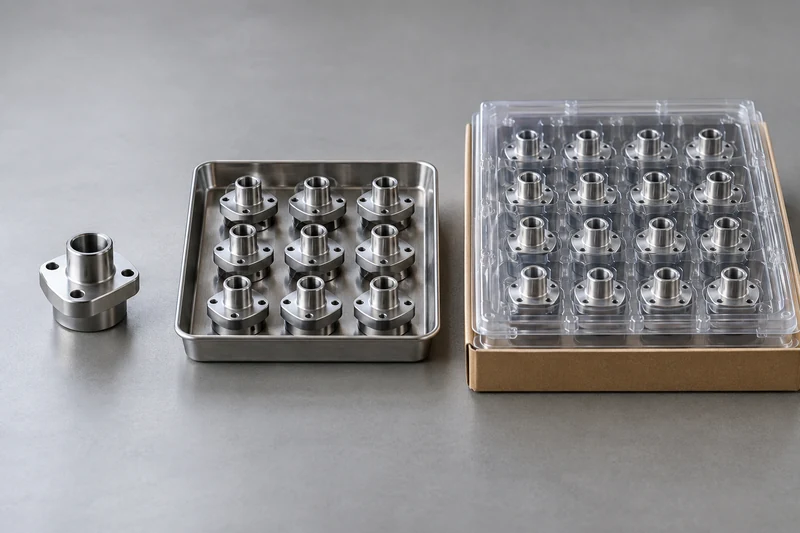
Ready for repeat supply
- A controlled drawing revision.
- Material and acceptance criteria decided.
- The approved configuration recorded before repeat supply starts.
Still being validated
- Treat the first order as a validation batch.
- Approve its sample against your drawing.
- Record the approved configuration, then plan repeat orders.
Process selection by part
Choose each process from the drawing, material, quantity and the consistency you need. Our three core business lines are CNC machining, metal stamping and plastic injection molding.
Suitability still depends on your part and on tool or setup economics. Other processes in your part list also run in our own factory, and your quote confirms the process part by part.
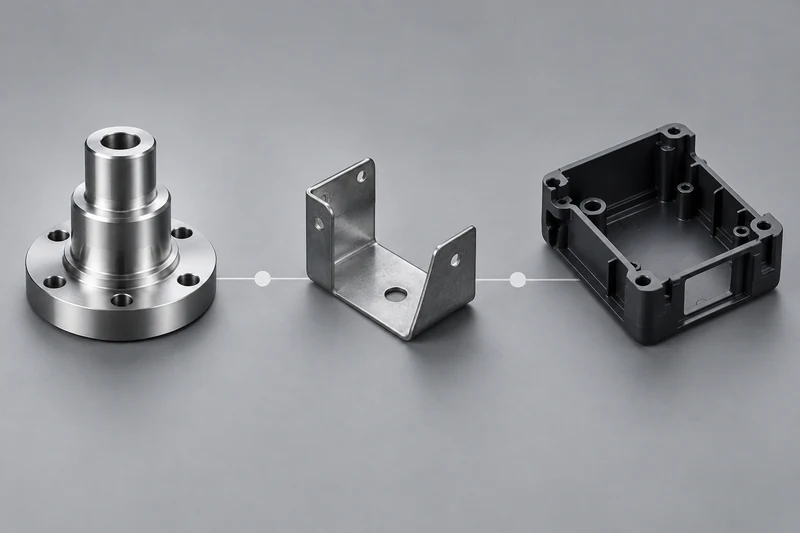
CNC machining
Works from the drawing without a part-specific tool, so setup is the main one-time cost. See CNC machining.
Metal stamping
A dedicated die raises the one-time cost and lowers the repeat unit cost once the design is stable. See metal stamping.
Plastic injection molding
A mold is a one-time investment weighed against repeat volume of a released design. See plastic injection molding.
Mixed processes in one part list? Send it and ask for a route per part.
Low volume without losing control
At low volume, setup, tooling and minimum raw-material purchase can dominate the unit cost. A clear quote and a first-article approval matter more than an aggressive price.
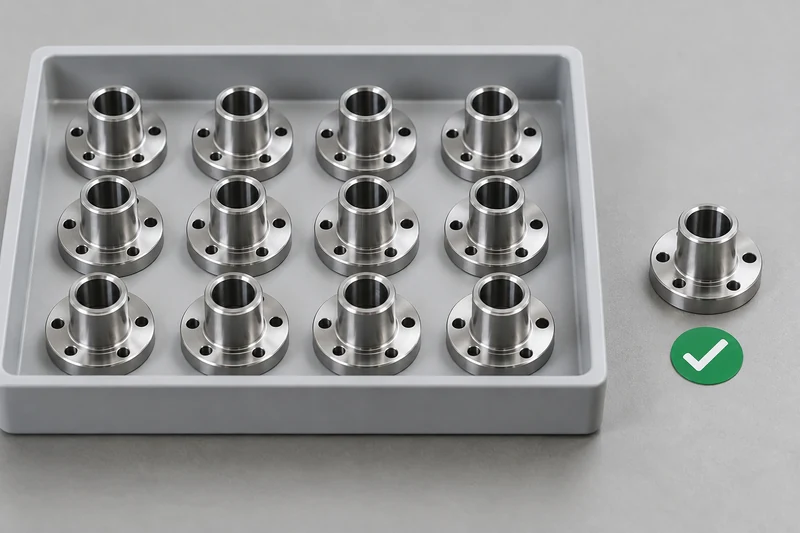
Name the purpose
Say whether the order is a pilot lot, a service spare, a replacement component or limited production.
Separate one-time costs
Ask the quote to split one-time costs from the repeatable unit price and to show economical quantity breaks.
Approve the first article
Define which characteristics are checked on the first article before the rest of the small lot is released.
Keep the revision controlled
A low quantity does not remove the need for a controlled drawing revision on every part.
Not sure which order model fits?
Send the part list with current quantities and the repeat pattern you expect. The review proposes a model part by part, and the next step is agreeing what stays fixed from one order to the next.
Repeat orders on an approved baseline
A repeat order should point to the baseline that made the approved parts. Details you do not control in writing may not stay the same from order to order.
Repeat terms for your parts, including any stock arrangement, are proposed per project in your quote.
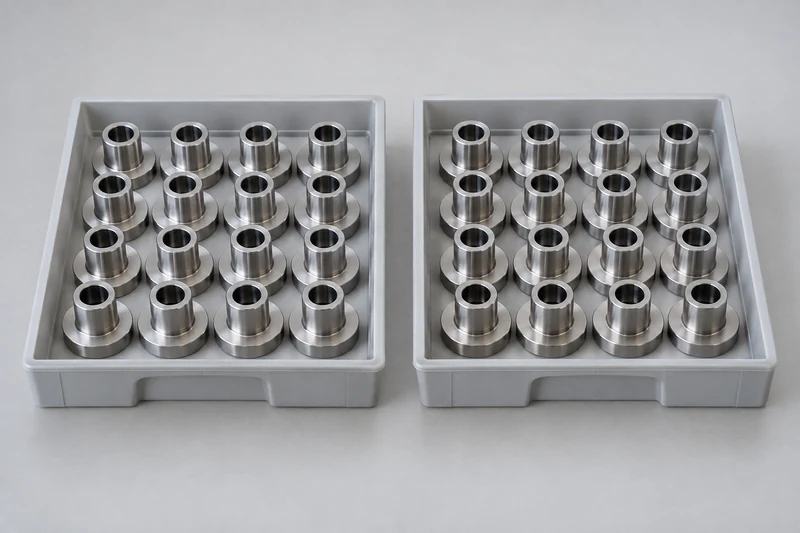
Approved baseline
Reference the approved drawing, material, surface finish, tooling status, inspection plan and prior approved sample on the order.
Material source
Repeat orders run in-house. Say whether the same raw-material source is also required, because a material source can change unless the order controls it.
Route as volume grows
When volume grows or the design settles, compare a route with higher setup cost and lower unit cost. A process change may need requalification.
Version control across orders
Keep part number and drawing revision on every document from quote to package label. When a drawing changes, decide what happens to open work and stock before the new revision runs.
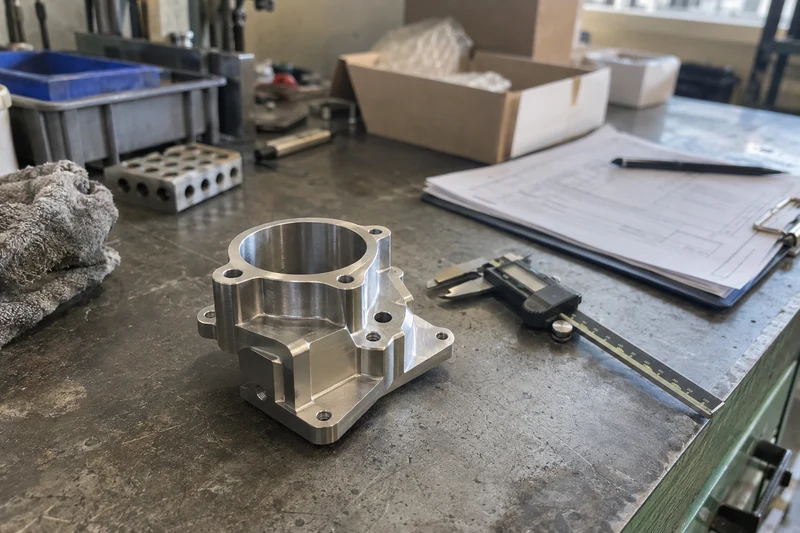
Label every record
Carry part number and drawing revision on the quotation, order, first article, lot record and package label.
Set the effective point
When a drawing changes, name the effective order and identify open work and remaining stock.
Decide on old-revision parts
Agree in writing whether old-revision parts can be used, reworked or must be held.
Reassess the approved sample
An approved sample covers the revision and process that produced it. A change in geometry, material or process may need new sampling.
The revision, stock and label controls for your parts are agreed in the order.
Process coordination for multi-part orders
Every custom part in a multi-part order is made in our own factory, so one team owns each process and the complete delivery. Settle the set rules before the first release, not when a part runs short.
Your quote lists the process for each part number and flags any standard catalog item, such as a fastener, that is bought in rather than made.
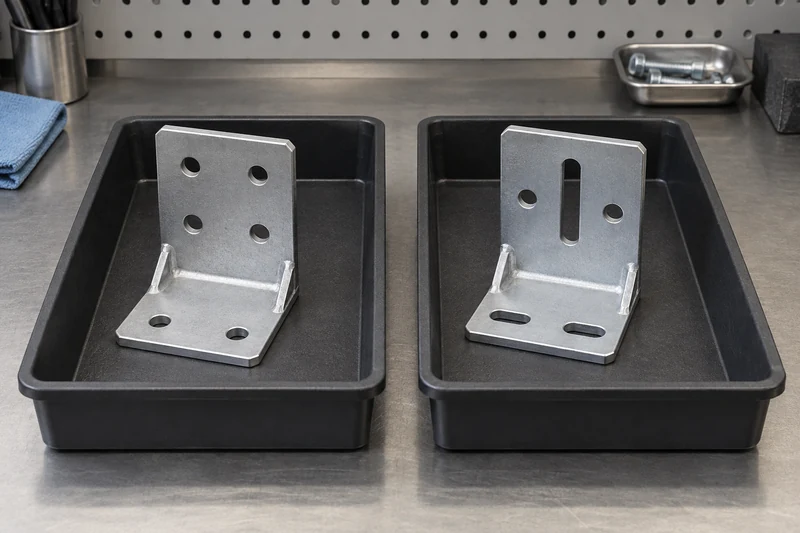
| Question | Agree in the quote |
|---|---|
| Each part | Process per part number; standard items flagged. |
| Substitutions | Who approves them. |
| Inspection records | One consolidated set, in the agreed format. |
| Unavailable component | Replacement reviewed against the assembly function. |
| Quantities | Per part, with cost and lead-time drivers. |
| Complete set | The packing rule for the full set. |
Agree in the quote Process per part number; standard items flagged.
Agree in the quote Who approves them.
Agree in the quote One consolidated set, in the agreed format.
Agree in the quote Replacement reviewed against the assembly function.
Agree in the quote Per part, with cost and lead-time drivers.
Agree in the quote The packing rule for the full set.
When the parts are delivered as one assembled unit, see mechanical assembly.
Quality records for every lot
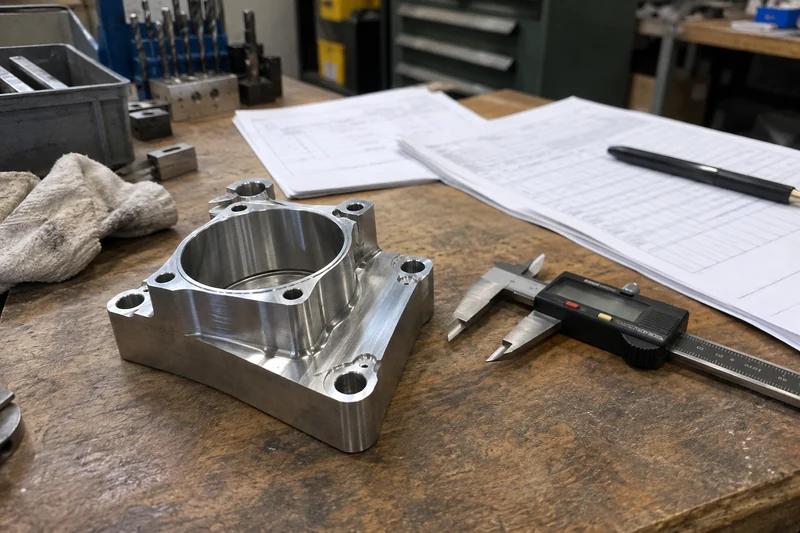
Agree what is recorded on the first article and what changes on repeat lots. Every record links to a part number and a delivered lot.
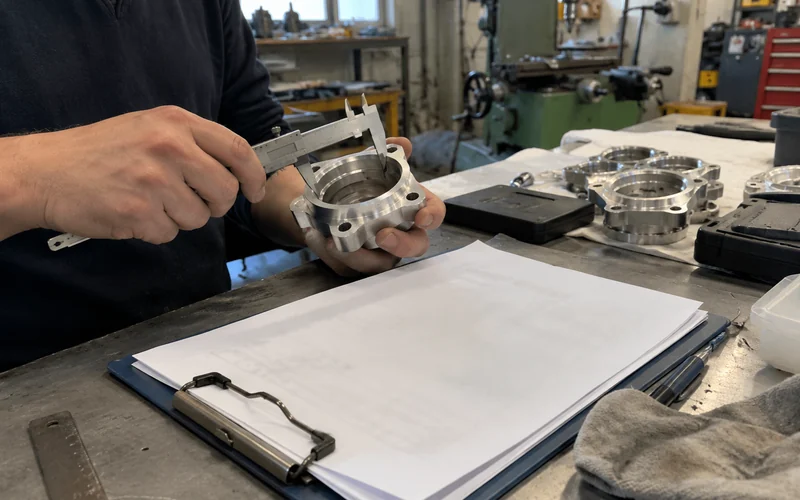
First article record
Confirms the process against a named drawing revision before repeat lots are released.
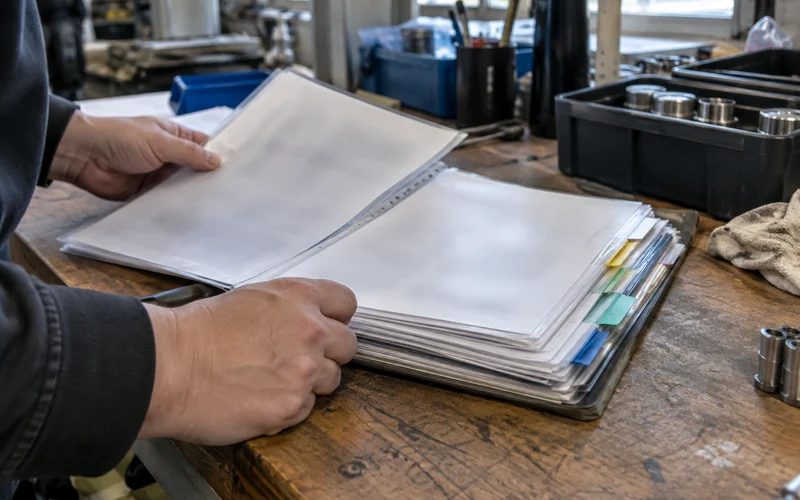
Repeat-lot record
Identifies material, quantity, inspection sample and any deviation for each delivered lot.
Required documents
For regulated or safety-relevant parts, list the exact documents you need in the RFQ.
Record formats and release controls are agreed per part number when you order.
Delivery planning and packaging
Say how you want parts to arrive before the first release. An uncertain forecast is a scenario to plan around, not a firm capacity reservation.
Stocking, release and shipment terms for your parts are agreed per project in the quote.
Choose the pattern
All parts together, partial shipments, scheduled releases or replenishment against a forecast.
Define the release
Release notice, pack quantity, label fields and the point where title or risk transfers.
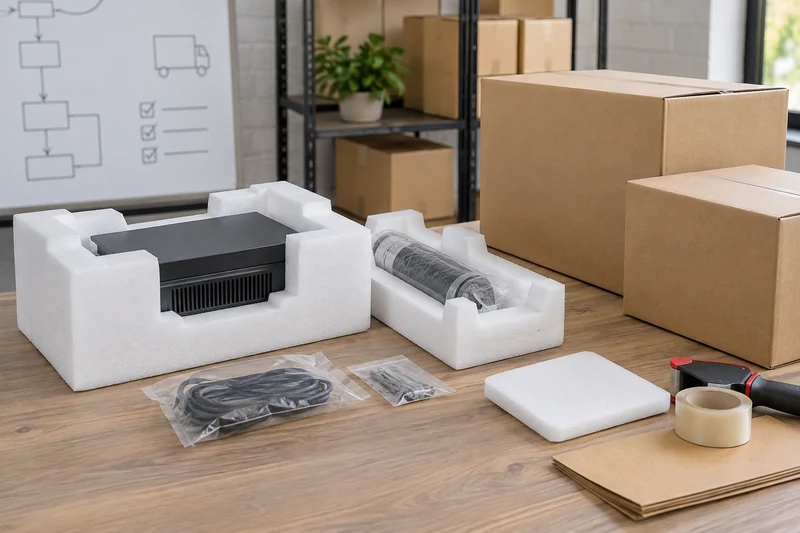
Protect and label
Packaging that protects the delivered finish and supports your receiving process.
Set kit rules
For part kits, agree the rule for shortage, substitute and overage.
Order quote inputs
A complete request lets each part be routed and priced with its one-time and repeat costs shown. Separate firm releases from forecasts.
Include in your request
- Part list, drawings and revisions.
- Material and finish specifications.
- Current order quantity and the expected repeat pattern.
- Firm releases, separated from forecasts.
- Inspection needs and packaging or kit rules.
- Existing tooling, approved samples and any owner-supplied material.
What your quote should state
- One-time charges.
- Unit prices by quantity.
- Part-level lead times.
- Revision-change rules.
- The final acceptance criteria.
- A project-specific proposal where a minimum order or stock arrangement is needed.
Quote response within 24 hours for complete drawings.
On demand manufacturing FAQ
Short answers to the questions that usually come up before a repeat-supply quote.
What should be retained after a small trial order for a repeat order?
The approved drawing revision, material and finish, the sample or first-article record, the inspection plan, tooling status and any allowed deviation. Link the new order to those records.
What happens to work in progress when a drawing changes?
Agree an effective date or order, then identify old-revision stock and work in progress. Hold, rework or accept each group by written disposition before the new revision is released.
Can we discuss rolling supply without a stable forecast?
Yes, but separate firm orders from scenarios. Material reservation, setup, release notice and stock ownership are reviewed part by part, with no fixed service level assumed.
Can different processes be included in one RFQ package?
Yes. Send a part list with drawings and quantities for each item; we make the parts in our own factory and propose a process for each one. Confirm the complete-set delivery rule if the parts must arrive together.
What if one part's minimum quantity affects a complete set?
Ask for part-level prices and quantity breaks. Then decide whether extra pieces are delivered, stored under an agreed arrangement or handled by a different route.
Can sample approval carry over after a revision change?
Only after assessing what changed. A material, fit or process change may need new samples or tests; record the decision against the new revision.
Will a repeat order automatically use the same raw-material source?
Not unless source control is specified. Production stays in-house, but if the material source matters, list the approved grade, supplier or equivalence rule and the change notification you need.
Who approves an alternative when a component is unavailable?
Name the approval authority in the order. Compare the substitute against function, drawing and validation, and record the change before it is used.
How should packaging labels support warehouse receiving?
Include the agreed part number, revision, lot, quantity and order reference. Add material or inspection status when your receiving process needs it.
How is this different from Rapid Prototyping?
Rapid prototyping centers on what a sample must prove before release. On demand manufacturing centers on controlled low-volume or repeat supply of specified parts once the configuration and order model are defined.
Request an on demand quote
Send the part list and tell us how demand is likely to run. Parker reviews it and replies with questions or a quote.

Parker
Your On Demand Manufacturing Contact, HONGYI
I'm Parker. Send me your part list with drawings and revisions, the current quantity and the repeat pattern you expect. Add the material, finish and inspection requirements.
Tell me how you want parts packed and released, and mark which items are approved for repeat supply and which still need a validation lot.
- Reply within 24 hours
- In-house production
- Drawings kept confidential