China Injection Molding Service
Tell us what you need supplied: a new mold, molded parts from an existing tool, or a part that adds a second material or an insert. The route decides which questions your RFQ has to answer.
- Share the part CAD and the current tooling status.
- Name the resin requirement, end use and target quantity.
- Say whether you need tooling, approved samples or production parts.
- In-house production
- ISO 9001
- 24h quote response
- 80+ countries
Sort your molding project before the quote
Jump to the stage, tooling or approval question you need to settle first.
Molding Capabilities
Match your project stage to a route
Molded Parts
Describe the part by its function
Material Requirements
Resin inputs that shape the route
Tooling Status
New tool, tool in progress or transfer
Molding Routes
Single material, overmolding or insert molding
Sample Approval
Criteria that make a sample count
Molding Production
Built, molded and checked in-house
Quality Control
What is checked, and against what
Quote Inputs
What to send for a useful quote
Molding FAQ
Ten questions buyers ask first
Request a Quote
Send your project brief to Parker
Molding capabilities by project stage
The first decision is what you need us to deliver. Find your project stage below; its first question is the one your RFQ has to answer.
| Project stage | Main deliverable | First question |
|---|---|---|
| Part design, no mold | Tooling plan and a path to molded samples | Who owns the tool and approves changes? |
| Existing mold | Molded parts, with tool transfer or qualification defined | Is the tool available and suited to the target press and resin? |
| Approved sample | Repeatable production parts | Which sample and inspection criteria control release? |
| Two materials or an insert | One integrated part with interface requirements | Which bond or retention feature must be verified? |
Main deliverable Tooling plan and a path to molded samples
First question Who owns the tool and approves changes?
Main deliverable Molded parts, with tool transfer or qualification defined
First question Is the tool available and suited to the target press and resin?
Main deliverable Repeatable production parts
First question Which sample and inspection criteria control release?
Main deliverable One integrated part with interface requirements
First question Which bond or retention feature must be verified?
Buying a defined plastic part? Go straight to plastic injection molding for the part-level checklist. Stay here while the deliverable or the tooling responsibility is still open.
Quote response within 24 hours for complete drawings.
Molded parts, described by function
Describe the part by what it must do: hold a fit, present a visible surface, seal an interface or retain a metal insert. Change one of those and the mold and inspection plan change too.
Identify the resin, wall and rib features, assembly interfaces, visible faces and any post-mold operation. If you already have approved samples, state the drawing revision and what made them acceptable.
Fit-critical parts
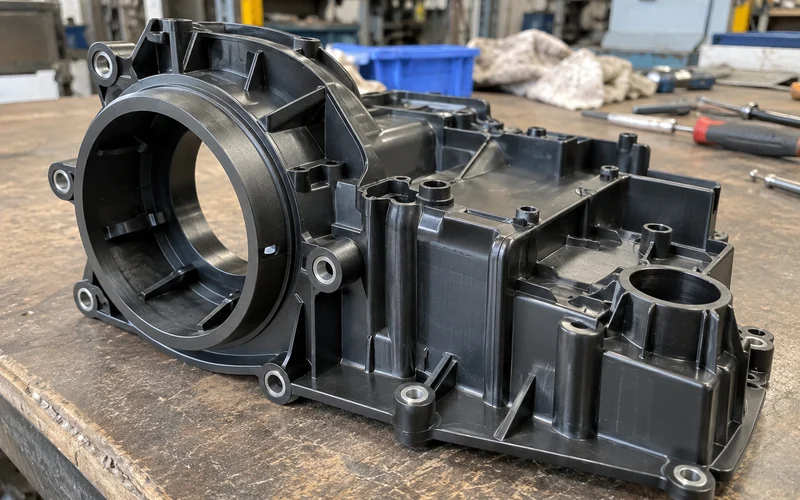
The part has to hold a fit or line up with a mating part. Mark the interfaces and the dimensions that control assembly.
Cosmetic parts
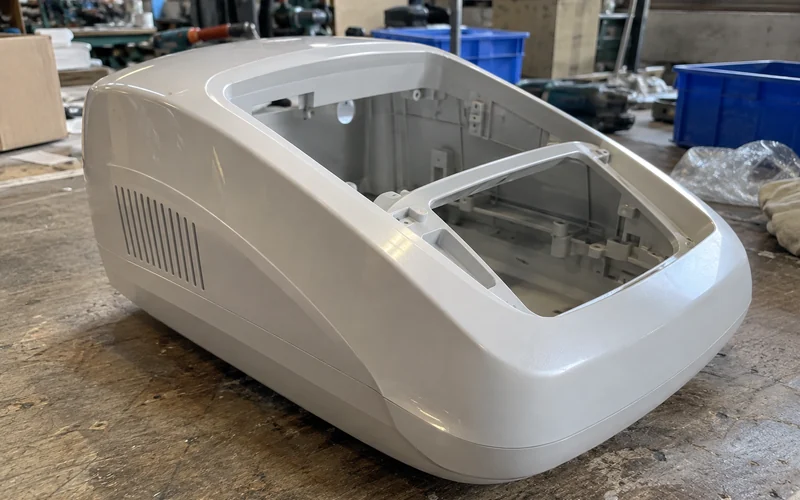
A housing or cover judged by how it looks. Mark the visible faces, the color standard and the texture you expect.
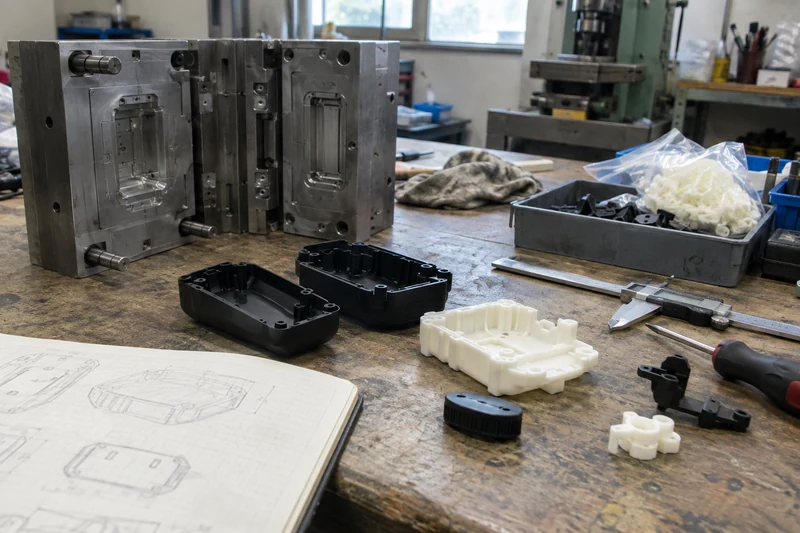
Sealing or insert parts
The part seals an interface or holds a metal insert. Show the sealing path or the insert, and how it must be retained.
Next, define the resin behind these functions.
Choose the resin from the part's needs
Choose a resin from the temperature, chemical, structural, electrical and appearance needs of the part. A trade name alone can miss the grade, filler, color or documents you need.
Once the resin is set, the next question is the tool: does it exist yet?
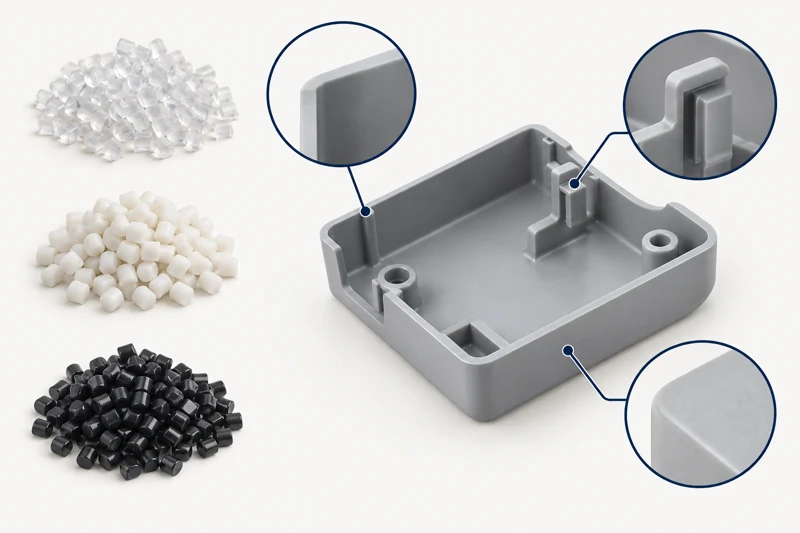
Functional exposure
State the temperature, chemical contact, load or electrical condition the part sees in use. These narrow the resin choice before any trade name does.
Appearance
Give the color standard, the texture and the surfaces that are visible in use, so the sample can be judged against them.
Compliance
Name the standard the finished part must meet and the document you need to receive with it.
Substitution
Say whether an alternate grade may be proposed for approval. A resin change can shift shrinkage, fit and tool behavior, so it needs engineering review and a new sample.
Where your tooling stands today
A new part and a transfer project need very different tooling answers. Pick the tab that matches your tool and send what it lists before a route is assessed.
For a new tool, settle ownership, cavity strategy, first-shot review and who is responsible for changes. For an existing tool, send its drawings, maintenance history and known molding window if you have them.
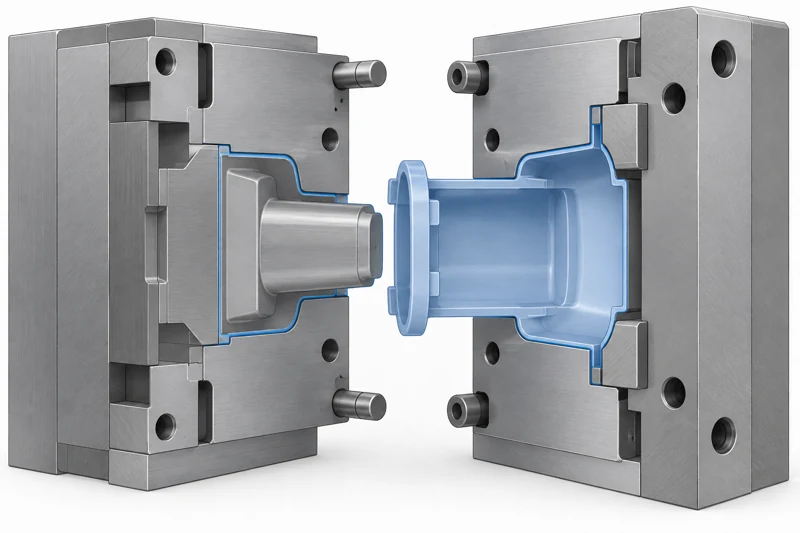
Mold delivery, ownership transfer and maintenance terms are written into your quote, not assumed. If the mold itself is what you are buying, see injection mold tooling.
Three molding routes, three different problems
Single-material molding, overmolding and insert molding solve different design problems. Name the materials and interfaces instead of treating the routes as interchangeable labels.
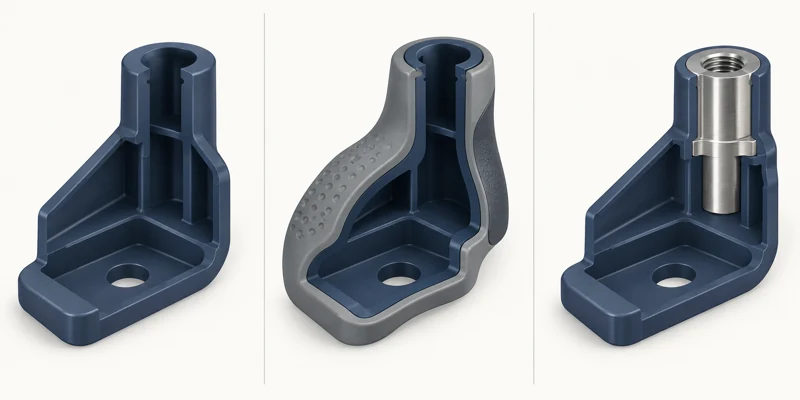
Single material
One resin forms the whole part. Define the resin, part geometry, tool status and finished-part requirements.
Overmolding
A second material molded onto a substrate. Define both materials, the bond or mechanical lock and the surfaces that stay exposed, then see overmolding.
Insert molding
Plastic formed around a component placed in the mold. Define the insert source, location, retention and inspection, then see insert molding.
A threaded insert pressed or heat-staked in after molding is a different operation from molding around an insert, and should be quoted as a separate step.
Not sure which route fits your part?
Send the part CAD and tell us what exists today: a design, a tool in progress or a mold to transfer. Parker reviews it and names the route and the questions your quote must settle, starting with how samples are approved.
Sample criteria, set before the first shot
A first-shot sample is only useful when the approval criteria are written down before anyone changes the tool or the resin.
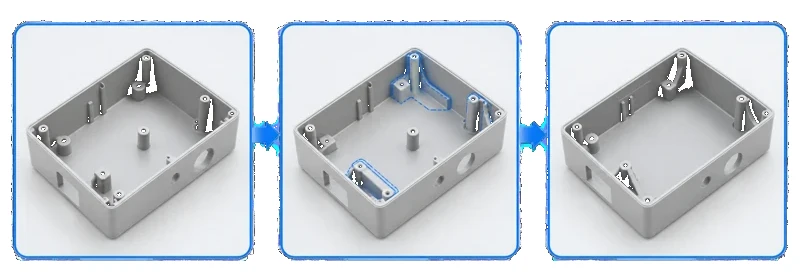
Set the criteria
Decide which dimensions, appearance surfaces and assembly functions must pass, and which deviations call for a tool correction.
Tag every sample
Keep the sample ID, drawing revision, resin grade and change decision together, so each result traces back to one condition.
Re-approve after changes
If the tool is modified after approval, state whether the new sample replaces the old reference and which checks repeat.
Sign off each check
A visual sign-off is not dimensional or functional acceptance unless those checks are named in the approval.
Sample sign-off before production.
Molding production in one factory
We build the mold, mold the parts and check them in our own factory, so one team owns the result from tool to shipment. Your quote names each step and the ownership terms for the tool.
Your mold runs in the same factory that maintains it, so tool corrections and part checks stay with one team.
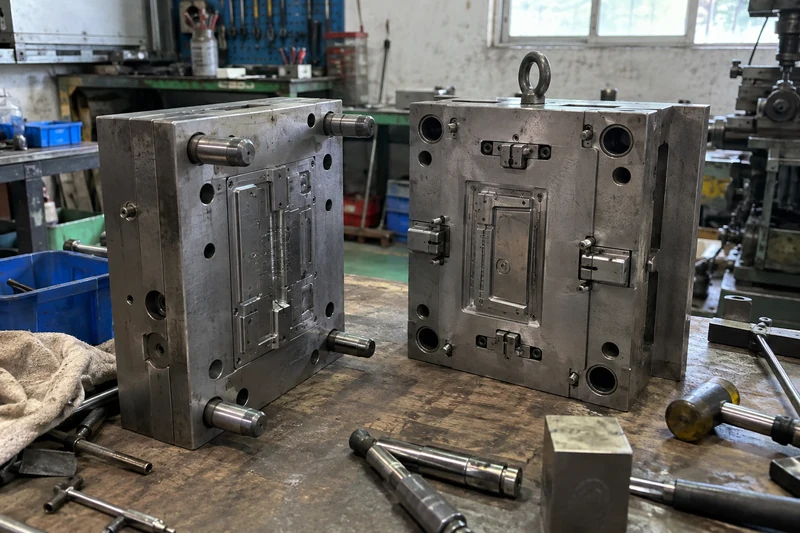
Mold and press
Your part is molded on our own presses, and we are responsible for the tool while it runs.
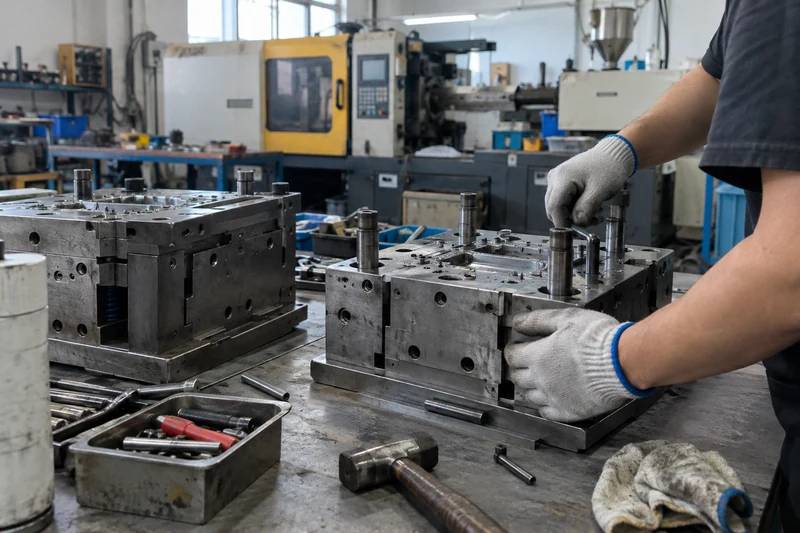
In-process part
Parts are checked during the run by the same team that sets the process. Ask how those checks are set for your part.
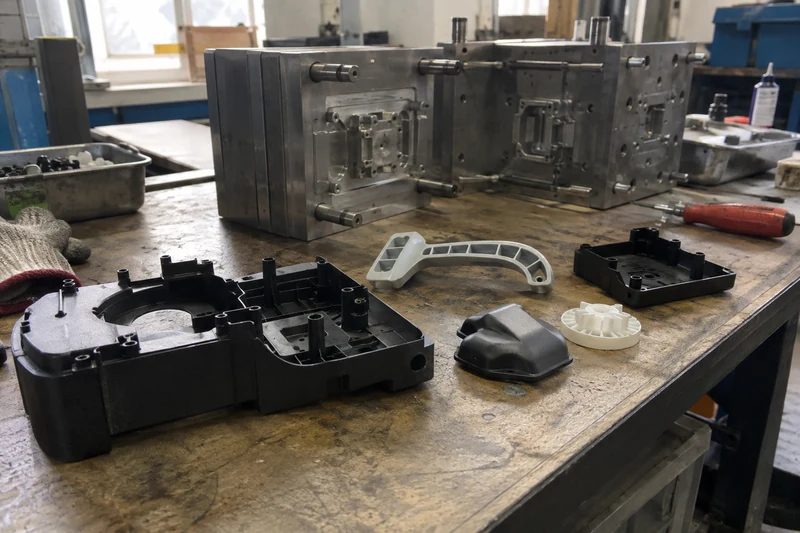
Finished sample
Approve a sample of the finished part against your criteria before volume production starts.
Next, agree how parts are checked against the approved sample.
Quality control tied to the approved sample
Inspection follows the part's use and the approved sample. A visible housing may need a signed appearance reference; a functional part may depend on fit, retention, warpage or material confirmation.
List the records you need in the RFQ. The inspection record is agreed for each order, so the checks match the features that matter to your part.
| Controlled item | Acceptance input | Evidence to agree |
|---|---|---|
| Critical dimension | Drawing revision and condition after molding | Measured feature record |
| Appearance | Approved sample, color or texture reference | Visual comparison method |
| Interface | Mating part, retention or sealing condition | Functional check, if specified |
| Production change | Resin, tool or process revision | Reapproval trigger |
Acceptance input Drawing revision and condition after molding
Evidence to agree Measured feature record
Acceptance input Approved sample, color or texture reference
Evidence to agree Visual comparison method
Acceptance input Mating part, retention or sealing condition
Evidence to agree Functional check, if specified
Acceptance input Resin, tool or process revision
Evidence to agree Reapproval trigger
What a useful molding brief includes
A useful molding inquiry says what is already fixed and what is still open. Send the part model and describe the deliverable before you ask for a price.
Core inputs
- Part CAD and drawing revision, with the intended use and critical features.
- Resin grade or functional requirement, color and finish.
- Current tool status, owner and availability for transfer, if a tool exists.
- First-order quantity, expected annual use and the sample stage you need, if known.
- Acceptance criteria, inspection records and any required documents.
Helpful context
- Mating part, existing sample or a past molding problem.
- Interface details for an overmold or an insert.
- Tool modification history or production restrictions.
Quote response within 24 hours for complete drawings.
Injection molding FAQ
Short answers to the questions that come up before a molding route is chosen.
I have part CAD but no mold. Where should I start?
Start with the part design, resin, quantity and sample goals. An injection mold tooling review then defines the tool deliverable and the path to molded-part approval.
Can an existing mold transfer be discussed here?
Yes. Send the tool owner, drawings, dimensions, condition, previous samples and any missing components. The mold then runs in our own factory, and its fit to our press is confirmed before a transfer is agreed.
How do I distinguish overmolding from insert molding?
Overmolding adds a second material onto a substrate. Insert molding forms plastic around an insert placed in the mold. State the interface and whether bonding or retention is the controlling requirement.
Will this page duplicate the Plastic Injection Molding inquiry?
No. Use this page when the route, tooling status or deliverable is unclear. For a defined plastic part, use plastic injection molding. Both lead to one project brief.
Can a different resin be substituted without approval?
No. A resin change can alter shrinkage, fit, appearance and performance. List any acceptable alternatives and the sample checks required before approval.
How should changes after first-shot approval be recorded?
Tie each tool or part revision to a new sample ID and record which criteria were repeated. The latest approved reference must be clear before production continues.
Why do appearance and functional parts need different checks?
Visible surfaces need an agreed appearance reference. Functional parts need the dimensions, fits or tests that control use. Some parts need both.
When should short shots and sink marks be defined as defects?
During sample approval. Define the unacceptable locations and severity; a mark near a functional edge can matter more than a minor mark on a hidden face.
Who retains batch and mold-maintenance information?
We do. Your parts are molded and the mold is maintained in our own factory, so that history stays with one team; the supply agreement defines which records you receive and who owns the tool.
Can an RFQ start without an annual volume forecast?
Yes, with a stated first-order quantity and an open forecast. Tooling and unit-cost assumptions are then marked as conditional until the volume plan is clearer.
Request a molding project review
Tell us what you need supplied and what is already fixed. Parker reviews the part and replies with questions or a quote.

Parker
Your Injection Molding Contact, HONGYI
I'm Parker. Tell me whether you need a new mold, molded parts, a tool transfer or help choosing the route. Send the part model and mark any material, interface or appearance requirement that is fixed.
If the quantity or tool status is still open, say so. My first reply lists what is missing, so the price you get rests on real inputs rather than guesses.
- Reply within 24 hours
- In-house production
- Drawings kept confidential