
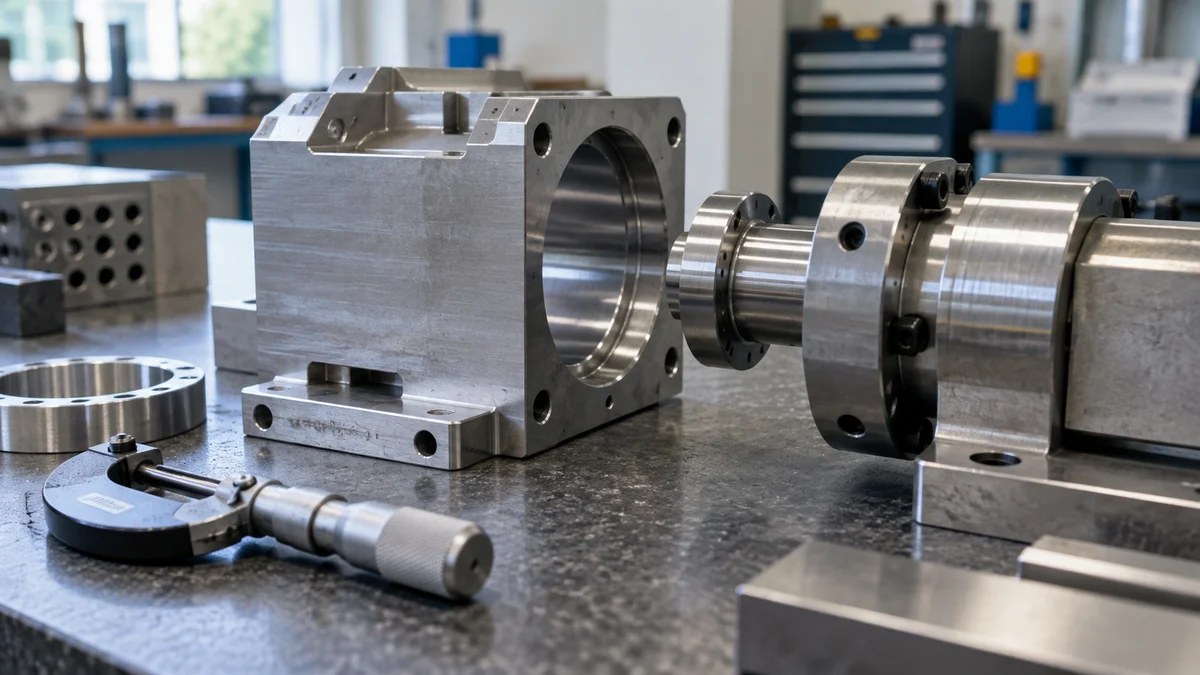
A CNC machined part can pass every dimension on its drawing while the completed assembly still has the wrong clearance or alignment. The useful question is which variations act together at the interface that matters. Start with that functional condition, trace the contributing features, and make the drawing, machining plan, and inspection method follow the same path.
The analysis method matters too. A hard assembly limit calls for a different decision from a statistical estimate. Ask whether the selected calculation represents the geometric relationship under review.
Controlling the stack means defining the closing condition, choosing a suitable analysis, checking the supplier’s evidence, and agreeing on assembly acceptance. For this RFQ, record the drawing and revision used for each decision.
What assembly condition should the tolerance stack protect?
Name the gap, clearance, interference, or alignment that matters to the assembly before asking for tighter part limits. The RFQ should identify candidate contributing features and ask the analyst to document each feature’s relationship to the selected assembly result.

Start with the assembly result the buyer needs to control, then identify the chain of dimensions that reaches it. IsoCNC’s worked example shows a housing dimension adding to a gap while the dimensions of parts inside it subtract. Its values describe that example only. A different assembly needs its own functional condition and an analysis suited to its geometry; use a signed chain when the selected relationship is one-dimensional.
For a proposed cover and housing, ask the supplier to show which features establish the specified space between them. A feature belongs in the calculation when it contributes to that selected result. Ask for the part and feature represented by each entry, its nominal dimension, its allowed variation, and its direction in the chain. If alignment is the decision instead, define the alignment to be assessed before reusing a worksheet built for a gap.
For this RFQ, provide the assembly condition and request a marked chain that a reviewer can trace through the supplied part information. Ask the supplier to identify the reference used at each end and explain any entry whose relationship to the result is unclear. Compare the calculated result with the stated assembly limit. This gives quotations a common functional question while leaving any proposed change to the chain open for review against the same condition.
When does the assembly need a worst-case limit?
Use a worst-case calculation when the decision requires the assembly limit to hold even if every contributing part reaches the relevant allowed extreme. Request both ends of the resulting range and compare them with the stated assembly limits.

PTC describes worst-case analysis as placing individual variables at their limits to make the stack distance as large or as small as possible. It does not use the frequency of those extremes. Under the modeled chain, the result gives upper and lower limits for assemblies made from acceptable parts. For this RFQ, ask the analyst to identify the contributors and assembly condition included in that calculation.
Choose this method when the buyer’s requirement must hold for every allowed combination represented by the chain. PTC identifies critical mechanical interfaces and spare-part replacement interfaces as cases where such a requirement is often used. Do not assume either condition applies to a particular project. For this RFQ, state the minimum and maximum permitted assembly results, then ask the supplier to calculate both extremes and identify the limits assigned to every signed contributor.
If the calculated range crosses an assembly limit, request a comparison of proposed changes to the relevant contributors or to the functional chain. Ask for the revised calculation under the same acceptance condition before deciding which option to quote. PTC notes that worst-case requirements can call for closer component tolerances and more costly manufacturing and inspection. A quotation should establish the consequence for the specified design; the source does not establish a cost or achievable tolerance for it.
When is an RSS estimate acceptable?
Treat RSS as a statistical estimate whose usefulness depends on its inputs and the buyer’s acceptance rule. Ask for the modeled contributors, the assumptions behind their variation, and measured evidence relevant to the proposed production before relying on the predicted assembly spread.

PTC identifies RSS as a special case of statistical analysis. Statistical analysis combines assumed contributor distributions to predict a distribution of the assembly stack distance; it does not calculate the possible extremes supplied by worst-case analysis. IsoCNC’s RSS discussion describes independent, centered, roughly normal contributors. Those assumptions need to be considered for the proposed parts rather than carried over from a worked example.
For this RFQ, ask which dimensions enter the RSS result and how each relates to the selected assembly condition. Request the assumed distribution and centering for each contributor, together with the basis for treating contributors as independent. IsoCNC specifically raises dimensions made in the same setup as a reason to question that assumption. Ask the supplier what relevant measurements are available and which assumptions remain unverified. PTC’s stated Cp assumption describes a calculation in its software, not a demonstrated capability of the supplier being quoted.
Decide separately whether a predicted spread is an acceptable basis for this assembly decision. If every allowed part combination must meet a hard limit, request the complete worst-case range for that requirement. When both calculations are useful, ask for them side by side with their different meanings stated: one addresses modeled extremes, while the other predicts a distribution under stated assumptions. Keep the assembly acceptance limit visible in either case.
Which geometric controls belong in the stack?
Select geometric controls by the assembly relationship being assessed. Ask the supplier to show how each included control connects to the functional result and why a control left out of the calculation does not enter that selected chain.
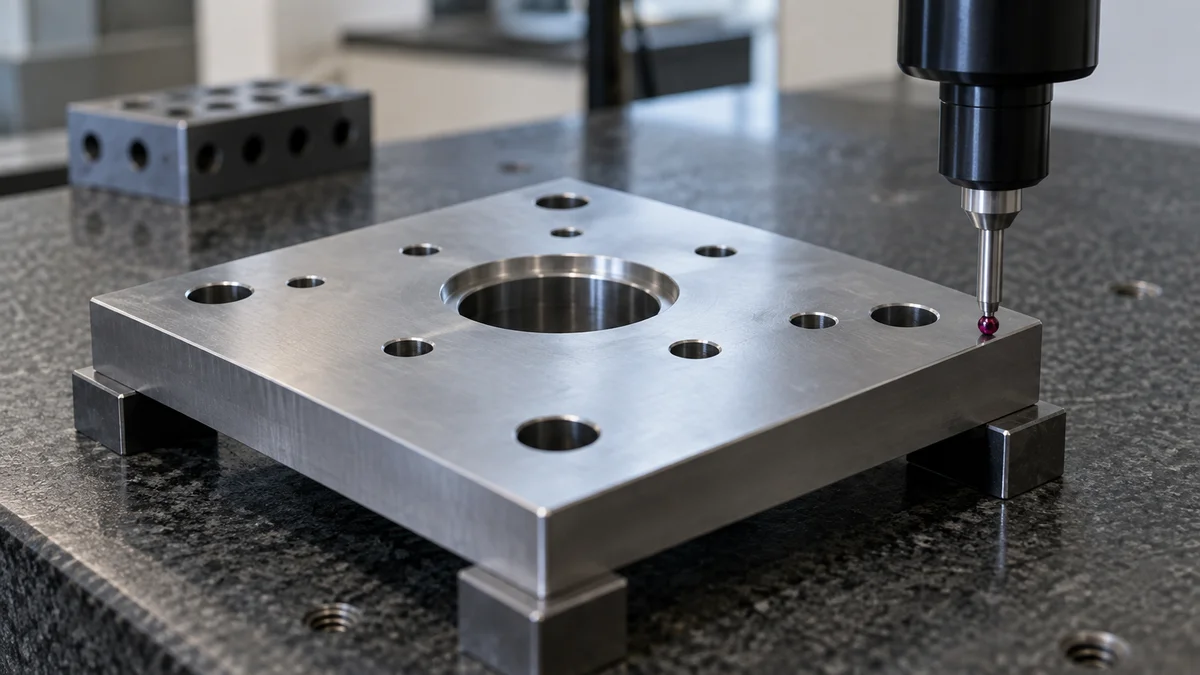
A list of part sizes may not describe the feature relationship that controls the chosen assembly result. IsoCNC discusses position referenced to a datum frame as an alternative to an indirect chain of coordinate dimensions. That example supports reviewing the controlled relationship, but it does not establish that every geometric callout belongs in every stack.
For an alignment question involving mating holes, ask which controlled hole relationships the supplier proposes to evaluate and which references the drawings use. Request an explanation of how those relationships enter the stated assembly condition before assigning a contribution to them. If the drawings contain other geometric controls, ask the supplier to identify any that it believes are relevant and to show the basis for including them. Do not assign an effect to a control solely because its symbol appears on a drawing.
Ask for the same explanation when a proposed worksheet omits a control near a mating feature. The useful review question is whether the calculation still represents the selected gap, clearance, interference, or alignment. Request a clear distinction between a drawing limit, an assumed assembly relationship, and a calculated effect. IsoCNC also discusses position at maximum material condition in a specific example; its values and bonus-tolerance result are not limits for this RFQ. The buyer can then quote the controls that the documented functional path actually requires.
How should mating parts share functional datums?
Ask for a datum path that a reviewer can follow across the mating parts and compare with the assembly relationship being assessed. If the drawings use indirect references, request an explanation of how those references reach the selected functional result.
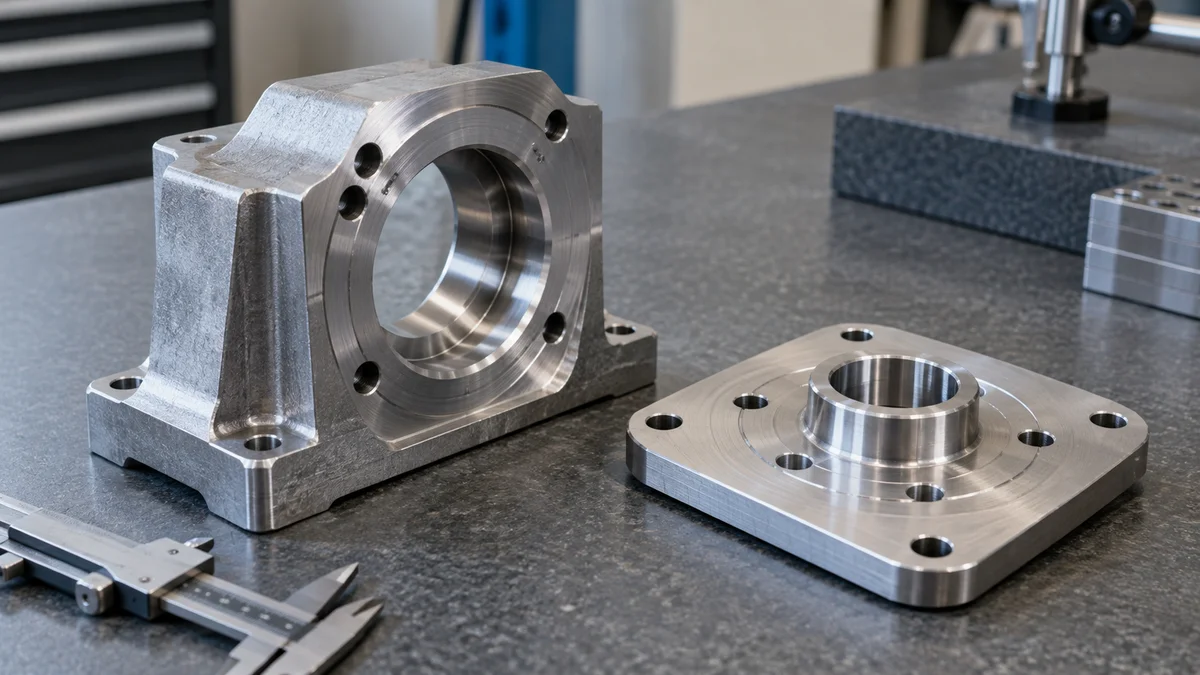
IsoCNC recommends unifying datums and directly controlling critical relationships as ways to review an unnecessarily long chain. That is a design option, not a datum scheme that can be imposed on every assembly. The buyer first needs to identify which mating relationship the calculation is intended to describe.
Consider a proposed pair of parts with holes whose alignment matters. Ask the supplier to mark the references used for each hole and show how the two drawing relationships are brought into the assembly calculation. If one relationship uses an indirect reference, request the intervening links rather than assuming that both drawings describe the same path. This example has no assigned size, tolerance, or result. It is a prompt to make the chosen path reviewable for the specified design.
For this RFQ, ask whether the proposed references can be used under the stated inspection condition and how the supplier would report the resulting feature relationship. If an alternative datum scheme is proposed, request a revised chain and a comparison against the same assembly limit. Keep the selected drawing information and worksheet identified together so that a later change can be assessed against the intended condition. The source supports examining functional references; the actual drawings and assembly information must establish which references govern this project.
Can geometry reduce stack sensitivity before tolerances are tightened?
Before quoting closer limits, ask whether the design can use a shorter functional chain or a direct control of the critical relationship. Require a recalculation that shows the assembly still meets the same stated condition after any proposed geometry change.
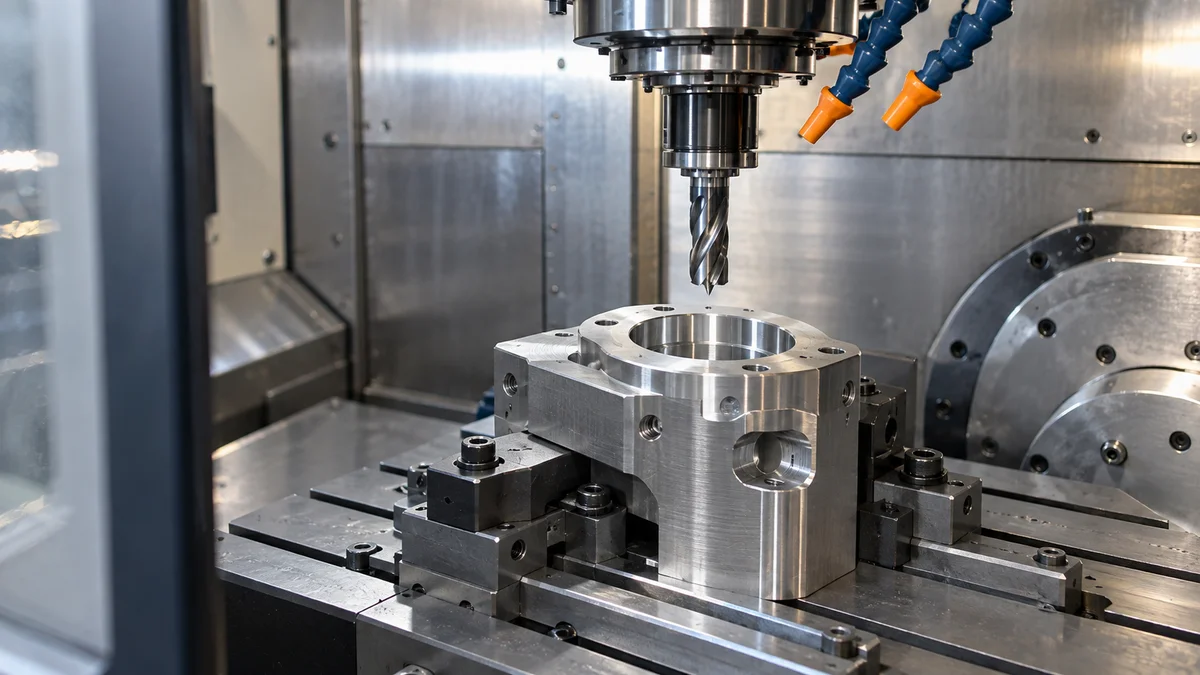
IsoCNC describes shortening the chain and tolerancing a critical relationship directly as design options. For the proposed assembly, request a marked comparison of the current and revised functional chains. Compare the resulting calculations against the same assembly limit.
For this RFQ, identify the features that define the critical gap or alignment and invite a supplier to propose a shorter path, a direct feature relationship, or a different reference. Ask for a sketch or marked drawing showing the proposed geometry. Where the buyer is considering a shared machining setup, ask the supplier whether it is feasible for these features and what references the proposal would use. That is a request for project-specific advice, not a claim that one setup provides a particular tolerance.
Require each option to be calculated against the same assembly condition and acceptance limit as the base design. Ask which part features would change, which relationships would be checked, and what information the supplier needs to quote the option. Keep the base and proposed results distinct so the buyer can compare a geometry change with closer limits on existing contributors. Approve a changed design only after its functional chain, part information, and proposed inspection scope describe the same option.
Which contributors deserve tighter tolerances?
Allocate closer limits only after the functional chain identifies the contributors relevant to the failed or narrow assembly margin. Ask for a recalculation and a quote for each proposed change so the buyer can compare its benefit with its manufacturing and inspection scope.

For a one-dimensional result, start with the signed chain and the assembly limit it must meet. For other geometry, ask for an analysis that represents the selected relationship. IsoCNC’s example shows that each contributing dimension has a direction and an allowed variation. Its particular dimensions are not a tolerance allocation for another design. Ask the supplier to show the effect of a proposed change to one contributor on the selected assembly result.
If a result misses the limit, compare specific options: a closer limit on an active contributor, a shorter chain, or a direct control of the critical relationship. Request a recalculation of the whole relevant chain for each option. A feature outside that chain should not be assigned a closer limit merely because it is nearby. Likewise, do not treat a general drawing rule as applicable until the project’s actual drawing and governing information establish it.
For each tighter limit under consideration, ask the supplier to quote the stated feature, its references, the proposed limit, and the requested inspection evidence. Ask it to identify any conditions it needs clarified before accepting the requirement. PTC notes that worst-case requirements often lead to close component tolerances and costly manufacturing and inspection; it gives no price or capability for this part. The buyer can select an allocation after comparing the revised assembly results and the project-specific quotations.
When is a statistical simulation justified?
Consider a more detailed statistical model when the selected assembly result cannot be represented adequately by a simple one-dimensional chain. Ask what geometry and distributions the proposed model uses, and keep its predicted result separate from a hard worst-case limit.

IsoCNC identifies propagation through angles and pivots in three dimensions as a reason to consider Monte Carlo simulation. PTC describes general statistical analysis as combining assumed contributor distributions to predict the assembly stack distribution. Neither description establishes a model for an unspecified assembly. The buyer must first state the functional result that the additional analysis is meant to resolve.
For this RFQ, ask the supplier to identify the modeled geometry, the contributors, the assumed distributions, and the basis for those inputs. If angles or pivots are relevant to the specified design, request a description of how the model represents them and which output corresponds to the assembly limit. Ask which inputs have measured support and which are assumptions. Avoid accepting a precise-looking probability without the conditions that produced it.
Use the simulation to compare defined design options against the same functional requirement. Request the reported prediction, input conditions, and acceptance rule together. If the buyer also requires every modeled allowed combination to meet a hard limit, request a separate worst-case analysis for that question. Any additional project-specific effect proposed for the model needs its own explanation and evidence before it is treated as established. This makes the extra analysis useful for an RFQ decision without presenting a prediction as proof of production results.
What material and finishing conditions should the stack-up RFQ define?
Set the condition in which the buyer wants the contributing features quoted and accepted. Ask the supplier which drawing limits apply at the specified stage and whether the proposed material, temperature basis, treatment, or finish needs a separate review for this design.
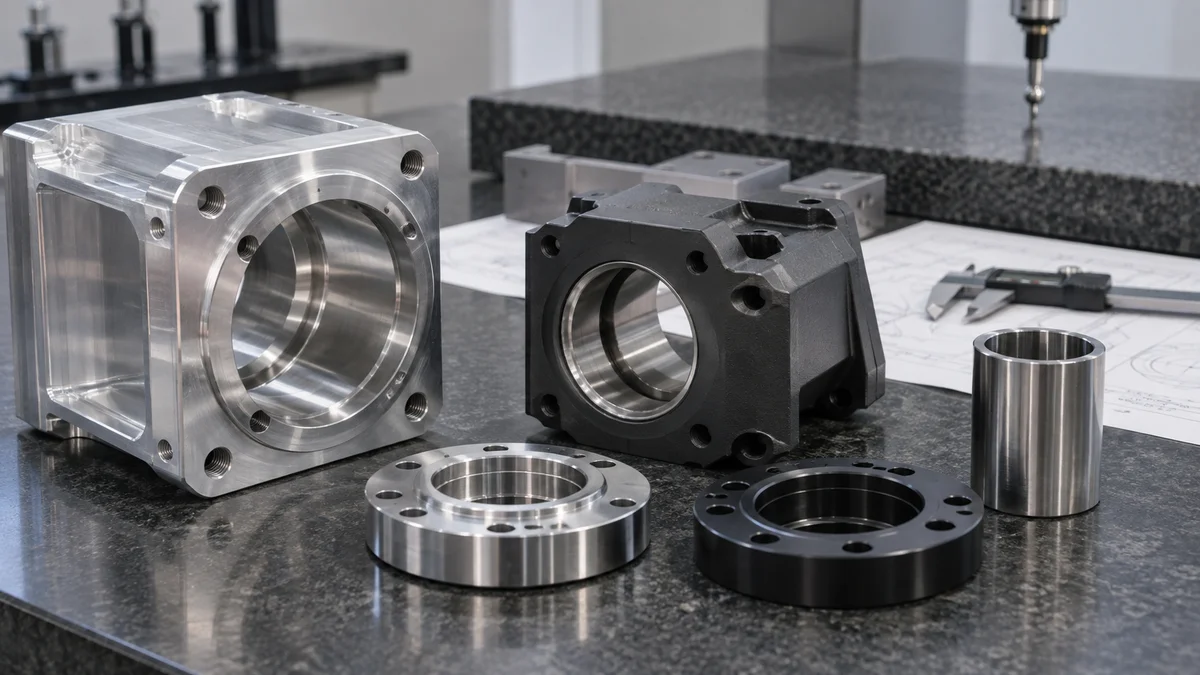
The two supplied sources explain tolerance-analysis methods and functional chains. Treat any proposed material, temperature, treatment, or finish change as a project-specific input for supplier review. For this RFQ, state the proposed material and supplied condition, any specified treatment or finish, and the condition in which the assembly result must be assessed. Ask the supplier to identify missing information before it quotes the critical relationships.
For each controlled feature in the selected chain, ask which stage of the supplied part the buyer intends the drawing limit to describe. Where a finish or treatment is specified, ask whether the supplier sees any project-specific question about the feature or its measurement that needs to be resolved. Ask the same question about the temperature basis if it is relevant to the buyer’s acceptance condition. These are requests for a defined proposal; they do not assume that a particular operation changes a dimension.
IsoCNC’s functional-chain explanation supports tracing an established contributor to the assembly result. Do not transfer worked-example values to a different material or finishing condition. Record the agreed condition beside the affected RFQ entries, then ask for a revised calculation if the supplier proposes a different condition or a changed feature limit. The buyer can compare quotations when each one states the part condition and assembly requirement it addresses.
What does supplier capability evidence need to show?
Ask for measurements that relate to the contributors and conditions used in any statistical estimate. Separate the part limits on the supplied drawings from evidence about actual measured variation, and identify which model assumptions the available data can support.

PTC’s statistical analysis description starts with assumed distributions for contributing dimensions. IsoCNC advises comparing measured parts with the model’s assumptions. Request supplier measurements for the specific contributors and conditions used in the proposed calculation.
For this RFQ, name the critical features and ask what measured results the supplier can provide for them. Request the references, part condition, and production context attached to those results so they can be compared with the stack inputs. If an RSS or simulation estimate assumes centering and independence, ask which observations address those assumptions and which remain unsupported. Do not carry PTC’s software Cp assumption into a supplier capability claim.
Keep two decisions visible. First, identify the limits by which the quoted parts will be accepted. Second, decide whether the available measurements justify using a predicted assembly distribution for planning or acceptance. Ask the supplier to explain any gap between the proposed production conditions and the conditions represented by its evidence. If the data do not resolve a critical assumption, label the resulting estimate accordingly and retain the applicable assembly acceptance question. A report becomes useful when the buyer can see what it measures, what it supports, and what remains an assumption.
How should the assembled condition be inspected?
Choose whether the RFQ calls for component results, a reported assembled result, or both. Specify the gap, clearance, interference, or alignment to be assessed and ask the supplier to describe the references and condition used for the proposed check.

IsoCNC’s worked chain connects individual part dimensions to an assembly gap. Its example shows why the buyer should state which resulting condition matters rather than leave the supplier with part dimensions alone. Define this project’s inspection plan in the RFQ.
For this RFQ, state the required assembly condition and its acceptance limits. Ask the supplier which component measurements it proposes to report and whether it can report the selected assembled result. Request the references and part condition for each proposed measurement so the buyer can compare it with the calculation. If a proposed method does not evaluate the same result, ask for an explanation before treating it as acceptance evidence.
Decide explicitly whether the quoted assembly may use matching or adjustment. If either is proposed, ask the supplier to describe the option, the resulting assembly condition to be checked, and the records it would provide. If neither is permitted, state that in the RFQ as a project decision. Also specify when the requested reports are needed for this order. State these reporting requests in the RFQ. The final quotation should make clear which measured information addresses part limits and which addresses the assembly result.
What should a stack-up RFQ and revision record contain?
As an editorial RFQ recommendation, provide a clearly identified model and drawing for the option being quoted. Include a signed worksheet when the selected relationship is one-dimensional; when the selected relationship cannot be represented by a one-dimensional signed chain, identify an analysis model and references suited to its geometry. State the assembly limit, analysis method, assumptions, and requested evidence so competing quotations address the same condition.

For this RFQ, the recommended package is a clearly identified 3D model and 2D drawing for the design option being quoted. Include a signed stack worksheet when the selected relationship is one-dimensional; otherwise identify the analysis model and references appropriate to the selected geometry. Ask the supplier to confirm which versions it used. Treat this as a procurement checklist for this RFQ. Identify the selected gap, clearance, interference, or alignment and its acceptance limits.
For a one-dimensional worksheet, ask for each contributor’s nominal dimension, allowed variation, sign, and reference path. If the selected alignment or three-dimensional relationship cannot be represented by a one-dimensional signed chain, ask the supplier to identify an analysis model, references, and contributing features suited to that geometry. IsoCNC’s signed worked chain illustrates why direction matters, but its values are not capabilities for this project. State whether the requested result is worst-case, RSS, or a more general statistical prediction. PTC distinguishes those methods and the questions their results answer. Request the assumptions and reported result with the selected method.
Include the proposed material and supplied condition, any specified finish or treatment, the intended acceptance stage, quantity, and requested component or assembly reports as project details to be confirmed. Ask suppliers to identify proposed alternatives separately, with an updated analysis and quotation for each. When the buyer changes a contributing feature or condition, update the identified package and request a new calculation for the affected option. As an RFQ revision record, list the option ID, part number, model and drawing revisions, changed feature or condition, affected assembly limit, analysis method and assumptions, dated result, and quotation revision. These are suggested comparison fields, not a universal quality-system requirement. This keeps the procurement comparison tied to a defined assembly question without claiming a universal drawing, quality-system, or revision rule.
For a CNC machining recommendation or quotation, send the active 3D models, controlled 2D drawings, material grades and conditions, quantity, prototype or production intent, functional assembly limits, stack worksheet, critical tolerances, surface finish, inspection expectations, revision levels, and delivery requirements. State whether parts must be interchangeable or may be matched or adjusted.