
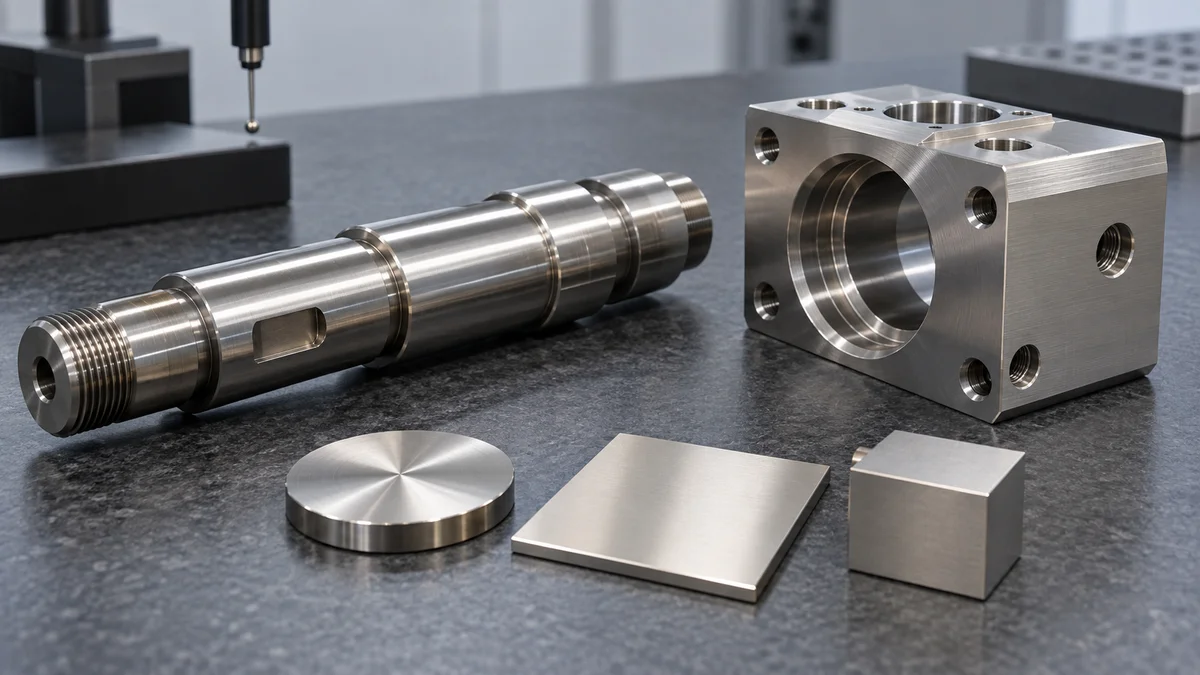
Nickel coating thickness belongs in the dimensional plan for a precision machined part. Micron’s electroless nickel guide connects coating buildup with dimensional tolerances and machining compensation. For electroless nickel-phosphorus, ASTM B733-21 describes uniform thickness on irregular shapes when plating solution circulates freely over their surfaces. These considerations make geometry, coating requirements, and final fit useful starting points for selection. Micron coating thickness guide, ASTM B733-21
For quotation, define the substrate condition, coated and masked surfaces, required thickness, and inspection requirements. Ask the machining supplier and finisher to review the same drawing revision and delivered condition.
The questions below connect process selection with drawing requirements, supplier confirmation, and evidence for accepting the finished part.
How do the two nickel processes deposit a coating?
Electroless nickel-phosphorus forms by self-sustaining chemical reduction. For electrolytic nickel, direct current deposits nickel onto a conductive substrate; part geometry then influences thickness distribution. Identify the actual manufacturing route and nickel process in the RFQ, then request a thickness and inspection plan for the specified surfaces.

Name electroless and electroplated nickel separately in the purchase specification. ASTM B733-21 describes electroless nickel-phosphorus as an alloy deposited by autocatalytic chemical reduction with hypophosphite. The deposited nickel alloy acts as a catalyst, making the reaction self-sustaining. This explanation is specific to the electroless nickel-phosphorus process covered by that edition. ASTM B733-21
Entech describes electrolytic nickel as using direct current to deposit nickel onto a conductive substrate. Entech nickel process comparison For electroplated nickel, Micron’s guide describes thickness distribution as influenced by the electric field, with increased deposition at edges and more exposed areas. Its electroless nickel discussion describes more even layer growth. For a proposed electroless route, also apply ASTM B733-21’s condition that solution must circulate freely over the surfaces to obtain uniform thickness on irregular shapes. Micron coating thickness guide, ASTM B733-21
This RFQ requests CNC machining of a metal part from solid stock before nickel finishing. Keep CNC turret punching, CNC punch press work, CNC-controlled stamping equipment, metal stamping, sheet metal fabrication and plastic injection molding as separate quotation scopes. Ask the supplier to name the actual manufacturing route before comparing finishing proposals.
For the machining proposal, mark the surfaces that control assembly and the surfaces requiring nickel. Request confirmation of the proposed deposition route, local thickness requirements, and inspection locations. Define which dimensions will be accepted before or after coating, so the supplier’s response addresses the specified finished part.
Which geometry makes coating coverage difficult?
Review geometry against the required local coating and final dimensions. ASTM B733-21 makes uniform electroless nickel-phosphorus thickness conditional on free solution circulation; Micron identifies increased electroplated deposition at edges and exposed areas. Mark internal features for supplier review without assuming a particular coverage result.
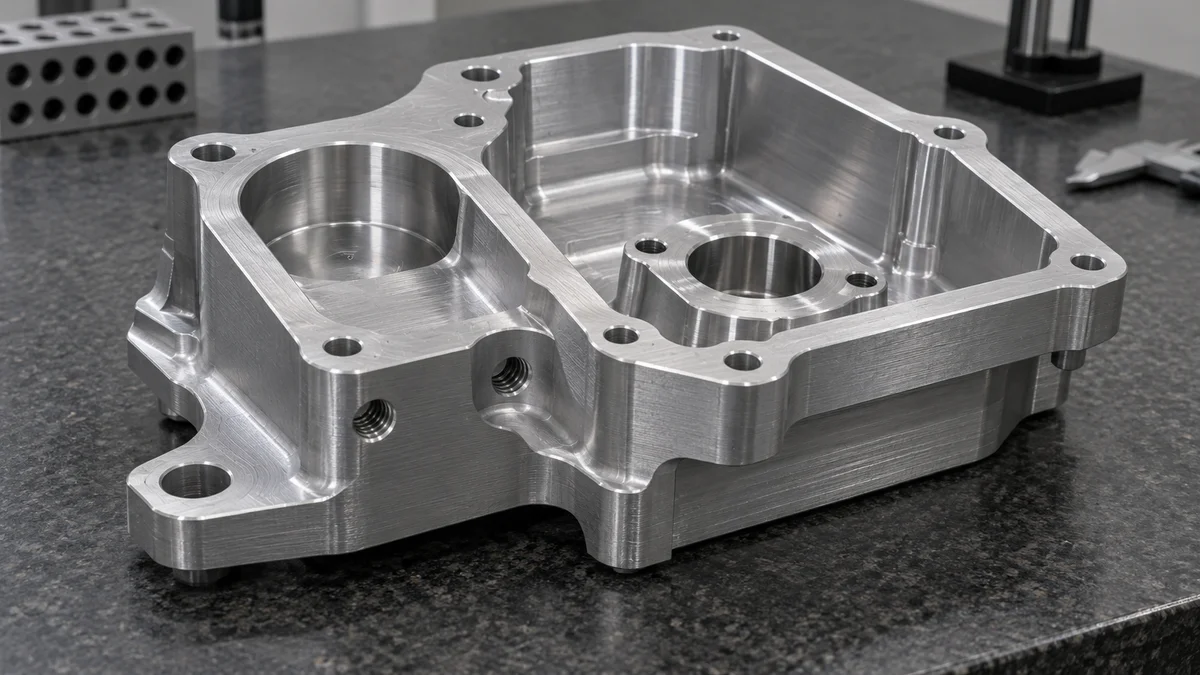
Start with the surfaces where coating is required. ASTM B733-21 states that electroless nickel-phosphorus produces uniform thickness on irregularly shaped parts provided the plating solution circulates freely over their surfaces. Use that condition when asking a processor to assess the proposed geometry. Request an explanation of how the intended surfaces will meet the specified local thickness. ASTM B733-21
For electroplated nickel, Micron identifies the edge effect: the electric field influences thickness distribution, increasing deposition at edges and more exposed areas. Mark any edge or exposed surface whose final dimension matters to assembly. Ask the supplier to state the proposed thickness distribution and dimensional acceptance basis at those locations. Micron coating thickness guide
The drawing review should identify bores, blind holes, recesses, and undercuts wherever the buyer requires coating. Supply the complete geometry and mark the required surfaces. These feature names identify locations for review; they do not establish a coating deficit, a measurement difficulty, or an automatic process preference. Ask the processor to propose coverage and verification arrangements for the actual part.
Choose between proposals using their responses to the marked requirements. Electroless nickel should be assessed against the circulation condition, while an electroplated proposal should explain control at dimensionally important exposed areas. For either route, agree on thickness locations, dimensional checks, sampling, and reported results before placing the order. Keep appearance requirements separate from the other acceptance characteristics specified for the part.
Which electroless nickel deposit fits the service condition?
Select an electroless nickel-phosphorus type against the operating requirement and governing edition. ASTM B733-21 distinguishes low-phosphorus wear applications, medium-phosphorus general wear and corrosion applications, and high-phosphorus salt-spray and acid resistance. Specify phosphorus type, service condition number, and post-heat-treatment class as separate choices.

Specify the operating requirement before choosing an electroless nickel-phosphorus deposit. ASTM B733-21 states that deposit properties vary primarily with phosphorus content and subsequent heat treatment. Its classifications distinguish phosphorus-based types, service condition numbers based on exposure severity and corresponding minimum thickness, and post-heat-treatment classes based on temperature and time. Keep these classifications separate in the purchase specification. ASTM B733-21
Within that edition, low-phosphorus coatings containing 2–4% phosphorus have high as-plated hardness and are used for abrasion and wear resistance. Medium-phosphorus coatings contain 5–9% phosphorus and are widely used for general wear and corrosion requirements. High-phosphorus coatings contain more than 10% phosphorus; the source describes superior salt-spray and acid resistance across a range of applications. Use these stated application distinctions when requesting a processor’s proposal. ASTM B733-21
For corrosion-led selection, describe the operating exposure and identify the surfaces requiring protection. For wear-led selection, identify the contact surface, mating condition, and required coating condition. Where both duties apply, ask the processor to explain the proposed phosphorus type and the acceptance requirements for each duty. Request part-specific confirmation rather than treating a category description as a guaranteed result.
Provide the substrate’s exact grade and condition with the active drawing revision. The referenced ASTM page identifies B733-21 as historical, so confirm the contractually required edition before adopting its classifications. Record the selected phosphorus type, service condition number, heat-treatment class where applicable, thickness requirements, and required test evidence.
How will nickel thickness change the final fit?
Account for coating buildup when preparing machining dimensions and final fit limits. Micron’s example shows that a 10 µm deposit reduces a bore by 20 µm. Ask the supplier to calculate allowances for the actual coated surfaces. State the thickness range and whether each critical dimension applies before or after coating.

Coating thickness belongs in the fit calculation. Micron’s electroless nickel guide advises accounting for coating buildup during machining and illustrates the resulting reduction in a hole diameter. Identify which surfaces receive nickel, then state whether the drawing’s dimensional limits apply before or after coating. Request the supplier’s proposed machining compensation and final inspection basis. Micron coating thickness guide
Teaching scenario: A drawing includes a plated bore and a mating outside diameter. Micron’s guide illustrates that a 10 µm electroless-nickel deposit reduces a hole diameter by 20 µm. Use that source example to discuss buildup on opposing bore surfaces, not as a measured result or promised coating outcome. Ask the supplier to calculate pre-coating dimensions for the actual bore and outside-diameter surfaces using the agreed thickness, then inspect the specified final fit. Micron coating thickness guide
Apply that calculation only with its stated assumptions. Ask the supplier to review the proposed thickness range against the actual dimensional limits. Include the required coated zones, any masked surfaces, and the measurement stage for each fit-critical feature. Request clarification of any proposal that uses a different thickness or dimensional basis.
Micron describes industrial electroless nickel thicknesses from 3–5 µm for light-duty applications through 50–70 µm for severe conditions. Its selection guidance considers performance and operating conditions. Treat those values as application references rather than default drawing requirements. Micron coating thickness guide
Record the selected nominal and minimum local thickness, agreed machining allowance, and final fit limits. Ask whether any subsequent finishing is proposed and obtain approval of its scope before quotation acceptance.
Which surfaces need masking and final inspection?
Assign coating, masking, and dimensional checks by feature. Ask the buyer’s drawing owner to designate sealing faces, bearing seats, threads, electrical contacts, datums, and required internal surfaces. Micron identifies selective masking as a possible electroless nickel response to particularly tight tolerances when machining compensation is insufficient.

Prepare a feature-level treatment plan for the drawing. Ask the drawing owner to designate each sealing face, bearing seat, thread, electrical contact, datum, and required internal surface as coated or masked, and define its accepted final condition. These designations are part-specific purchasing requirements; they are not a claim that every listed feature needs the same treatment.
Micron’s electroless nickel guide explains that machining dimensions can account for coating buildup. For particularly tight dimensional tolerances, selective masking of holes or functional surfaces may be required when appropriate machining compensation cannot meet the tolerances. The guide associates this masking with increased process complexity and cost. Keep that guidance within its electroless nickel scope. Micron coating thickness guide
For each designated feature, request the proposed thickness measurement location and dimensional check. State whether the dimensional limit applies before or after plating, which functional gauge or measurement is required, and which results must be reported. Specify whether the requested evidence covers a first article, samples, or the production lot. Ask the supplier to confirm the proposed method and sampling scope.
ASTM B733-21 lists appearance, thickness, adhesion, and porosity among electroless nickel-phosphorus acceptance characteristics. Where that edition governs, identify the applicable tests and reporting requirements in the purchase specification. ASTM B733-21
Review the treatment drawing and inspection list together. Resolve proposed masking, measurement locations, and final fit checks before accepting the quotation, with any permitted finishing operations explicitly identified.
What preparation prevents coating failure?
Request a preparation proposal for the specified substrate and incoming surface, then agree on coating acceptance evidence. Identify cleaning and activation as matters for processor confirmation. For electroless nickel-phosphorus, ASTM B733-21 provides exposure-related thickness classifications and acceptance characteristics for the coating specified on this order.

Define the base material and incoming surface condition, then request the processor’s preparation proposal. Include the exact alloy grade and condition, surface-finish requirements, and any known contamination or surface concerns. Ask the processor to identify its proposed cleaning and activation approach and the basis for using it on the stated substrate. These are requests for technical confirmation. Where ASTM B733-21 governs electroless nickel-phosphorus on metallic products, its abstract calls for pre-plating substrate stress relief to reduce hydrogen embrittlement risk; ask the processor whether that pretreatment and its conditions apply to the offered substrate. ASTM B733-21 Do not infer a particular cleaning-to-defect mechanism without supporting evidence.
For corrosion-led electroless nickel-phosphorus selection, connect the exposure requirement with the coating specification. ASTM B733-21 bases service condition numbers on exposure severity and the corresponding minimum thickness for satisfactory performance. Micron’s thickness guide also considers required corrosion and wear performance, operating conditions, base material, and expected service life when selecting electroless nickel thickness. ASTM B733-21, Micron coating thickness guide
Ask the processor how preparation and coating conformity will be documented. Where ASTM B733-21 governs, its acceptance characteristics include appearance, thickness, adhesion, and porosity; qualification requirements include composition, microhardness, and hydrogen embrittlement. Agree on the applicable tests, acceptance criteria, sampling, and reporting under the required edition. Do not describe requested tests as tests already performed. ASTM B733-21
Keep preparation questions and measured acceptance results explicit in the RFQ. If cleaning, activation, roughness, or porosity is a concern for the proposed part, request a supported explanation and suitable acceptance evidence from the processor. Confirm the substrate-specific proposal before approving the finish, rather than retaining an unsupported chain of causes and defects.
Does the wear requirement justify heat-treated electroless nickel?
Review heat treatment as a separate electroless nickel-phosphorus specification choice when wear or hardness requirements call for it. ASTM B733-21 distinguishes post-heat-treatment classes by temperature and time for desired adhesion and hardness improvements. Request substrate compatibility confirmation and an agreed final dimensional inspection plan.

Define the wear or contact requirement before requesting heat treatment. ASTM B733-21 states that electroless nickel-phosphorus deposit properties vary primarily with phosphorus content and subsequent heat treatment. Its post-heat-treatment classifications use temperature and time to produce desired adhesion and hardness improvements. Specify the required coating condition under the governing edition without adopting unsupported hardness figures. ASTM B733-21
Provide the processor with the substrate grade, temper or condition, functional surfaces, and active drawing revision. Ask it to identify the proposed phosphorus type, thickness, post-heat-treatment class, temperature, and duration. Request confirmation that the proposed exposure is acceptable for the specified substrate condition. Treat that confirmation as a part-specific technical response, with supporting evidence where the contract requires it.
Keep the thermal proposal and dimensional requirements visible together. Ask the processor to assess substrate-distortion risk for the stated temperature, duration and geometry, and request a verification plan for affected features. Define the final fit limits and inspection stage. Any proposed post-treatment grinding, lapping, honing, thread finishing, or polishing should be disclosed for drawing-owner review; this request does not assert that those operations are necessary or establish their effects.
Micron’s electroless nickel guide supports accounting for coating buildup in machining dimensions and reviewing selective masking when particularly tight tolerances cannot be met by compensation. Apply that dimensional planning separately from the heat-treatment classification. Micron coating thickness guide
Approve the proposed route against the specified coating condition, permitted operations, and required final evidence. Record the agreed treatment and inspection requirements so the quotation describes the condition to be delivered.
What drives the total coating cost and lead time?
Compare itemized finished-part quotations under the same drawing and inspection requirements. Micron identifies increased complexity and cost for selective masking in its electroless nickel guidance. Request explicit price and delivery assumptions for quantity, handling, heat treatment, finishing, inspection, and outside processing rather than assigning an unsupported process ranking.

Define the requested delivered condition before comparing prices and delivery dates. Give each supplier the same substrate specification, active drawing revision, quantity, coating zones, thickness requirements, and inspection scope. Ask each proposal to identify its included operations and exclusions. This lets the buyer compare the same delivered scope.
One supported cost consideration is selective masking in electroless nickel work. Micron states that masking holes or functional surfaces for particularly tight tolerances increases process complexity and costs, and recommends it when appropriate machining compensation cannot meet the tolerances. Ask whether the proposed part requires that measure and how the supplier has included it in the quotation. Micron coating thickness guide
Request an itemized response covering the proposed coating type, nominal and minimum local thickness, masking, handling, heat treatment, permitted finishing, and inspection. Ask suppliers to state quantity assumptions, batching arrangements, any outside-processing steps, and the delivery basis. These are commercial questions for the actual order; they do not establish that every listed item changes both price and schedule.
Use the geometry review to compare technical conformity alongside the commercial response. For electroless nickel-phosphorus, confirm the solution-circulation condition associated with uniform thickness on irregular shapes. For electroplated nickel, request the proposed control at important edges and exposed areas. ASTM B733-21, Micron coating thickness guide
Resolve differences in included operations and acceptance evidence before choosing a quotation. Let the returned proposals establish the cost and lead time for the specified part and order.
What must the nickel plating RFQ specify?
Send a controlled model and drawing defining the substrate, selected nickel process, treatment zones, thickness, final dimensions, and inspection evidence. Identify the contractually required standard and edition. For electroless nickel-phosphorus, keep phosphorus type, service condition number, and post-heat-treatment class distinct when applying ASTM B733-21.

Prepare the RFQ around the finished part’s requirements. The readable ASTM reference covers electroless nickel-phosphorus coatings on metallic products for engineering uses and identifies B733-21 as historical. Confirm the required edition before specifying its phosphorus type, service condition number, and post-heat-treatment class. For an electroplated proposal, request the applicable standard and edition for independent verification. ASTM B733-21
Include:
| RFQ input | Details to provide |
|---|---|
| Design files | The current 3D model and controlled 2D drawing, with matching part identity and active revision. |
| Substrate | Exact substrate grade and condition, incoming surface condition, and relevant surface-finish requirements. |
| Order context | Quantity, prototype or production intent, known repeat demand, and delivery expectations. |
| Coating scope | Selected nickel process and the verified governing standard and edition. |
| Coated and masked areas | Plated and masked zones, nominal and minimum local thickness, and proposed thickness measurement locations. |
| Dimensions | Critical tolerances and the before- or after-plating basis for each final dimension. |
| Heat treatment and finishing | Required or permitted heat treatment and subsequent finishing operations. |
| Acceptance evidence | Final fit checks, coating tests, acceptance criteria, sampling, and required records. |
Ask suppliers to return a marked response identifying assumptions, proposed alternatives, included operations, and exclusions. Request confirmation of any proposed machining compensation: Micron’s electroless nickel guide connects coating buildup with dimensional planning and discusses selective masking when particularly tight tolerances cannot be met through compensation. Micron coating thickness guide
Before releasing the order, resolve differences between the drawing, coating specification, and inspection proposal. Keep the manufacturing route separately identified and obtain approval of the proposed finish requirements and acceptance evidence.
For a finish recommendation or quotation, send the current 3D model and controlled 2D drawing. Include material grade and condition, critical tolerances, surface finish, plated and masked zones, required thickness, inspection expectations, quantity, prototype or production intent, active revision, and delivery requirements. Ask suppliers to identify their coating and dimensional assumptions, included operations, and proposed acceptance evidence.