

For an aluminum part requiring chemical conversion coating, start with the contractually required coating document and the function of the treated surfaces. Confirm the permitted chemistry, applicable performance class and acceptance evidence before requesting a price. A short “chem film” note may need clarification, including a check of any defaults in the governing document.
Use the drawing and RFQ to identify the material, treatment areas, substance restrictions and requested inspection scope. Ask machining and finishing suppliers to disclose conflicting instructions or proposed deviations before work begins.
The following questions identify the decisions and supplier confirmations needed for a coating RFQ.
Which coating standard and revision govern the part?
Name the governing coating document and the revision required for this order. Then confirm its type, class and additional customer requirements. A short finish note may need clarification, but any defaults in the governing document must also be considered.

The cited PDF identifies itself as MIL-DTL-5541F, dated 11 July 2006. Its printed identity must remain separate from MIL-DTL-81706, which section 3.1 references for coating-material qualification. ASTM B449-93(2022) covers rinsed and nonrinsed chromate conversion coatings on aluminum and aluminum alloys for corrosion protection and as a base for other coatings. Identify the document required for this order rather than assuming a supplier’s specification list selects it. MIL-DTL-5541F coating specification ASTM B449-93(2022) scope
A short “chem film” note can require clarification; it does not automatically mean that every requirement is absent. Under the captured F edition, Type I applies if no material type is specified, and substitutions between types are prohibited unless otherwise specified in the contract or order. MIL-DTL-5541F material requirements
For the RFQ, state the governing designation and contractually required revision, then identify the applicable type, class, treatment areas and additional customer requirements. Ask the supplier to flag conflicts between the drawing, purchase order and finish note before quoting. Keep the part revision and coating-specification revision separately identifiable.
Treat chemical conversion coating as the finish for the specified aluminum part. Mention CNC machining or another actual part-making operation where the incoming surface or requested inspection needs clarification. Ask which operations will precede coating and which incoming-condition details the processor needs.
Does the specified chemistry meet the part’s substance restrictions?
Select the coating type against the restrictions that actually apply to the order. Under the captured MIL-DTL-5541F, Type I contains hexavalent chromium and Type II does not. Request the proposed qualified material and review the applicable customer, regional or internal requirement separately.

Under MIL-DTL-5541F, Type I compositions contain hexavalent chromium; Type II compositions contain no hexavalent chromium. Type identifies this chemistry distinction, while Class 1A or Class 3 identifies a separate performance requirement. Specify both decisions when that document governs the order. MIL-DTL-5541F type and class definitions
For this RFQ, identify any applicable RoHS, REACH, regional, customer or internal restriction by its actual requirement and scope. Include the relevant customer instruction or document reference for supplier review. This is a request to assess the proposed chemistry against the order’s restrictions, rather than a claim that every destination or product has the same obligation.
Ask the processor to identify the proposed conversion material and its qualification reference. Section 3.1 of the F edition requires materials approved for the selected type, class, form and application method under MIL-DTL-81706 qualification requirements and accepted for the applicable qualified products list. The cited PDF supplies that requirement; it is not itself the MIL-DTL-81706 document. MIL-DTL-5541F material approval requirements
Resolve any conflict between the coating callout and substance restriction before accepting the proposal. Royal Coatings discusses drawing and customer requirements and qualified chemistry as separate inputs. Before quotation, ask the processor to identify any conflict between the proposed chemistry and this order's controlled requirements. Ask for the proposed material reference and the requested compliance documentation; do not approve the complete finish solely from a generic “RoHS compliant” description. Royal Coatings chemistry and quotation guidance
Should corrosion protection or electrical contact govern the class?
Review Class 1A where maximum corrosion protection is required, or Class 3 where corrosion protection must accompany low electrical resistance. Identify the surfaces whose function drives that choice, and specify the acceptance evidence. Type I or Type II does not replace the class decision.

MIL-DTL-5541F defines Class 1A for maximum corrosion protection, painted or unpainted. It defines Class 3 for corrosion protection where low electrical resistance is required. These class definitions are separate from the Type I and Type II chemistry definitions. MIL-DTL-5541F classification
Begin the class review with the function stated for the relevant surfaces. Where maximum corrosion protection governs, ask whether the requirement applies to painted or unpainted aluminum. Where low electrical resistance governs, identify the electrical contact or interface for supplier review. These are recommended RFQ inputs; they should reflect the actual drawing and customer requirement rather than an assumed use for the part.
Mark the surfaces that drive the decision and ask the processor to confirm the proposed treatment. If different areas have different instructions, describe those instructions individually and request clarification of any conflict. Royal Coatings identifies masking requirements, electrical bonding areas and downstream paint systems among the details planners should review before quoting. Royal Coatings class and quotation guidance
Carry the selected function into the evidence request. For corrosion protection, identify the required corrosion documentation under the governing document and order. For Class 3 electrical contact, identify the applicable testing instruction and requested results. Ask the supplier whether its quotation includes those records. Selecting a chemistry type should not be used as a substitute for agreeing the required class and its acceptance instructions.
Which aluminum condition will receive the coating?
For a part-specific review, identify the aluminum alloy and temper, clad condition where applicable, and incoming surface condition. Provide relevant preparation history and specified roughness as RFQ inputs. Ask the processor to confirm the proposed preparation and disclose any nonstandard pretreatment.

Provide the processor with the specified aluminum alloy and temper, and identify clad or unclad material where applicable. Treat these as inputs for a part-specific review, not as evidence that a supplier can coat every aluminum condition. Ask the bidder to confirm the named substrate and identify any information still needed before it proposes the finish.
The captured MIL-DTL-5541F contains cleaning and application requirements, and its process-control specimen provisions address alloy and temper. Those provisions give the processor requirements to review; they do not establish the material capability of an individual supplier. Keep the production-part description distinct from any test-specimen material identified in the processor’s evidence. MIL-DTL-5541F preparation and specimen provisions
For the incoming-condition record, include relevant machining, heat treatment and earlier anodizing or plating, if present. State any specified pre-coating roughness, known machining residue or preparation concern for review. Ask what condition the processor expects to receive and whether its proposed cleaning or pretreatment requires customer approval. These are recommended disclosure questions, not a claim that each listed condition has the same technical effect.
Compare proposals against the same material and preparation description. Request a written response to any proposed nonstandard pretreatment and identify the acceptance documents required for this order. Royal Coatings recommends confirming the substrate, downstream coating system and documentation before quotation. Its checklist supports that review request without establishing compatibility for an unnamed alloy or preparation history. Royal Coatings substrate review guidance
Where must coating be applied or excluded?
Identify coated and excluded areas on the drawing, and state any permitted application or touch-up instructions. Review threads, fits, bores, sealing faces and electrical contacts individually. Where the buyer requests final-condition inspection, name the feature, drawing requirement and evidence to be supplied.
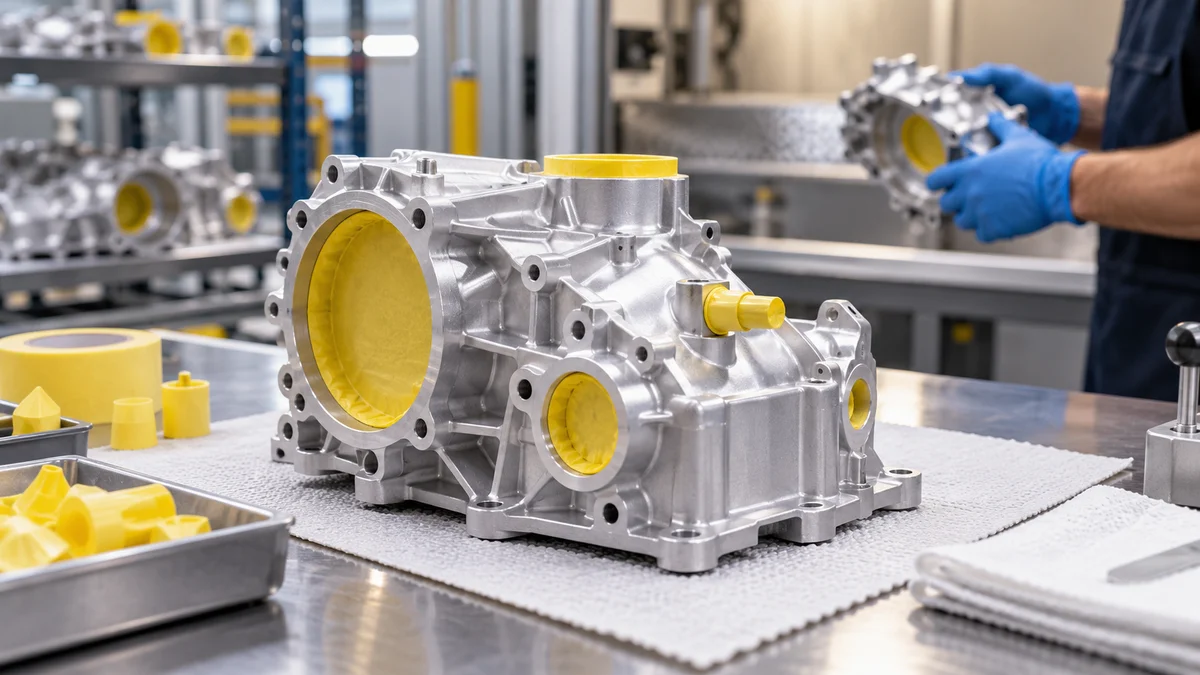
Mark the surfaces to receive coating and those to be masked or otherwise excluded. Review threads, bearing fits, precision bores, sealing faces and electrical contact pads according to the instructions for this part. Royal Coatings identifies masking, threaded features, close-tolerance bores and electrical bonding areas as quotation-review items. Its discussion does not prescribe one treatment for every such feature. Royal Coatings feature and masking guidance
State permitted application methods where the order controls them, and request the proposed touch-up scope before approving repair instructions. The captured F edition contains separate application and touch-up provisions; use those provisions with the actual contract rather than authorizing unrestricted touch-up through a general finish note. MIL-DTL-5541F application and touch-up provisions
Teaching scenario: A hypothetical CNC-machined aluminum housing has a precision bore and an electrical contact pad. The buyer marks the intended coating condition of each feature and asks the processor to review the area map. If the buyer requests a check after finishing, the RFQ names the feature and applicable drawing requirement. Neither feature is assumed to require masking in every application.
For any requested final-dimensional check, specify the inspection stage, characteristic and report expected. This is a customer inspection instruction, not a dimensional limit supplied by the cited coating provisions. Likewise, connect an electrical interface to its applicable electrical acceptance instruction. Keep the area map identifiable to the part revision used for quotation, and ask the processor to disclose unresolved treatment or inspection instructions.
What corrosion evidence is required for acceptance?
Define whether the order requires material-qualification references, periodic process-control results, lot evidence or a customer-specific test. The captured MIL-DTL-5541F places its 168-hour ASTM-B117 corrosion procedure within process control. Agree the applicable test scope, frequency and delivery records before accepting the quotation.

The captured MIL-DTL-5541F specifies a 168-hour ASTM-B117 salt-spray procedure for process-control corrosion testing on test specimens. It classifies process-control inspection separately from conformance inspection, which includes visual lot examination. The duration must therefore retain its stated test scope; it should not be presented as an automatic corrosion test for every delivered production lot. MIL-DTL-5541F inspection and corrosion-test provisions
Coating-material qualification is a different reference. Section 3.1 directs material approval to the qualification requirements of MIL-DTL-81706 and the applicable qualified products list. That reference does not turn the F-edition process-control corrosion procedure into a material-qualification procedure. The cited document remains MIL-DTL-5541F, dated 11 July 2006. MIL-DTL-5541F material qualification reference
For the RFQ, name the evidence requested: a material approval reference, periodic process-control report, evidence associated with the delivered lot, or a customer-defined test. Identify the governing edition, test conditions, required frequency and report or certificate. Ask the processor to explain how the proposed record relates to the order. Include external exposure as project information where relevant, while taking acceptance conditions from the governing requirement.
Confirm the promised documents before award. Keystone’s service page offers Certificates of Compliance to listed specifications, but does not describe the corrosion-test procedure or provide an order-specific result. Use that page for its stated service information and request the required evidence directly. Keystone certificate services
How will Class 3 electrical resistance be verified?
For Class 3 electrical acceptance, identify the contractually required test method, frequency and resistance values. As part-specific RFQ instructions, also clarify measurement locations, applied load, test condition and reporting scope. Confirm these details against the governing requirement before the processor quotes the verification.

Section 3.7 of MIL-DTL-5541F states that Class 3 electrical contact-resistance testing is to be specified in the contract or order. The acquisition activity specifies the test method, frequency and required resistance values to meet the particular application. Use that instruction as the basis for the electrical evidence request. MIL-DTL-5541F electrical contact-resistance requirements
For a part-specific RFQ, identify the contact pads or interfaces to be reviewed. Also ask the processor to confirm measurement locations, applied load, relevant test condition and whether results are required before or after corrosion exposure. These are recommended details to agree for the application; they are not additional universal requirements quoted from section 3.7.
Take the numerical limit from the governing specification revision or customer contract. Ask the supplier to identify the origin of its proposed method and limit, and resolve differences before testing is ordered. State whether recorded results are requested for samples, a defined inspection frequency or the delivered lot. Include the expected report and its identification to the order.
The F edition addresses appearance in section 3.5 and electrical contact resistance in section 3.7. Review those requirements separately rather than using a color photograph to approve a specified resistance value. Keystone describes Class 3 chemical film as electrically conductive, but its service page supplies no part-specific test method, frequency or resistance value. Request the ordered measurement evidence from the processor. Keystone Class 3 service description
Can color be used to accept the finished coating?
Use the governing appearance requirement alongside the specified performance evidence. Color alone should not stand in for corrosion or electrical verification. Where the customer controls appearance, identify a separate visual standard and ask the processor to confirm the inspection conditions before quotation.

Color alone should not be used as proof of complete coating compliance. Royal Coatings states that appearance can vary with alloy, among other factors, and recommends checking any drawing or customer appearance standard. Its captured discussion does not establish a fixed color assignment for Type I and Type II. Do not infer the required chemistry from a photograph or a particular shade. Royal Coatings appearance guidance
Appearance still has a defined role under the captured F edition. Section 3.5 requires a continuous coating appearance that is visibly discernible in daylight and addresses defects detrimental to serviceability, protection or paint bonding. Use the applicable visual requirements rather than reducing inspection to a preferred color. MIL-DTL-5541F appearance requirements
Where appearance is a separate customer requirement, the recommended RFQ inputs are the visible zones, agreed comparison standard if available, viewing conditions and cleanliness expectations. Ask the processor to review that request for the named aluminum condition. Viewing conditions here are proposed inspection instructions, not a sourced explanation for how coating color changes.
Keep the visual decision and requested performance evidence separately identifiable. The F-edition corrosion-resistance clause says loss of color is not cause for rejection within that test requirement; this should not be extended into permission to disregard a separate contractual appearance instruction. Confirm which visual criteria, corrosion records and electrical results apply to the order before accepting the finish. MIL-DTL-5541F corrosion acceptance requirements
What makes the coating RFQ quote-ready?
Provide one consistent RFQ package covering the aluminum part, coating instructions, treatment areas, requested inspections and delivery expectations. Identify the model and drawing revisions used for quotation. Ask bidders to state inclusions, exclusions, proposed deviations and whether finishing is performed in-house or subcontracted.

Prepare the RFQ so each bidder reviews the same requested part and finish. Providing models, drawings and inspection requests is a procurement recommendation here; the coating sources do not define the contents of every drawing or model. Royal Coatings recommends confirming the specification, revision, type, class, substrate, masking and documentation before quotation. Royal Coatings quotation checklist
Include the following information for review:
- Part definition: current 3D model and controlled 2D drawing, their revisions, alloy, temper and clad condition where applicable.
- Order context: quantity, prototype or production intent and requested delivery date.
- Machining inspection request: critical tolerances, specified pre-coating roughness and identified features or stages requiring measurements.
- Coating instruction: governing document and revision, type, class and applicable substance restrictions.
- Area instructions: coated and excluded zones, permitted application methods and touch-up scope.
- Finishing evidence: required corrosion or electrical verification, frequency, reports and delivery documents.
- Supplier response: finishing location, subcontracting arrangements, exclusions and proposed deviations.
Label each requested result with the drawing or finishing requirement it is intended to address. Ask the supplier to state the contents of its proposed reports rather than assuming what a generic coating report includes.
Ask whether masking, pretreatment, testing, reporting or outside processing changes the bidder’s quoted price or proposed delivery date. Compare its stated inclusions and assumptions. Keystone offers quotations based on specific requirements and Certificates of Compliance; its page does not establish universal cost or schedule effects for those activities. Keystone quotation and certificate services
For a coating review or quotation, provide the current 3D model and controlled 2D drawing, their revisions, aluminum grade and temper, clad condition where applicable, quantity, prototype or production intent, critical tolerances, specified pre-coating surface finish and delivery expectations. Add the coating document and revision, type, class, applicable substance restrictions, treatment map, touch-up instructions and requested inspection records. Ask the supplier to identify exclusions and proposed deviations before production.