
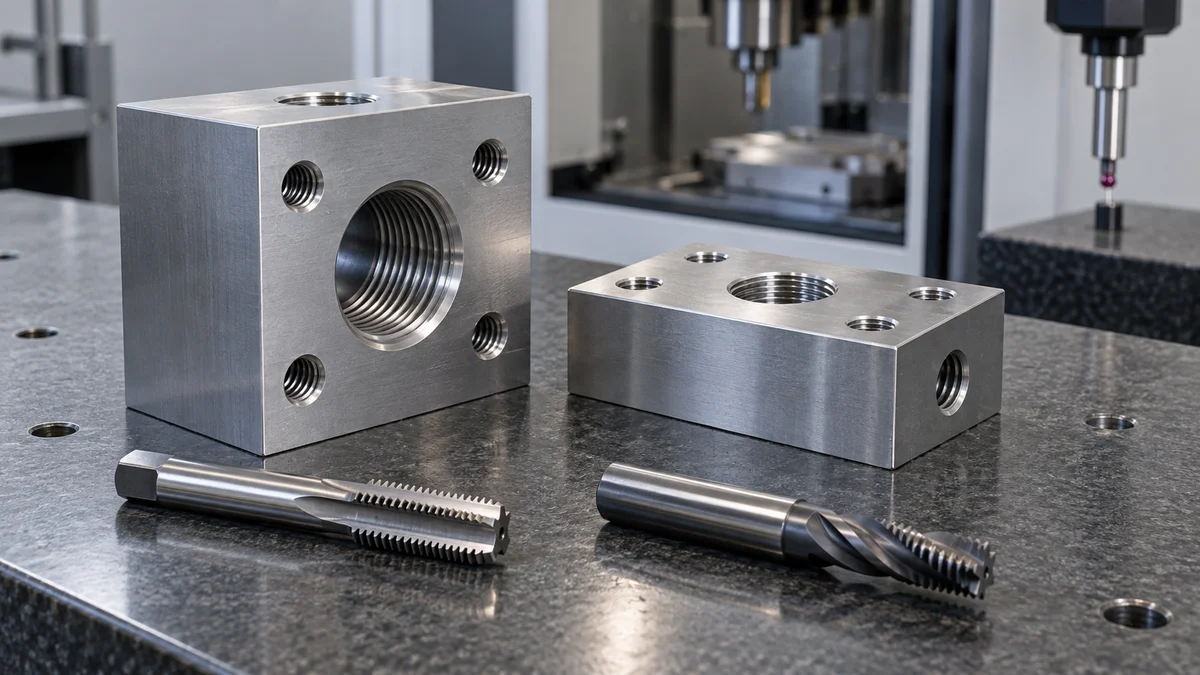
The thread depth, surrounding geometry, material condition and required fit belong in the manufacturing request. Tapping and thread milling are two ways to make an internal thread on a CNC machined part. The suitable choice depends on the specified feature and the supplier’s proposed setup.
Start with the finished thread and its acceptance requirements. Then ask suppliers to compare the methods against the same part revision, quantity and delivered condition.
How do tapping and thread milling produce a thread?
Tapping feeds a tap selected for the thread size along the hole axis. Thread milling moves a rotating cutter along a helical path. For a CNC machined part, specify the finished thread first, then ask which method can make and verify that feature in the stated material and geometry.
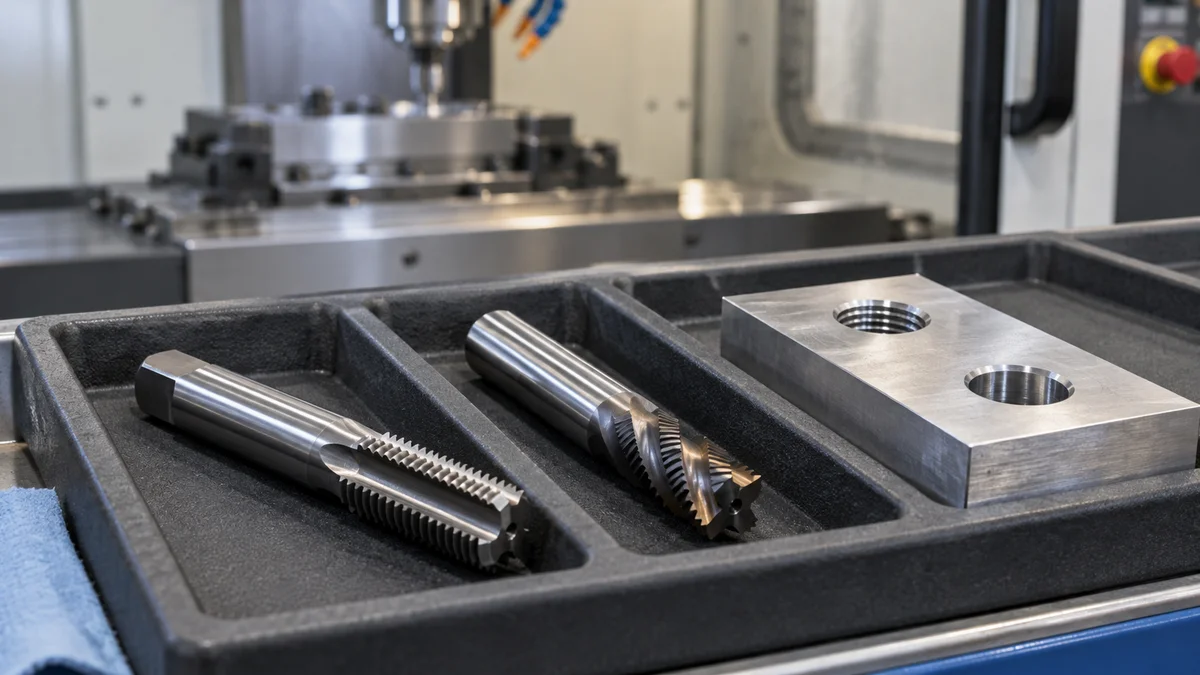
A cutting tap cuts an internal thread in a straight pass with a tool matched to its size. A thread mill cuts along a helical path that combines circular and axial movement. A suitable thread mill can also cut an external thread, but an internal thread in a machined hole is the comparison here. MSC’s thread-milling guide describes both motions and the cutter’s internal and external applications.
This comparison concerns threading a CNC machined part. If the RFQ uses conflicting process names, clarify the requested part and its thread requirements before asking for a threading recommendation.
Give the supplier the thread designation, hole location, blind or through condition, material condition and current part revision. Ask it to identify the proposed method and the tool and machine access it assumes. Require the quote to state how the finished thread will be accepted. That response lets the buyer compare proposed routes against one specified feature, instead of treating either method name as proof of fit. A method preference can be stated when the application requires it, but the finished requirement still needs to be explicit.
How much full thread must a blind hole provide?
For a blind hole, state the required length of usable thread and the available drilled depth as separate requirements. Thread milling can be considered when the thread must extend close to the bottom, but the supplier must confirm the proposed cutter and hole geometry before claiming the required engagement.

For a specified blind hole, state the drilled opening depth and the required usable full-thread depth separately. MSC’s thread-milling guide describes thread milling close to the bottom of blind holes, while CNC Cookbook’s thread-milling guide describes precise thread-depth control. Those statements support considering the method; they do not establish the depth achievable in a particular part.
The RFQ should identify the required full-thread depth, available drilled depth, entry side and any permitted space below the usable thread. If a drawing shows only one depth, ask whether it refers to the opening or to the thread that must engage the mating part. Do not let either supplier choose that interpretation silently. Request a proposed threading route and a drawing-based explanation of how the required depth will be reached.
A through hole changes the bottom constraint, but it does not by itself select tapping. The thread designation, material, access, quantity and acceptance requirement still apply. Ask the supplier to identify the depth that it will inspect and the evidence it will provide. Compare tapping and milling proposals only after both use the same definition of usable thread. If the required engagement remains unclear, resolve the design requirement before treating either quotation as equivalent.
When do material and thin walls change the method?
Hard material or a thin surrounding wall can justify asking a supplier to evaluate thread milling. The sources describe lower cutting forces and applications in difficult materials, but they do not qualify every grade or wall geometry. Supply the exact material condition and nearby dimensions for a part-specific recommendation.

MSC’s thread-milling guide describes smaller cutting forces and thin-wall applications. It also discusses thread milling in difficult materials. CNC Cookbook’s guide presents hardened materials as a reason to consider milling. These are application considerations, not evidence that either method will meet every thread requirement in a named material.
The buyer should state the material grade and condition required when the thread is made and when the part is accepted. If heat treatment or a finish is specified, identify its place in the requested sequence and the condition in which thread fit must be checked. Provide a section view and dimensions around the thread. Ask the supplier to explain its choice for that exact part, including the tool it proposes and the access it needs.
A material family name alone is too broad for a part-specific decision. Neither a general hard-material application nor a general thin-wall benefit establishes a tolerance, a safe wall thickness or a qualified material capability for the supplier. Request the planned thread check and any sample evidence needed to accept the feature. If the application restricts coolant or requires dry machining, put that restriction in the RFQ and ask the supplier to assess it rather than assuming a general cutter recommendation applies.
Can the thread mix justify a thread mill?
A suitable thread mill may make several internal thread diameters that share a pitch, while taps are selected by thread size. The benefit depends on cutter type, hole size and depth. Give suppliers the full thread list and hole counts so they can price tooling and programming for the actual mix.
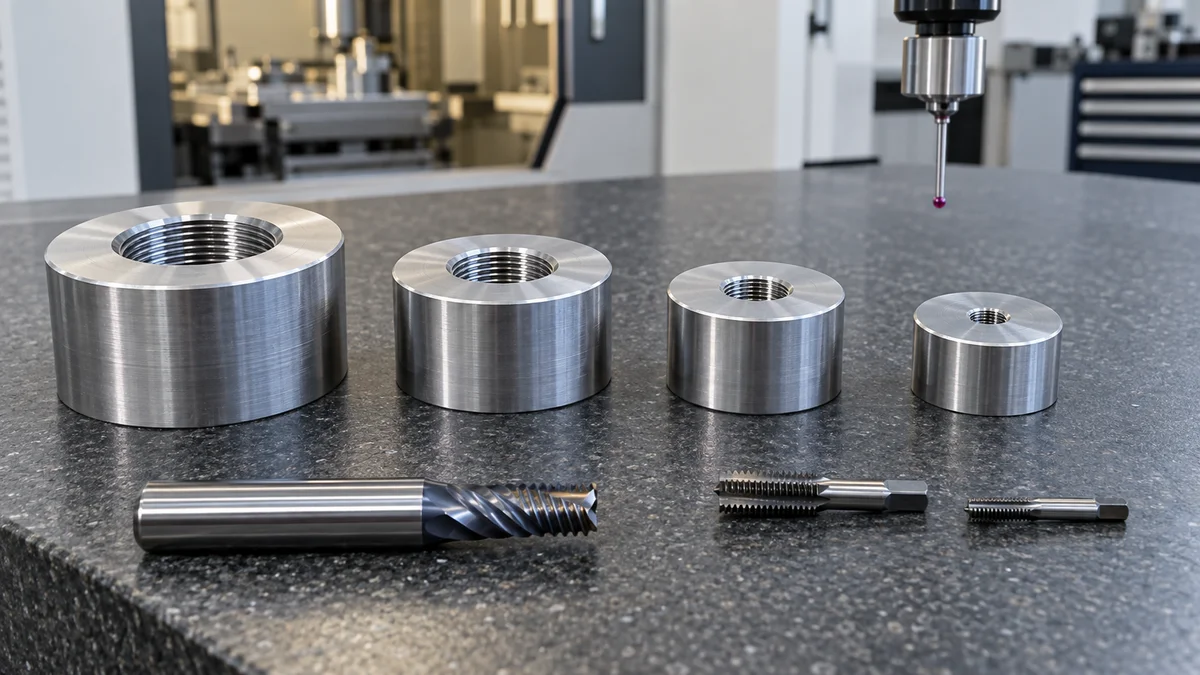
MSC’s thread-milling guide describes a thread mill cutting multiple internal diameters at the same pitch. MSC’s process comparison adds that a single-plane cutter can replace several taps when hole size and depth permit. This is a conditional tooling option, not a promise that one cutter can make every thread on a drawing. CNC Cookbook also distinguishes cutter types with different pitch flexibility.
List each thread designation, pitch, handedness, location and hole count. Separate threads on the current part from threads on other parts in a proposed family. Ask the supplier which cutter or tap it would use for each designation and whether the same cutter can actually reach each feature. A shared pitch is relevant, but cutter geometry and available space still need confirmation.
For a changing prototype, fewer distinct tools may be useful; programming and setup still belong in the quotation. For repeated holes of one designation, ask for a tapping proposal as well if both methods are feasible. Require both prices to use the same revision, delivered condition and inspection scope. The useful comparison is the quoted route for the specified thread mix, including tool changes and verification, rather than a general claim that shared tooling always reduces cost.
Can the available machine reach and generate the thread?
Thread milling requires a machine and program that can move the cutter along the required helix. Show the surrounding geometry and ask the supplier to confirm its proposed tool, holder, entry side and machine route before accepting a method recommendation.

Thread milling relies on a programmed helical path, as described in MSC’s thread-milling guide and CNC Cookbook’s programming guide. MSC’s process comparison describes tapping with a suitable toolholder, CNC threading cycle and tap. These descriptions identify different setup questions; they do not establish that an unnamed supplier’s machine can perform the job.
Show the hole, entry side, adjacent surfaces and available approach in the model and drawing package. Ask the supplier whether its proposed cutter and holder can reach the full specified thread, and whether its machine can execute the needed path. The same request should cover a proposed tap and its required approach. Where an opening or nearby feature is difficult to interpret, provide a section or detail view and ask for an explicit access assumption in the quote.
For a deep feature, request the proposed tool reach and the way the supplier will check the finished thread. For a small opening, ask it to confirm the cutter it intends to use rather than assuming a general thread mill fits. If a different part orientation or setup is proposed, require it to be identified. Access must be settled for the actual revision before cycle time or tooling comparisons are useful.
How should thread fit be specified and inspected?
Define the finished thread and the evidence that will establish acceptance. Thread milling permits cutter-offset correction in the cases described by the supplied comparison; a tap uses a tool selected for its thread. Specify the required check and reporting scope rather than assuming either method guarantees a particular fit.
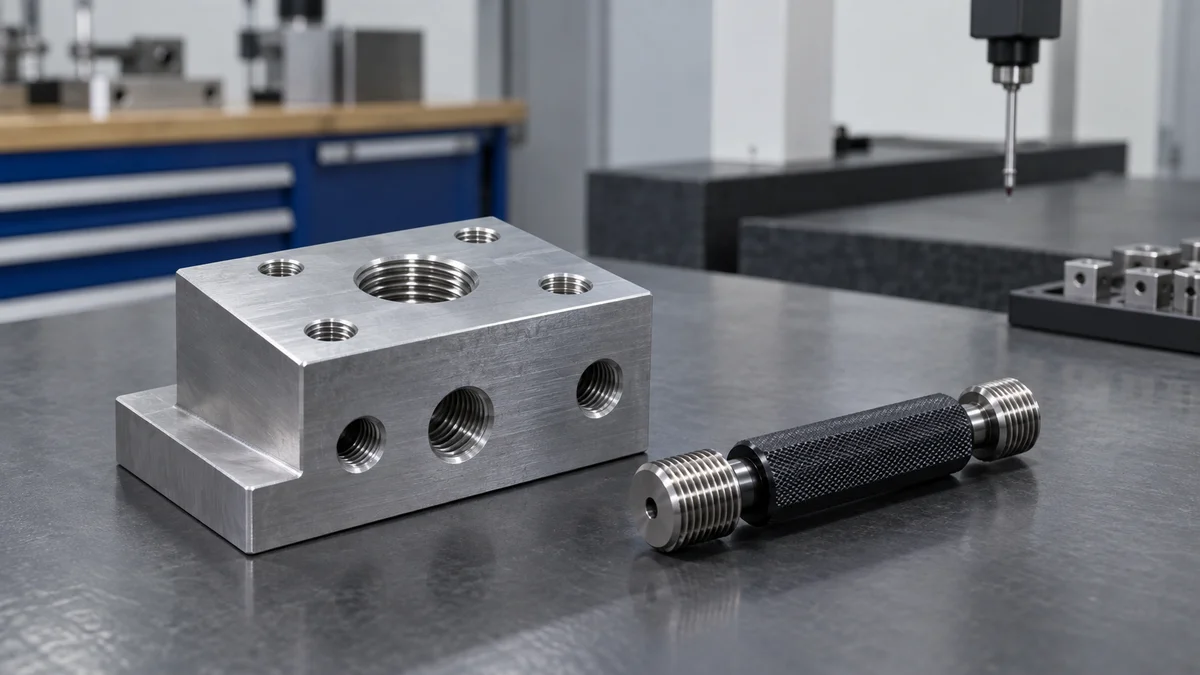
The RFQ should give the complete thread designation, pitch, handedness and any required class or tolerance grade. Identify the governing standard and edition if the contract specifies them. State which revision and delivered condition apply to acceptance, including any specified finish. The supplier can quote those specific requirements against the identified drawing revision.
MSC’s process comparison describes Go and No-Go plug checks and adjusting a thread-milling tool offset when a first result does not fit. It also describes a pitch-diameter measurement as a possible way to determine an offset. That account supports asking how the supplier controls fit. It does not make an offset adjustment, a particular gage or a recorded measurement mandatory for every part.
State whether the required evidence is a functional gage result, a recorded dimension or another contractually defined check. Identify the holes to be checked, whether inspection applies to a first article, selected samples or every identified critical thread, and whether results must be documented. If acceptance must occur after finishing, say so and ask the supplier to price the same condition. A quotation should name its inspection method and reporting assumptions. When the drawing supplies only a nominal thread without the needed fit and evidence requirements, complete those requirements before comparing method or price.
How should chip evacuation and tool breakage affect selection?
Ask for a chip-control and failure-disposition plan when the hole or material makes these risks consequential. The supplied sources describe shorter thread-milling chips and difficult broken-tap removal in some cases. They do not establish that one method prevents failure on the specified part.

MSC’s process comparison discusses chip-control concerns for large or deep threads in ductile materials and notes that tap designs can address them. CNC Cookbook contrasts the shorter chips from thread milling with chips that some taps can produce. These sources support asking about evacuation; they do not make every blind hole a chip-control failure for tapping.
Ask the supplier to describe the proposed tool, chip-removal approach and any fluid or dry-machining assumption for the stated material and hole. If threading takes place after other costly operations, request its plan for a broken tool. The cited guides discuss broken-tool risk and the effect of tool choice on a proposed route. Neither source guarantees recovery without part damage in a particular feature.
The buyer should state whether extraction, thread repair or replacement is permitted and who can approve a repaired feature. Define the inspection required after any permitted repair. Those are acceptance decisions, not claims that a supplier has performed or qualified a recovery method. Request a first-article thread check if that evidence is needed for the order. Compare the two proposals with the same disposition rules so a cheaper quote does not rely on an unstated assumption about damaged parts.
When does tapping make the stronger cost case?
Tapping may make a stronger cost case for repeated suitable threads when speed and setup matter. Thread milling may be worth quoting for a varied thread mix or a consequential tool failure. Compare supplier prices only after both routes meet the same drawing, quantity, finish and inspection requirements.
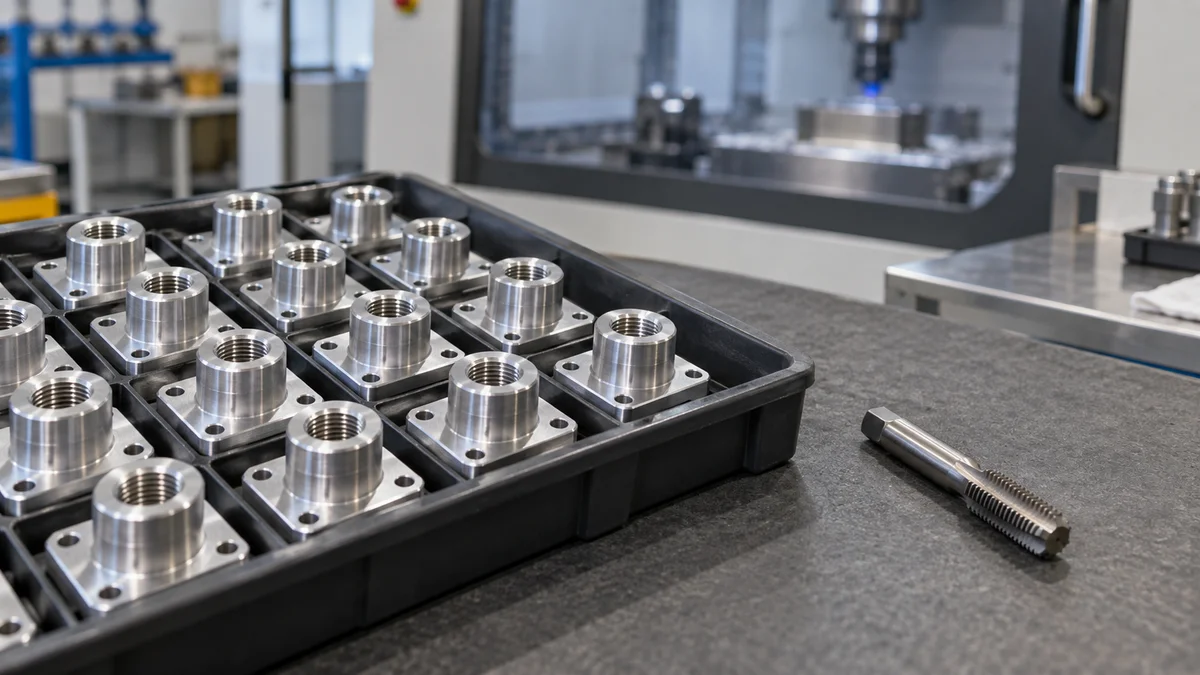
MSC’s process comparison describes tapping as generally faster and easier to set up, with less expensive cutting tools in its comparison. It also describes thread milling’s greater flexibility. CNC Cookbook discusses tool-change savings where a suitable mill serves multiple thread sizes. These are reasons to request alternatives, not cycle or price commitments for this part.
First establish that each proposed method can produce the specified threads and acceptance evidence. Then provide hole counts by designation, order quantity, the current revision and any known repeat demand. Ask each supplier to state tooling, programming, setup, tool changes and inspection included in the quote. For blind holes or material conditions that affect the proposal, require the supplier to state its chip-control and failure assumptions as well.
Keep the delivered finish, inspection frequency and permitted rework decision identical when comparing offers. A tap’s shorter cutting cycle might matter for many repeated holes, while a shared cutter might matter for a mixed set of threads. The relative result belongs to the supplier’s part-specific quotation. Published examples in the comparison article are examples of particular tools and conditions; they should not be transferred to the buyer’s cycle-time estimate. Select on the quoted delivered requirement, not on a method’s general reputation.
What must a threading RFQ tell the supplier?
An RFQ should identify the finished threads, part revision, material condition, hole geometry, quantity and required acceptance evidence. Send the current 3D model and controlled 2D drawing, and resolve any disagreement between them before quotation. Ask the supplier to state its method, tooling, access and inspection assumptions against that package.
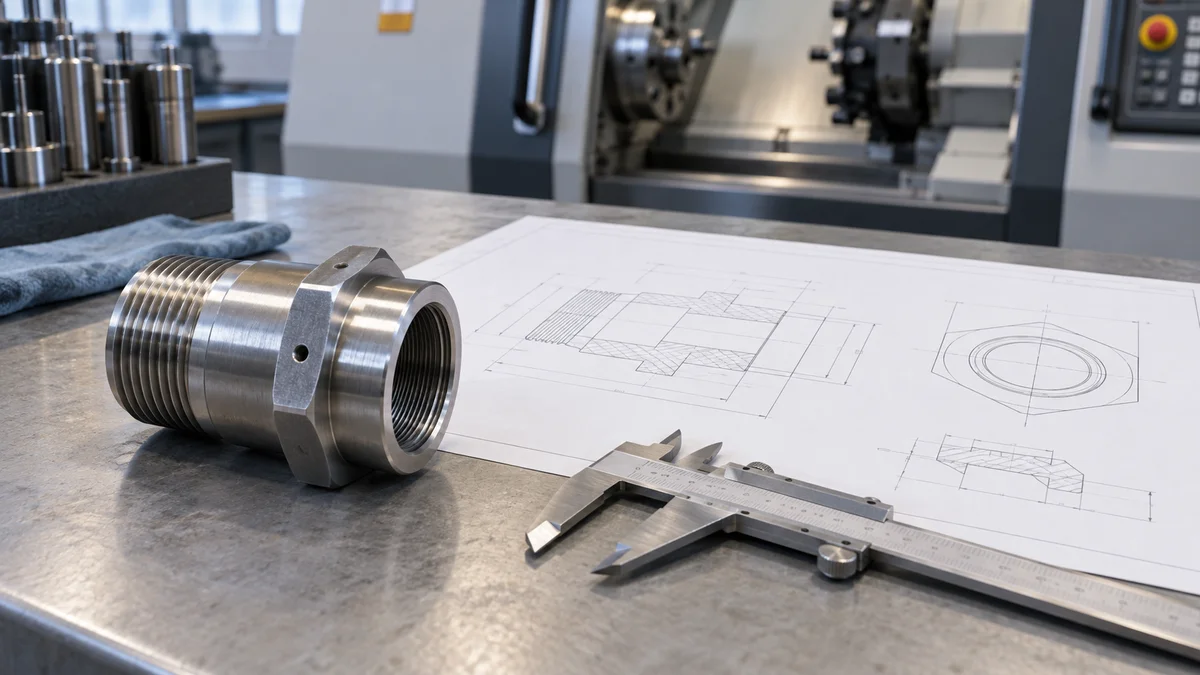
Provide the current 3D model and controlled 2D drawing with part identity and revision clearly identified. If the model and drawing disagree, resolve the conflict or state the controlling instruction for this order before quotation. Mark each thread location and identify its designation, pitch, handedness, required fit, entry side and blind or through condition. Include the governing standard and edition when the contract calls for them.
For blind features, state usable full-thread depth and drilled depth separately. Show the surrounding geometry. Give the material grade and condition, required finish or coating, quantity, prototype or production intent, delivery expectations and any machining-fluid restriction. Identify the condition in which the thread must be accepted. Ask each supplier to confirm its proposed method for the specified combination. If tapping or thread milling is mandatory, state the reason in the RFQ; otherwise, request and compare the supplier’s proposed route.
Request the supplier’s proposed tapping or thread-milling route, including tool and machine assumptions, access, chip control and setup. MSC’s thread-milling guide supports asking about cutter fit and helical motion; MSC’s process comparison supports comparing setup, flexibility and inspection. State the required gage or measurement evidence, locations, frequency and records. Define whether extraction or repair is allowed. Ask any supplier offering alternatives to price them against the same revision and acceptance requirements.
For a method recommendation or quotation, send the current model and drawing, identify their revisions and resolve any disagreement between them. Include material grade and condition, a thread list, blind-hole and access details, quantity, finish, inspection expectations and delivery requirement. Ask the supplier to state its proposed threading method, assumptions and acceptance evidence.