
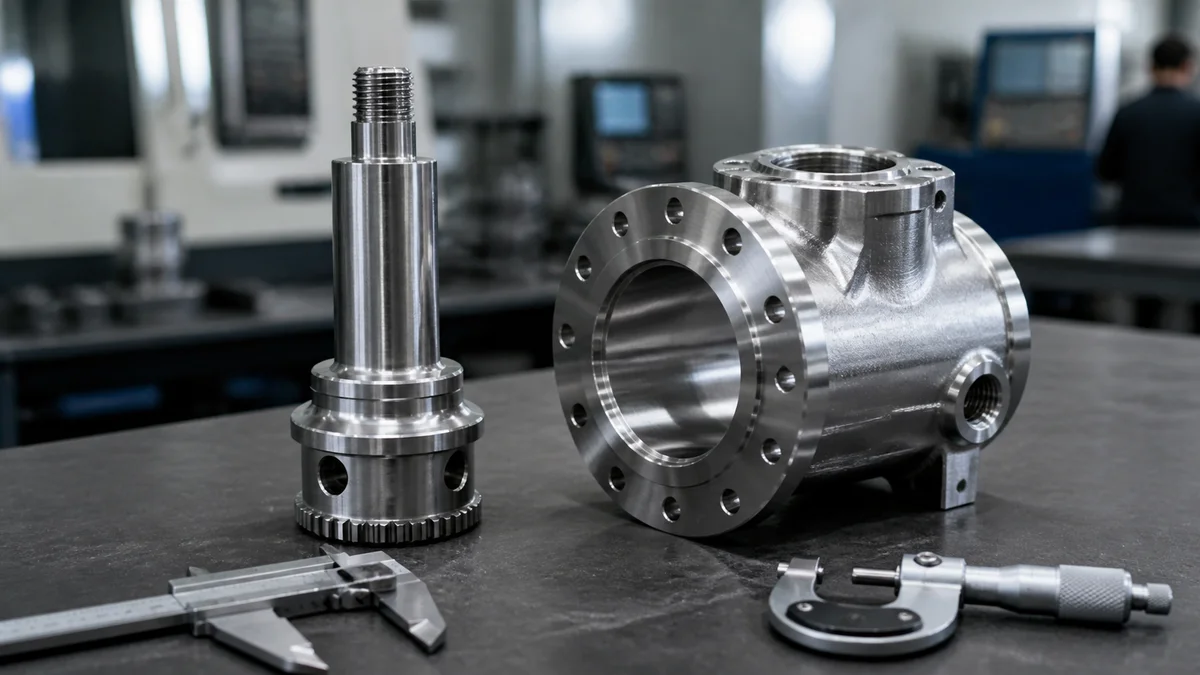
Choosing between 17-4 PH and 316 stainless steel is not simply a choice between strength and corrosion resistance. The correct grade depends on the part’s governing risk: mechanical loading, wear, chloride exposure, cleaning chemicals, geometry, machining sequence, joining method, and final inspection condition.
Material condition also matters. The properties and machining behavior of 17-4 PH depend on its aging route, while 316 presents work-hardening and chip-control challenges. Either alloy can become costly or unsuitable when the drawing leaves heat treatment, critical tolerances, surface finish, or acceptance requirements open to interpretation.
The decisions below connect service conditions to machining, geometry, inspection, and RFQ requirements so suppliers can compare the two alloys using consistent assumptions.
Should You Choose 17-4 PH for Strength or 316 for Corrosion Resistance?
Choose 17-4 PH when strength, stiffness, wear resistance, hardness, or thread retention governs the design. Choose 316 when chloride exposure, seawater, salt spray, chemical contact, or aggressive cleaning creates the greater service risk. Neither alloy is universally superior; selection should follow the most credible failure mode.

Start by defining what the part must survive. A shaft, gear, valve stem, threaded component, or compact load-bearing body may point toward 17-4 PH when mechanical demand controls acceptance. A fitting, housing, or fluid-contact component may point toward 316 when pitting, crevice corrosion1, or material loss in a chloride-bearing environment is the larger concern.
| Specification question | 17-4 PH may fit when | 316 may fit when |
|---|---|---|
| What controls failure? | Load, stiffness, wear, hardness, or thread retention | Chloride-driven pitting, crevice corrosion, or chemical attack |
| What processing follows machining? | Aging can be integrated into the route | Welding, forming, or passivation is required |
| What must the drawing define? | Final condition and critical post-age dimensions | Exposure, final finish, and corrosion-related acceptance |
| What must the supplier review? | Heat-treatment sequence and mechanical duty | Fluid chemistry, cleaning practice, and exposure pattern |
Avoid selecting from an application label alone. “Marine part,” “high-strength bracket,” or “food equipment component” does not define stress, fluids, cleaning frequency, temperature, or exposure duration. Those details establish whether corrosion or mechanical damage is more likely to control service life.
Example: A pump shaft exposed to a mildly corrosive fluid cannot be assigned automatically to either alloy. Review its torque, bending, wear surfaces, fluid chemistry, cleaning practice, sealing interfaces, and required final condition together. If both materials remain technically acceptable, compare their complete machining and post-processing routes.
Which 17-4 PH Condition Should the Drawing and RFQ Specify?
Specify both the 17-4 PH grade and its required condition, including the incoming stock condition, final aging condition, and treatment sequence. A grade-only callout is incomplete because aging changes mechanical properties and machining behavior. Grade 316 does not use the same precipitation-hardening route.

Condition A2 identifies a solution-treated state commonly considered for machining before aging. Aging conditions such as H900 and H1025 describe different delivered material states and should not be treated as interchangeable labels. The design authority must select the condition that supports the required mechanical outcome rather than asking the heat treater or machine shop to infer it from the application.
The controlled drawing and RFQ should answer six questions:
- What exact grade and incoming condition must the supplier purchase?
- What final aging condition must the delivered 17-4 PH part have?
- Will machining occur in Condition A before aging, or in the final aged condition?
- Which features need finish machining or grinding after aging?
- Which dimensions and GD&T controls apply after the thermal cycle?
- What material or heat-treatment documentation is required for acceptance?
Grade 316 needs a different specification approach. It is an austenitic stainless steel and is not strengthened through the same aging sequence. Its RFQ should still identify the exact grade, stock condition, final surface treatment, and inspection state, but it should not copy a 17-4 PH heat-treatment route.
Common specification mistake: Writing only “17-4 stainless” in the material field while placing a hardness expectation in a separate, uncontrolled note. That disconnects the requested outcome from the material condition intended to produce it. Put the exact material and final condition in the controlled specification, then align the process sequence and inspection basis with that callout.
How Do Work Hardening and Aging Change the Machining Plan?
Machine 17-4 PH in a suitable pre-aged condition when the approved route permits, then age and finish critical features as required. For 316, control work-hardening risk through stable tool engagement, sharp tooling, chip management, and cooling. The final geometry and condition should determine the sequence.

The alloys create different cutting problems. With 17-4 PH, machining becomes more demanding after aging, so the route may separate rough machining, aging, and final finishing. With 316, rubbing instead of effective cutting can work-harden the local surface3, accelerating tool wear and making a later pass more difficult.
| Machining decision | 17-4 PH | 316 |
|---|---|---|
| Material state | Decide which operations occur before and after aging | Machine in the specified austenitic condition |
| Primary cutting risk | Hardened-state tool wear and cutting forces | Gummy chips and work hardening |
| High-risk geometry | Interrupted cuts, deep slots, long engagement, post-age finishing | Repeated engagement, light rubbing passes, deep slots, poor chip evacuation |
| Process response | Separate roughing, aging, and local final finishing where justified | Maintain effective engagement, cooling, chip removal, and tool condition |
| Drawing input | Final condition and post-age critical features | Critical features, finish zones, and final treatment state |
Specify the required result rather than unsupported cutting parameters. Feeds, speeds, insert selection, coolant delivery, and tool-change strategy normally belong to the supplier’s process plan. The RFQ should instead expose the geometry that affects that plan: interrupted cuts, thin walls, deep narrow slots, long bores, small internal radii, finish-critical surfaces, and features requiring reclamping.
A light final pass is not automatically low risk in 316 if the previous operation has work-hardened the surface. Likewise, requiring every 17-4 PH surface to be remachined after aging can create unnecessary hardened-state cutting. Limit post-age finishing to dimensions, datum relationships, and surface conditions that control fit or performance.
Which Part Geometries Favor 17-4 PH or 316?
Compact, monolithic, load-bearing geometry may favor 17-4 PH, while a machined component that also requires substantial welding or forming may favor 316. Deep pockets, thin walls, slender shafts, narrow slots, restricted access, and multiple setups increase machining risk in either alloy and require supplier review.

Material choice cannot rescue geometry that lacks cutter access or rigidity. Deep pockets and narrow slots can require long tools. Thin walls and slender shafts can deflect under cutting or clamping forces. Small internal radii may force smaller cutters, while multi-face features introduce setup transfers and possible tolerance stack-up4 between orientations.
Review these geometry groups before releasing the material specification:
- Load-bearing sections: Identify shoulders, threads, contact zones, wear surfaces, and areas exposed to bending or torsion.
- Flexible features: Mark thin walls, tall ribs, long overhangs, slender diameters, and restricted clamping regions.
- Tool-access risks: Show deep pockets, narrow channels, small internal radii, hidden undercuts, and obstructed holes in the model and drawing.
- Cross-setup relationships: Define which bore-to-face, hole-pattern, or multi-side alignments are functionally critical.
- Downstream fabrication: State every weld, bend, roll, or other forming operation before selecting the alloy.
Scenario: Consider a compact valve stem with a wear surface, threaded end, and substantial mechanical loading. Its geometry may support a 17-4 PH review if the aging and final-finishing route is controlled. A formed and welded stainless assembly exposed to corrosive cleaning may instead support a 316 review because joining and corrosion govern its manufacturing route.
A stamped stainless steel clip is a separate teaching scenario, not a CNC machined part. Its material hardness, bend radius, springback, and burr direction may matter more than a generic overall tolerance. It belongs to metal stamping or sheet metal fabrication, depending on the route. Keeping these processes distinct prevents sheet-forming requirements from being misapplied to stock-removal machining.
When Should Tolerances Apply Before or After Final Processing?
Critical dimensions should normally be accepted in the final delivered condition when aging, grinding, passivation, or another finishing step can affect them. For 17-4 PH, identify post-age requirements and finishing allowance. For 316, define final inspection after the specified machining and surface-treatment sequence.
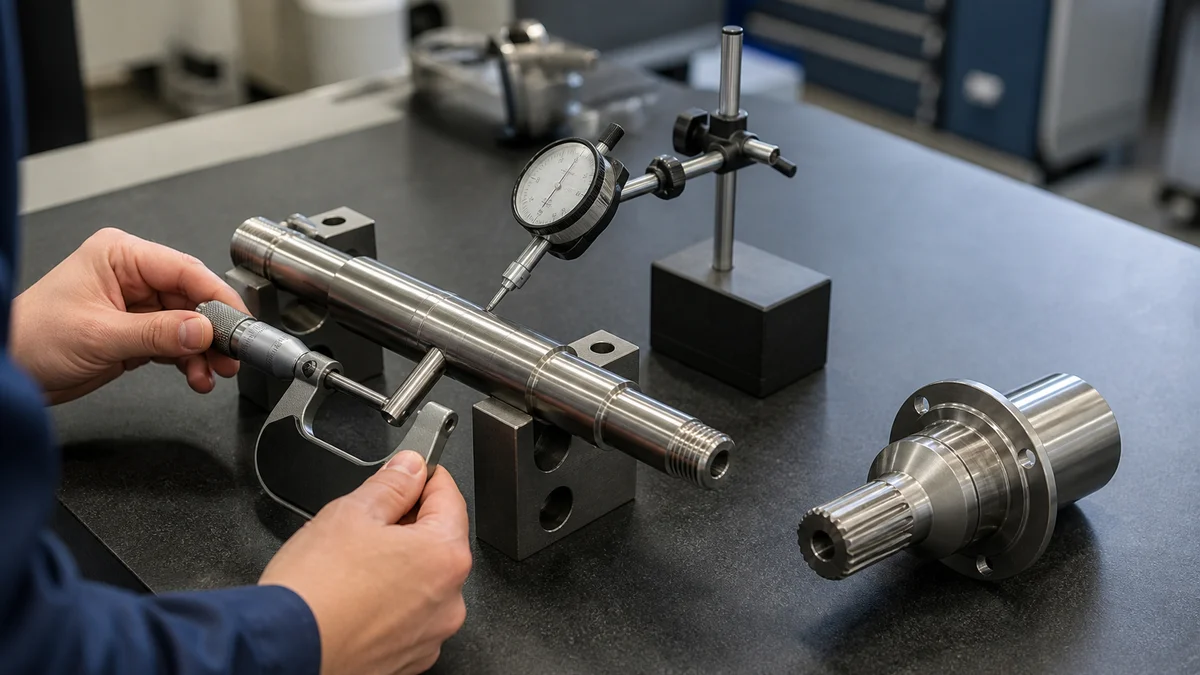
A drawing should distinguish process dimensions from acceptance dimensions. A rough-machined diameter used to prepare a 17-4 PH part for aging is not necessarily the dimension that controls assembly. A bore, thread, bearing surface, sealing face, or alignment feature may need to meet its tolerance only after the complete route is finished.
For 17-4 PH, identify surfaces that need stock reserved for post-age machining or grinding. Agree the allowance with the supplier because it depends on geometry, section balance, treatment route, and finishing method. One blanket allowance is not suitable for every feature. Thin sections, long shafts, asymmetric material removal, and interrupted geometry deserve specific review for dimensional movement.
For 316, there is no comparable precipitation-aging step, but sequence still matters. Passivation does not intentionally smooth a machined surface5 or correct a dimensional error. If polishing, electropolishing, or another material-removing treatment is required, state whether dimensions and surface conditions apply before or after that operation.
A functional tolerance plan should:
- Apply general requirements to ordinary, non-critical geometry.
- Mark bores, threads, mating faces, sealing areas, bearing locations, and alignment features separately.
- Use GD&T when position, flatness, perpendicularity, parallelism, coaxiality, runout, or profile communicates function better than size alone.
- Establish datums that reflect assembly location and inspection setup.
- Identify the final material and surface condition for acceptance.
Inspecting a 17-4 PH shaft before aging does not prove that its final bearing diameter and runout comply. Acceptance evidence must represent the delivered condition.
What Inspection Evidence Should Confirm the Material Choice?
Inspection evidence should confirm the requirement that justified the alloy. For 17-4 PH, verify the specified final condition and critical post-age geometry. For corrosion-driven 316 parts, request the material and surface-treatment evidence required by the governing specification, together with clearly defined dimensional inspection and sampling.

Dimensional conformance does not prove material identity or heat-treatment condition. A material record likewise does not prove that a bore, sealing face, or hole pattern meets its drawing requirement. Build the acceptance package from separate evidence and request only what the application needs.
What should be checked for a 17-4 PH part?
- Exact grade and final condition identified by the purchase requirement
- Requested material and heat-treatment documentation
- Critical dimensions measured after final aging and finishing
- GD&T results evaluated from the specified datum reference frame6
- Hardness or other condition-related verification only when required
- First-article, sampling, or production inspection frequency defined in advance
What should be checked for a 316 part?
- Exact material grade and requested traceability documentation
- Critical dimensions in the final machined and treated state
- Passivation or other surface-treatment evidence when explicitly required
- Corrosion-related acceptance only where a governing specification defines it
- Surface-finish measurements at the specified functional locations
- First-article, sampling, or selected full inspection based on feature risk
The inspection report should identify the active drawing revision and connect each result to an inspected characteristic. For critical dimensions, actual measured values are more informative than an unexplained pass/fail entry. The RFQ should define which features need documented results, the inspection method where it matters, and how much of the lot the report covers.
Do not assume that certificates, passivation records, heat-treatment evidence, roughness readings, or complete dimensional reports are automatically included. Each item adds sourcing, processing, metrology, or reporting work and should be requested before quotation.
Which Alloy Produces the Lower Total Cost and Lead Time?
Neither alloy is always cheaper or faster as a finished CNC part. Compare material availability, stock condition, machining time, tool wear, heat treatment, passivation, post-age finishing, setup count, inspection, documentation, quantity, and delivery requirements. Request alternatives only when both alloys satisfy the engineering and service requirements.

Raw stock price is only one part of the manufacturing route. Grade 17-4 PH may be machined in a more workable condition, but aging, outside processing, handling, final finishing, and post-treatment inspection add schedule stages. Grade 316 avoids aging but may require more machining effort where work hardening, difficult chip behavior, and long tool engagement dominate.
| Quotation driver | 17-4 PH route | 316 route | Buyer input needed |
|---|---|---|---|
| Material sourcing | Exact grade, stock form, incoming condition | Exact grade, stock form, availability | Approved grades and substitutions |
| Primary machining | Often planned around pre-aged material | Planned around chip and work-hardening risk | Complete geometry and finish zones |
| Secondary processing | Aging and possible post-age finishing | Passivation or specified surface treatment | Final treatment specification |
| Dimensional control | Verification after aging and finishing | Verification after machining and treatment | Final-condition tolerances |
| Tooling exposure | Greater when substantial cutting follows aging | Greater with long engagement or restricted access | Deep slots, bores, and interrupted cuts |
| Schedule exposure | Treatment queue, handling, finishing, reinspection | Machining duration, treatment, inspection | Quantity and delivery expectations |
Production intent changes the comparison. A prototype may use flexible workholding and a conservative route. Stable repeat production may justify refined fixtures, tool-life planning, batching, and a defined sampling plan. Revisions can disrupt either route, especially after dedicated fixtures or post-treatment allowances have been established.
Ask suppliers to state their assumed sequence: material procurement, roughing, aging or passivation, final machining, deburring, inspection, documentation, and delivery. Quotations are comparable only when they include the same delivered condition and acceptance scope. A lower machining line item is not a lower total cost if secondary processing or final verification is missing.
What Specification Failures Lead to the Wrong Stainless Grade?
The wrong grade is often selected when 17-4 PH is treated as a universal strength upgrade or 316 as a universal corrosion upgrade. Resolve the actual risk first, including overload, fatigue, wear, thread failure, pitting, crevice corrosion, welding, forming, and final processing requirements.
Material upgrades are not substitutes for engineering requirements. A higher-strength alloy does not correct an undefined load case, weak thread geometry, poor support, or an unsuitable heat-treatment sequence. Greater corrosion resistance does not prove that a highly loaded component has adequate mechanical performance.
Watch for these specification failures:
- Calling for “high-strength stainless” without loads, duty cycle, wear conditions, or final material condition
- Calling for “marine-grade stainless” without defining seawater contact, salt spray, immersion, crevices, cleaning agents, or exposure frequency
- Selecting 17-4 PH but omitting its aging condition and final inspection state
- Selecting 316 to solve a tolerance or surface-finish problem governed by geometry and process control
- Ignoring welding or forming until after a monolithic CNC machining route has been quoted
- Applying blanket close tolerances or fine surface finish to non-critical geometry
- Requesting material alternatives without confirming that both meet the governing failure criteria7
Scenario: A threaded actuator operates under repeated load and receives occasional chloride-bearing washdown. Choosing 316 only because chlorides are present leaves the mechanical requirement unresolved. Choosing 17-4 PH only because repeated load is present leaves the corrosion environment unresolved. Define both risks, identify which controls acceptance, and state any required surface treatment or cleaning route.
Example: A lightly loaded cover is specified as 17-4 PH because the grade sounds stronger. If its actual requirements are chemical washdown, welding into an assembly, and ordinary mechanical duty, the aging route may add manufacturing complexity without addressing the governing function. Reopen the material decision rather than defending it as a premium upgrade.
What Should a 17-4 PH or 316 CNC Machining RFQ Include?
A complete RFQ should define the CNC machining process, exact stainless grade and condition, geometry, quantity, production intent, critical tolerances, finish, inspection scope, revision, service exposure, post-processing, and delivery expectations. It should give suppliers enough evidence to recommend 17-4 PH or 316 without hidden assumptions.

Use this RFQ and approval checklist before requesting a material recommendation or quotation:
- ☐ Current 3D CAD model showing complete external and internal geometry
- ☐ Controlled 2D drawing with units, part identity, active revision, and governing notes
- ☐ Exact material grade and incoming condition
- ☐ Required final 17-4 PH aging condition, when applicable
- ☐ Immediate quantity and prototype, validation, pilot, or repeat-production intent
- ☐ Expected annual demand or lot pattern when known
- ☐ Critical tolerances separated from ordinary dimensions
- ☐ Functional datums and GD&T where feature relationships govern assembly
- ☐ Surface-finish values and locations for sealing, sliding, bearing, or cosmetic faces
- ☐ Heat treatment, passivation, grinding, polishing, or other secondary operations
- ☐ Statement defining whether critical dimensions apply before or after final processing
- ☐ Inspection method, report scope, sampling frequency, and first-article requirements
- ☐ Required material, heat-treatment, or surface-treatment documentation
- ☐ Loads, duty cycle, wear, thread use, fluids, chlorides, cleaning methods, and exposure frequency
- ☐ Welding, forming, assembly, masking, or protected-surface requirements
- ☐ Delivery expectations, partial-shipment needs, and approved material alternatives
- ☐ Governing document identified if the model and drawing conflict
Name the process correctly. CNC machining removes material from solid stock by milling, turning, drilling, boring, reaming, or related operations. CNC turret punching8 uses programmed punch tools on sheet metal; a CNC punch press is equipment for that sheet operation. Metal stamping uses dedicated dies. Sheet metal fabrication can include cutting, punching, bending, welding, and finishing. Plastic injection molding forms polymers in a mold.
“CNC turret punching, CNC punch press, CNC-controlled stamping equipment, or metal stamping depending on the actual process” is not one standard process term. If it appears in an RFQ, clarify whether it means CNC turret punching, a CNC punch press, CNC-controlled stamping equipment, or general metal stamping before discussing material, tolerance, tooling, or cost.
For a material recommendation or quotation, send the 3D model, controlled 2D drawing, proposed grade and condition, quantity, prototype or production intent, critical tolerances, surface finish, inspection expectations, revision level, service loads, exposure, post-processing, and delivery requirements.
References
-
Pitting Corrosion vs. Crevice Corrosion in Stainless Steel - Nickel-based alloys like 625, C22, and C276 offer the greatest resistance to pitting and crevice corrosion. The 316L grade of stainless steel (UNS S31603) ... ↩
-
17-4 Precipitation-Hardening Stainless Steel: Soft-Tough Heat ... - by PY Hsieh · 2024 · Cited by 6 — The results showed that after the precipitation hardening heat treatment, the ultimate tensile strength and hardness of 17-4PH stainless steel increased. ↩
-
Secrets of CNC machining of high hardness stainless steel ... - How to break through the tool wear and work hardening problems of high hardness stainless steel machining? This article explains tool ... ↩
-
Avoiding Tolerance Stacks with GD&T - Using the appropriate datum features to set up your locational tolerances also helps reduce the number of tolerance calculations that would be ... ↩
-
What is Passivation? How Does Stainless Steel ... - In stainless steel, the passivation process uses nitric acid or citric acid to remove free iron from the surface. The stainless steel passivation treatment ... ↩
-
Mastering GD&T - Building Datum Reference Frames - ASME Y14.5 defines a datum as a theoretically exact point, axis, line, plane, or combination thereof derived from the theoretical datum feature simulator. ↩
-
Understanding Material Failure: Causes, Types, and ... - Material selection must consider strength requirements and environmental factors like chemical exposure, UV light, and heat. Part design should ... ↩
-
CNC and Turret Punch Press Machine and Services - A sheet of metal is sandwiched between two turrets that hold corresponding punches and dies. The punch sits above the metal, on the bottom is its associated die ... ↩