
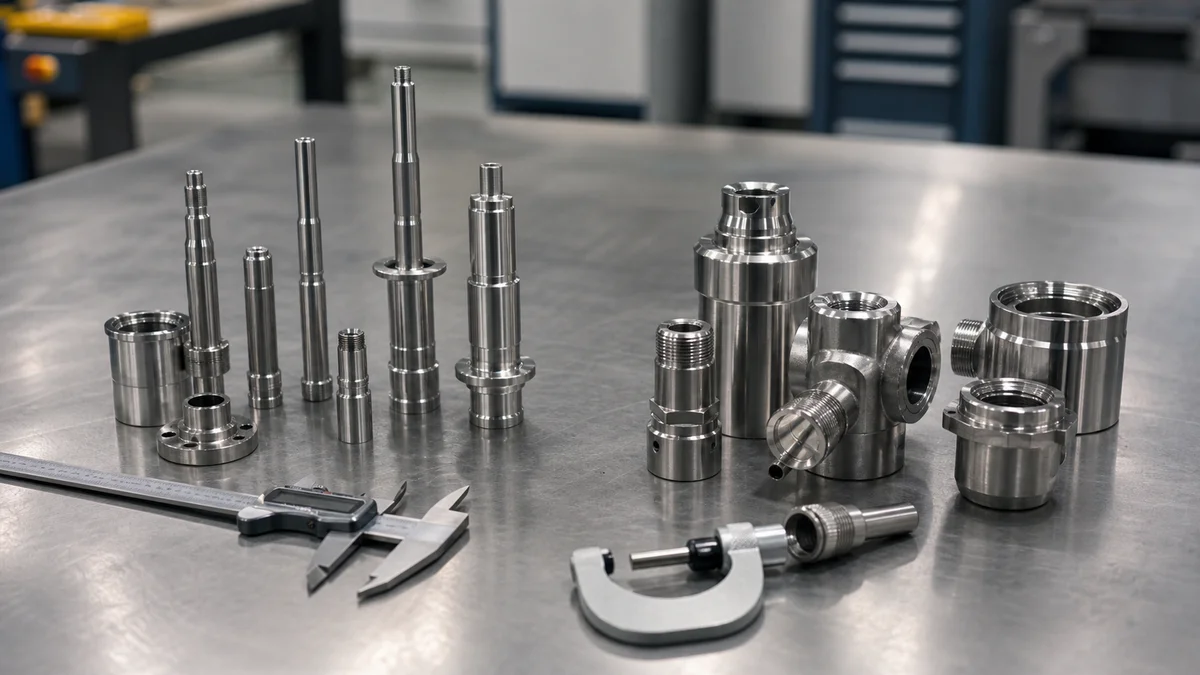
Stainless steel 303 and 304 are closely related austenitic grades, but they solve different manufacturing problems. Grade 303 favors machinability and chip control. Grade 304 sacrifices some cutting convenience for better corrosion resistance, weldability, and formability.
The right choice depends on the complete part specification, not a simple material ranking. Service exposure, geometry, tool access, critical tolerances, surface finish, downstream fabrication, inspection scope, quantity, and production intent can all change the recommendation.
A practical selection starts by identifying what governs the part: machining efficiency, corrosion exposure, or post-machining welding and forming. The following sections translate those priorities into drawing, inspection, and RFQ decisions.
What Is the Main Difference Between Stainless Steel 303 and 304?
Stainless steel 303 prioritizes machinability through a sulfur addition that promotes chip breaking, while 304 prioritizes corrosion resistance, weldability, and formability. Select the grade according to the governing manufacturing and service requirement rather than treating either material as universally superior.
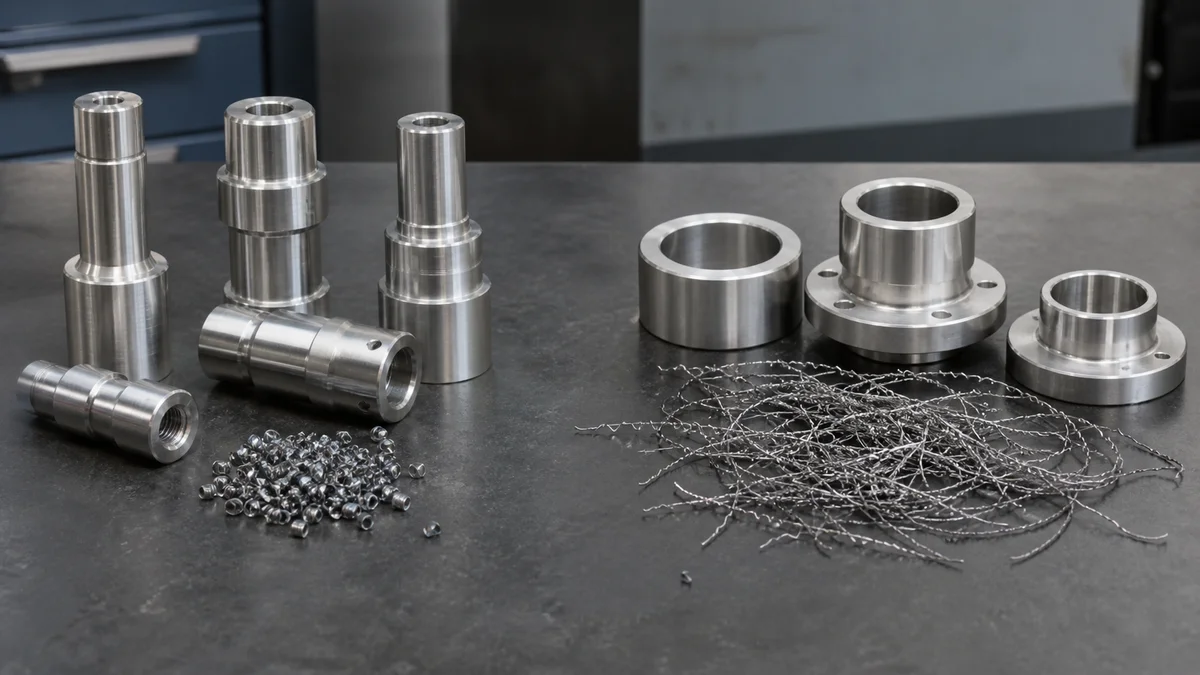
Both grades belong to the austenitic stainless family1, but they are not interchangeable when the manufacturing route or operating environment exposes their different priorities.
Sulfur is the central distinction. In 303, it promotes manageable chips during turning, drilling, and milling. That can reduce chip entanglement and simplify machining-intensive production. The same compositional change makes 303 less suitable when corrosion exposure, welding, or substantial cold forming governs the design.
| Specification factor | Stainless steel 303 | Stainless steel 304 | Practical consequence |
|---|---|---|---|
| Machining behavior | Better chip breaking | Longer, stringier chips and greater work-hardening sensitivity | 303 may reduce chip-control interruptions on feature-dense parts |
| Corrosion priority | Suited conditionally to mild exposure | Better choice between these grades for more demanding exposure | Describe the actual fluid, atmosphere, and cleaning cycle |
| Welding | Generally a poor selection when welding is required | Preferred when welding is part of the route | Review the entire assembly process before selecting material |
| Cold forming | Less suitable for substantial forming | More ductile and formable | Bend radius, hardness, and springback require process-specific review |
| Typical route | Machining-dominant parts from solid stock | Machined parts with exposure or later fabrication requirements | Grade choice should follow the delivered part, not the first operation |
This comparison does not establish strength, tolerance, or surface-finish capability for a particular component. Those requirements still depend on material condition, geometry, rigidity, workholding, setup relationships, finishing, and inspection.
A common specification mistake is calling out only “stainless steel” and allowing the supplier to choose between 303 and 304. State the exact grade, or permit alternatives only after defining the service and downstream-process requirements that control approval.
When Should You Choose 303 for CNC Machined Parts?
Choose 303 when machining from solid stock dominates the production route, corrosion exposure is mild, and the part will not require welding or substantial forming. Its chip-breaking behavior is especially relevant to feature-dense turned or milled components with repeated tool engagement.
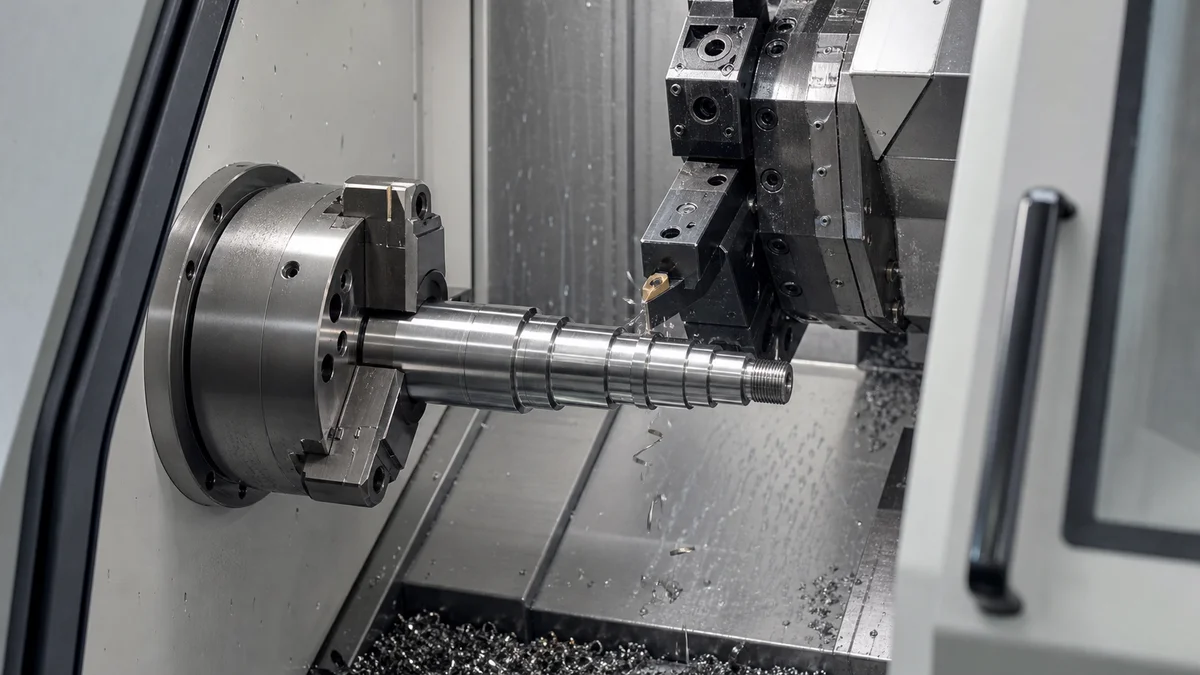
Grade 303 is most compelling when the component is primarily a machining challenge. Possible candidates include shafts, fittings, threaded components, fasteners, and bushings made from bar stock. Rotational geometry may favor CNC turning; flats, pockets, or cross-holes may justify milling or a turn-mill route2.
Before specifying 303, confirm that:
- The documented service environment does not require the greater corrosion resistance of 304.
- Welding is absent from the released manufacturing route.
- Bending, swaging, deep drawing, or substantial cold forming is not required.
- Machining content is high enough for chip control and repeated tool engagement to affect the process plan.
- The proposed stock form suits the part envelope without unnecessary material removal.
- Critical tolerances, finish zones, and inspection expectations are defined independently of the grade.
- The supplier can review the actual geometry, setup count, quantity, and production intent.
Example: A bar-stock shaft with several turned diameters, grooves, threads, and cross-holes may suit 303 when it operates in mild indoor service and will not be welded. The same geometry becomes a weaker candidate if repeated chemical washdown or later welding is introduced.
The RFQ should communicate function and constraints without prescribing unsupported cutting speeds, feeds, coolant settings, or tool types. The supplier can then plan cutting conditions, workholding, tool access, and inspection around the specified stock condition, finish, batch quantity, and feature relationships.
When Does Corrosion Exposure Make 304 the Better Choice?
Choose 304 when humidity, outdoor service, washdown, chlorides, chemicals, or repeated cleaning creates a corrosion requirement beyond mild service. Describe the actual environment in the RFQ because a generic request for corrosion resistance does not establish whether 303 is acceptable.
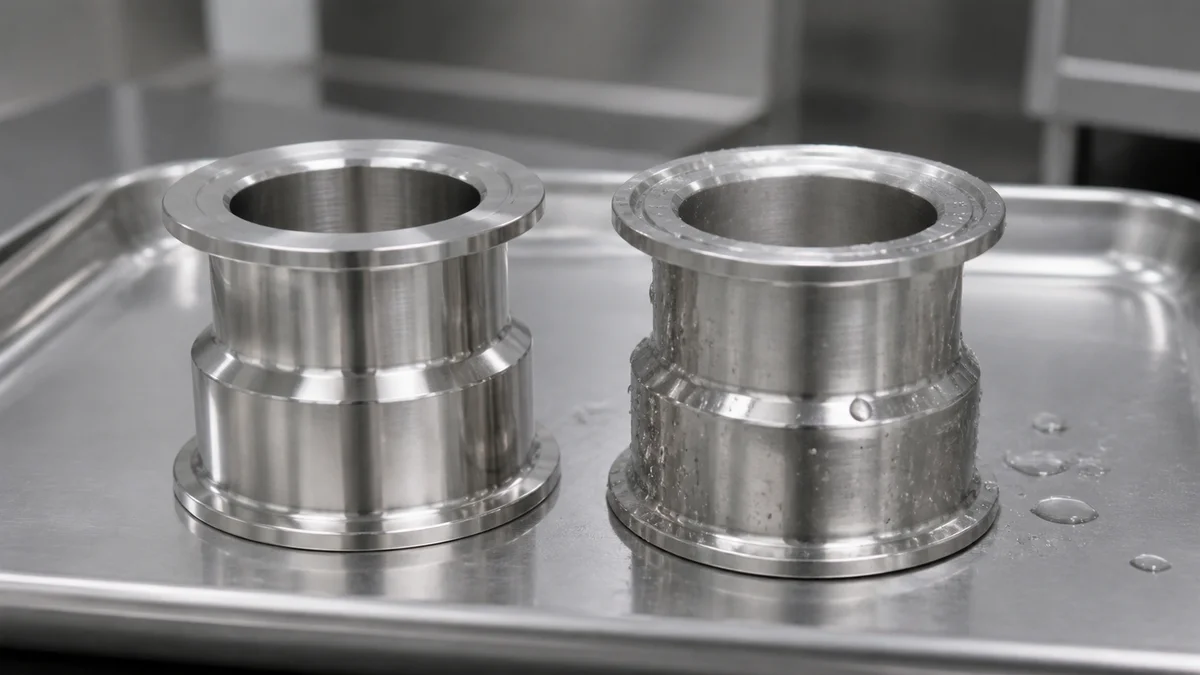
Treat corrosion exposure as an operating specification3, not a broad preference for stainless steel. Grade 303 may remain suitable in some mild conditions, but its sulfur-enhanced machinability comes with lower corrosion performance than 304. When exposure can control service life or acceptance, 304 is the stronger starting point between these grades.
Document both the medium and the exposure pattern. Occasional contact followed by drying differs from continuous exposure. Indoor humidity differs from outdoor service, and mild cleaning differs from repeated chemical washdown.
| RFQ input | Specification detail to provide | Why it affects selection |
|---|---|---|
| Moisture exposure | Indoor humidity, outdoor service, condensation, or immersion | Establishes how often the surface remains wet |
| Chloride contact | Source, concentration if known, duration, and rinse conditions | Identifies exposure that may outweigh machining economy |
| Washdown | Fluid, cleaning agent, temperature, frequency, and drying | Defines the actual cleaning cycle |
| Chemical contact | Substance, concentration if known, and contact duration | Allows compatibility review against a defined medium |
| Geometry | Crevices, trapped-fluid areas, drainage, and mating interfaces | Shows where exposure may persist locally |
| Acceptance | Material designation, required documentation, and inspection scope | Prevents undocumented assumptions during quotation |
Scenario: A machined fitting used in a dry indoor mechanism may permit 303 if no other requirement prevents it. Put the same fitting into repeated washdown service, and 304 may become more appropriate even though machining it can require closer process control.
Avoid relying only on terms such as “weatherproof,” “food grade,” or “corrosion resistant.” They do not define the fluid, temperature, cleaning method, duration, or acceptance criteria. Request any mandatory material documentation before quotation instead of assuming it is included.
Should Welding or Forming Requirements Override 303 Machinability?
Yes. Choose 304 when the released manufacturing route includes welding, bending, deep drawing, swaging, rolled holes, or other significant forming. The complete downstream process should govern material selection because 303’s improved machining behavior does not compensate for weak weldability or reduced formability.
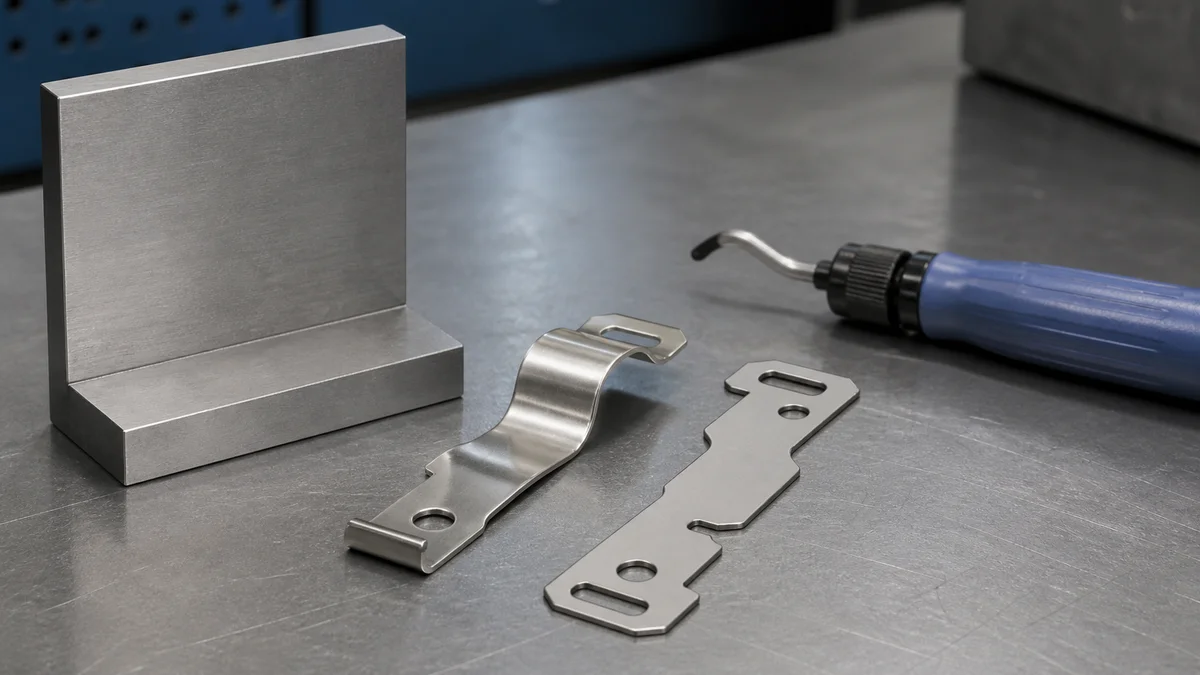
A machined component may be only one stage in a larger manufacturing route. If it will later be welded into an assembly or significantly cold-formed, selecting 303 solely to simplify cutting creates downstream risk. Between these grades, 304 is the more appropriate starting point when joining or forming is functionally necessary.
Identify every operation that follows machining:
- Welding to another machined component, tube, plate, or fabricated frame
- Bending or local flange formation
- Deep drawing or substantial reshaping
- Swaging, staking, or rolled-hole formation
- Press operations that alter final geometry
- Heat treatment or finishing that changes dimensional acceptance
Scenario: For a stamped stainless steel clip, burr direction, material hardness, bend radius, and springback affects the delivered angle4 and final retention geometry more directly than a generic overall tolerance note. This is a metal-stamping example, not a CNC-machining case; 304’s formability would normally take priority over 303’s cutting convenience.
Keep the process names distinct. CNC machining removes material from solid stock. CNC turret punching uses programmed punches on sheet. Metal stamping cuts or forms sheet with dedicated dies. Sheet metal fabrication may combine cutting, punching, bending, welding, and finishing. Plastic injection molding forms polymers in a mold. These routes have different tooling, burr, springback, wall-thickness, and tolerance behavior.
A common failure is quoting a turned 303 blank and disclosing the welding requirement after purchase. Put welding, forming, finishing, and the required final inspection condition in the initial RFQ so the supplier evaluates the delivered component rather than machining in isolation.
How Do Geometry and Work Hardening Affect Machining Risk?
Grade 304 becomes more demanding when thin walls, slender sections, deep pockets, restricted access, or repeated tool engagement amplify work hardening, heat, chip-control, and deflection risks. Grade 303 generally produces more manageable chips, but geometry and setup strategy still govern manufacturability.
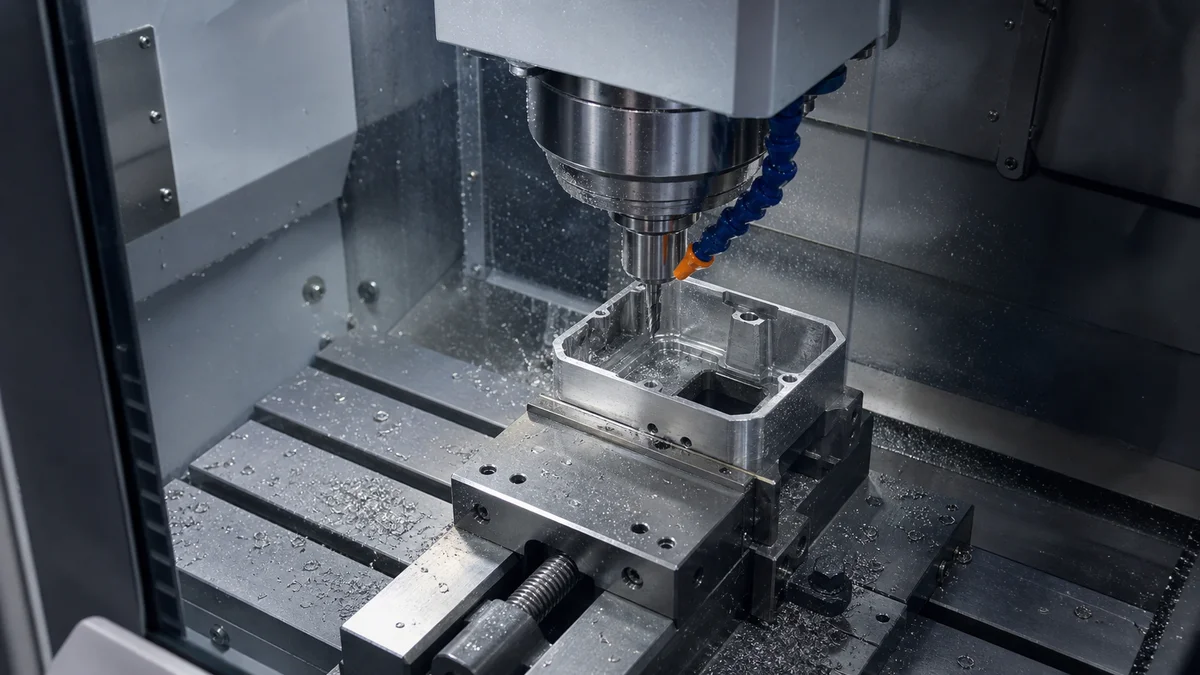
Work hardening means material can become harder locally as it is deformed during cutting. If a tool rubs, dwells, loses an effective cutting edge, or repeatedly enters an affected area, the next pass may encounter a less forgiving surface. With 304, this behavior can combine with long, stringy chips and increase the need for stable process control.
Geometry determines the severity. A rigid, accessible feature with a short cutting path presents a different risk from a deep pocket requiring extended tool reach. A thick shaft is easier to support than a slender diameter, while a short wall is less sensitive to cutting and clamping forces than a tall, thin wall.
Features deserving early review include deep pockets, narrow slots, small internal radii, thin walls, long unsupported sections, deep holes, interrupted cuts, restricted cutter approaches, and geometry requiring several orientations. Cross-setup relationships also matter: a bore located from a face machined after reclamping can accumulate datum-transfer error.
Example: A 304 housing with a deep pocket and thin remaining wall combines chip-evacuation difficulty with declining stiffness as stock is removed. Applying a tight profile tolerance to the complete wall can add light finishing passes and structured inspection. Specify only the sealing or alignment zone that functionally requires close control.
Show tool access in the 3D model and add section views when internal geometry is unclear. Let the supplier select tooling, coolant strategy, workholding, roughing sequence, and finishing passes after reviewing the grade, stock form, quantity, surface finish, wall thickness, and critical feature relationships.
Does Choosing 303 Make Tight Tolerances Easier to Hold?
303 may support more stable cutting through lower resistance and better chip control, but the grade does not guarantee tight tolerances. Repeatability still depends on feature geometry, rigidity, workholding, tool condition, setup relationships, surface finish, quantity, and the agreed inspection method.
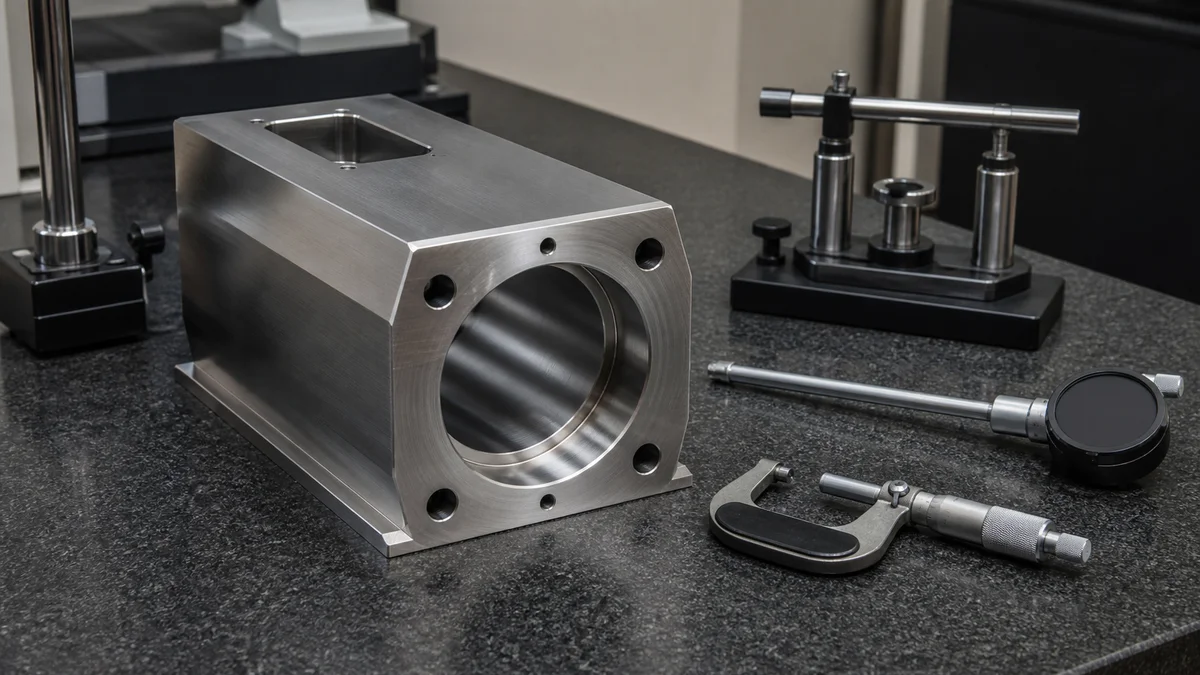
Material selection and tolerance planning are related, but they are not the same decision. Grade 303 may reduce some sources of cutting variability, while 304 can require closer control of tooling and work hardening. Neither statement establishes a universal tolerance capability for an actual component.
Use a tiered approval checklist:
- Mark bearing bores, sealing faces, press fits, alignment features, mating surfaces, and critical hole patterns as functional or assembly-critical.
- Cover clearance pockets, non-contact faces, and cosmetic edges with an appropriate general tolerance where applicable.
- Establish functional datums5 when position, flatness, perpendicularity, parallelism, coaxiality, or profile communicates assembly intent better than size alone.
- Localize surface-finish requirements because additional finishing passes can alter dimensional planning.
- State whether dimensions apply before or after any secondary finish that can affect acceptance.
- Define whether inspection covers a first article, production samples, every part, or selected critical characteristics.
- Specify the required report and measurement condition where acceptance might otherwise be ambiguous.
A common mistake is selecting 303 because the drawing contains tight tolerances without identifying which relationships matter. A bore can satisfy its size limit yet be incorrectly located from a mounting face. Conversely, a non-contact pocket may not require the same control as the bore.
Features produced in one setup are generally easier to relate than features requiring reclamping or indexing. Thin walls can also move after release from the fixture. Ask the supplier to confirm repeatability for the specific geometry, grade, stock condition, batch quantity, machining sequence, finish, and inspection plan.
How Should You Compare 303 and 304 Cost and Lead Time?
Compare complete delivered-part quotations rather than raw stock prices. Grade 303 may reduce machining and chip-handling effort, while 304 may prevent corrosion, welding, or forming risks that would make a cheaper machining route unsuitable for the finished component.
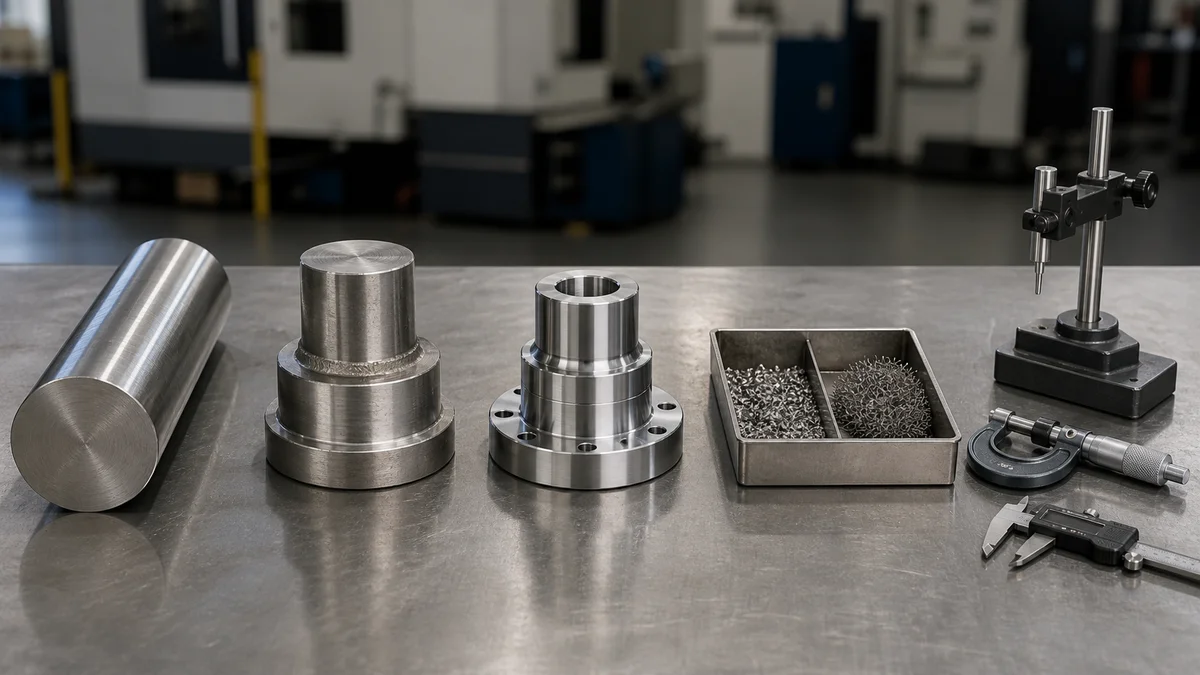
The lower raw-material price does not necessarily produce the lower delivered cost. Material sourcing is only one part of a complete-route comparison6. Programming, fixtures, setups, machining, tool attention, chip handling, finishing, inspection, documentation, packaging, and outside processing can all affect price and schedule.
| Quote driver | Required comparison input | Possible effect on 303 versus 304 |
|---|---|---|
| Stock form and condition | Diameter, plate size, condition, and approved substitutions | Availability may outweigh a nominal material-price difference |
| Removed material | Starting envelope and finished geometry | Heavy machining can increase the value of 303’s chip control |
| Geometry and setups | Deep features, thin walls, access directions, and reclamping | Setup risk may dominate material choice |
| Tool engagement | Cycle content, interrupted cuts, and finish-critical zones | Demanding 304 geometry may require closer tool monitoring |
| Welding or forming | Complete downstream route | These requirements may eliminate 303 as an acceptable option |
| Secondary finish | Deburring, passivation, polishing, masking, and protected edges | Adds handling, dimensional planning, and verification |
| Inspection | First article, sampling, reports, and critical-feature frequency | Metrology effort can materially affect the delivered quote |
| Quantity and intent | Prototype, pilot, or repeat-production volume | Workholding and process-control assumptions may change |
| Delivery | Material procurement, approvals, outside work, and shipment plan | The quoted schedule must cover the full route |
Request alternative 303 and 304 quotations only when engineering permits either grade. Both options should use the same controlled model, drawing, tolerances, finish, quantity, inspection scope, revision, and delivery requirement; otherwise, their prices are not comparable.
An unusually low quote may omit an operation or assume a different inspection level. Resolve the difference by checking material condition, setup assumptions, finishing, documentation, packaging, and whether the schedule includes downstream processing and final inspection.
What Information Should a 303 or 304 CNC Machining RFQ Include?
A useful RFQ should confirm CNC machining as the intended process and include matched design files, the exact stainless grade, quantities, production intent, critical tolerances, finish, inspection scope, revision, delivery expectations, service exposure, and every downstream welding or forming operation.

A complete RFQ lets suppliers compare 303 and 304 without filling specification gaps with different assumptions. Submit this approval checklist before requesting a firm recommendation or quotation:
- 3D CAD model: Include complete geometry, hidden pockets, tool-access restrictions, thin walls, and multi-side features.
- Controlled 2D drawing7: State units, part number, active revision, threads, critical dimensions, datums, GD&T where needed, and drawing notes.
- Exact material grade: Specify 303 or 304, or authorize alternatives subject to documented service and process requirements.
- Quantity: Provide the immediate order quantity and projected repeat demand when known.
- Production intent: Identify whether the order supports a prototype, functional validation, pilot production, or repeat production.
- Service exposure: Describe humidity, outdoor conditions, washdown, chlorides, chemicals, contact duration, and cleaning frequency.
- Critical tolerances: Separate bores, sealing faces, fits, mating surfaces, alignment features, and hole patterns from ordinary geometry.
- Surface finish and edges: Localize functional roughness, cosmetic zones, deburring, edge breaks, burr direction, and protected sharp features.
- Secondary operations: Identify welding, bending, swaging, forming, passivation, polishing, assembly, or other downstream work.
- Inspection expectations: Define first-article results, sampling, final dimensional reporting, material documentation, and characteristics requiring recorded verification.
- Revision and delivery: State the active revision, required delivery date, shipment plan, and any approval gate before repeat production.
Confirm the process name. CNC machining removes material through milling, turning, drilling, boring, reaming, or related operations. CNC turret punching uses programmed punches on sheet metal. Metal stamping uses dedicated dies. Sheet metal fabrication may include cutting, punching, bending, welding, and finishing. Plastic injection molding forms polymers in a mold. “CNC turret punching, CNC punch press, CNC-controlled stamping equipment, or metal stamping depending on the actual process” is not one standard process term and must be clarified before quotation.
For a material recommendation or comparable quotation, send the current 3D model and controlled 2D drawing with the proposed stainless grade, quantity, prototype or production intent, critical tolerances, surface finish, inspection expectations, revision level, service exposure, downstream welding or forming, and delivery requirements.
References
-
Stainless Steels | Elements of Metallurgy and Engineering Alloys - Austenitic stainless steels have excellent low-temperature toughness, weldability, and corrosion resistance. They usually possess excellent cryogenic properties ... ↩
-
Lathe Machining vs. CNC Milling: Choosing the Right Process - CNC turning centers with live tooling can mill cross-holes, flats, and slots without re-chucking. This matters for cost control on medium-complexity cylindrical ... ↩
-
How do chlorides affect stainless steel durability? - Chlorides significantly impact stainless steel durability by attacking the protective passive film that gives stainless steel its corrosion ... ↩
-
Springback in Sheet Metal: Causes, Values & Control - Stainless Steel Austenitic grades like 304 and 316 have high tensile strength and a strong tendency to work-harden during deformation. ↩
-
The Ultimate Guide to ASME Y14.5: Understanding, Applying ... - The first compartment is the geometric characteristic (flatness, position, profile ... Align datum choices with function and inspection reality. ↩
-
Build-Up an Economical Tool for Machining Operations ... - by FJG Silva · 2022 · Cited by 13 — Therefore, a cost estimation tool was developed, based on the calculated machining times and amount of required material, based on the final drawing of the ... ↩
-
Geometric Dimensioning & Tolerancing Course Collection - Our GD&T Guided Study courses enhance your skills related to choosing datums and feature controls, per ASME Y14.5, through drawing assignments, quizzes, and ... ↩