
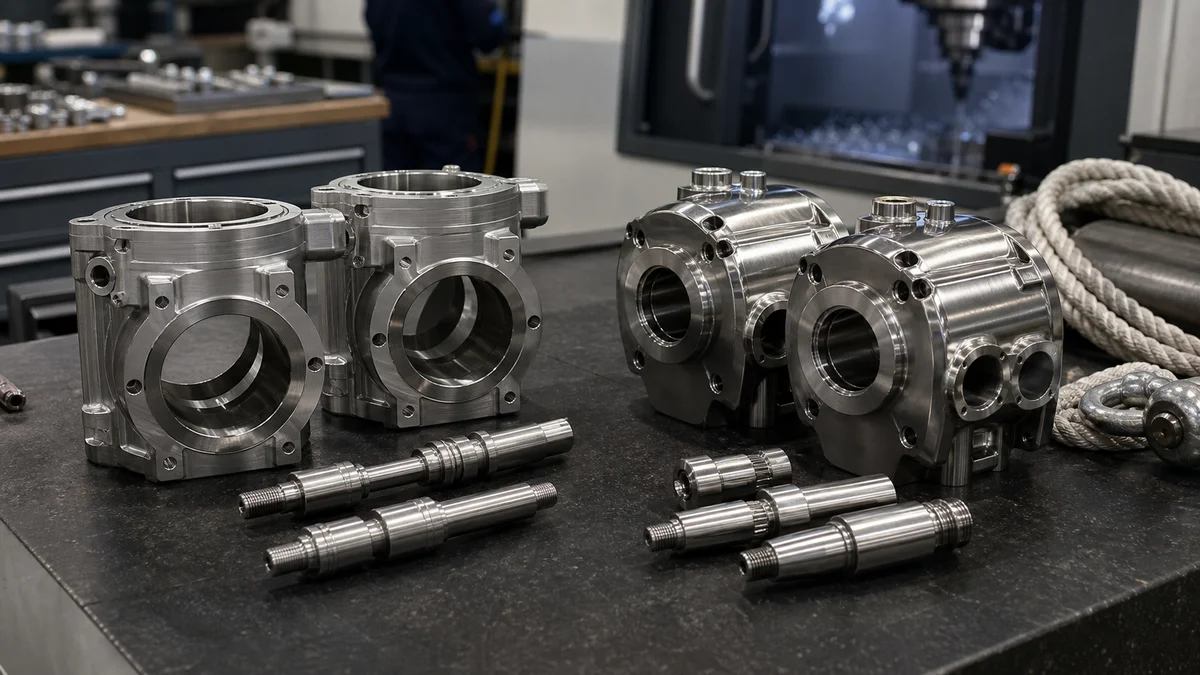
Choosing between stainless steel 304 and 316 is primarily an environmental and manufacturing decision. Both grades can be milled, turned, drilled, bored, and reamed. Either may suit precision interfaces when the geometry, workholding, tooling, and inspection plan are properly controlled. The higher-priced grade is not automatically the better part material.
For many indoor, atmospheric, food-equipment, and general industrial applications, 304 is the practical starting point. Grade 316 becomes more relevant when chlorides, saltwater, coastal air, chlorinated water, chemical contact, or repeated chemical cleaning raises the risk of pitting or crevice corrosion.
A sound choice therefore requires more than comparing grade names. The drawing and RFQ should connect the service environment to geometry, tolerances, surface finish, inspection evidence, quantity, production intent, and total quoted cost.
Should You Choose 304 or 316 for the Service Environment?
Choose 304 as the practical starting point for indoor, atmospheric, food-equipment, and general industrial service. Consider 316 when chlorides, saltwater, coastal air, chlorinated water, chemical contact, or repeated chemical cleaning create a credible risk of pitting or crevice corrosion.
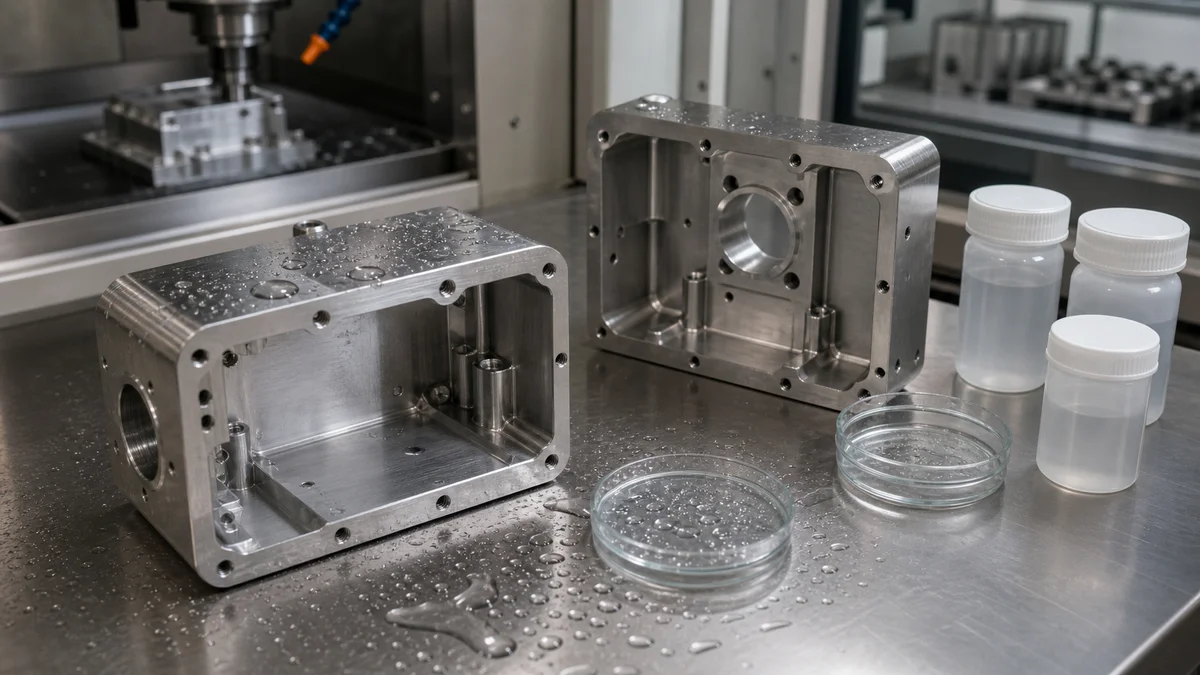
Begin with what surrounds or contacts the finished part, not with a general preference for the more expensive grade. Grade 316 contains molybdenum, which improves resistance to localized corrosion in chloride-bearing conditions1. That makes it an environment-driven upgrade rather than a universal replacement for 304.
| Service condition | Initial grade direction | Details needed before approval |
|---|---|---|
| Indoor or controlled atmosphere | Start with 304 | Humidity, contaminants, cleaning method, and expected service life |
| Food-equipment or general industrial service | Often start with 304 | Product contact, cleaning chemistry, temperature, and washdown frequency |
| Coastal air or salt spray | Consider 316 | Direct spray, salt deposits, cleaning cycle, and sheltered crevices |
| Chlorinated water | Consider 316 | Concentration, temperature, immersion pattern, and stagnant areas |
| Marine splash or saltwater contact | Consider 316 | Continuous or intermittent exposure, drying, deposits, and maintenance |
| Chemical cleaning or process contact | Review 316 | Chemical identity, concentration, temperature, duration, and frequency |
This is a selection framework, not a complete material compatibility determination. Terms such as “food grade,” “outdoor use,” and “chemical resistant” are too broad for a dependable RFQ. A useful service environment specification describes the actual fluid or atmosphere, temperature, frequency, duration, cleaning method, and areas where deposits or liquid may remain.
Example: A machined fixture used indoors with mild routine cleaning may have no documented chloride exposure, making 304 a reasonable starting point. Put the same geometry beside a chlorinated washdown area and the corrosion case changes, even though its tolerances and surface finish remain identical. Record that difference before approving either grade.
Is Strength a Valid Reason to Choose 316 Instead of 304?
Strength alone is usually not a valid reason to replace 304 with 316 because their reported strength ranges overlap. Use corrosion conditions to distinguish these grades, then verify loading, fatigue, temperature, and other structural requirements through the applicable mechanical-property specification.
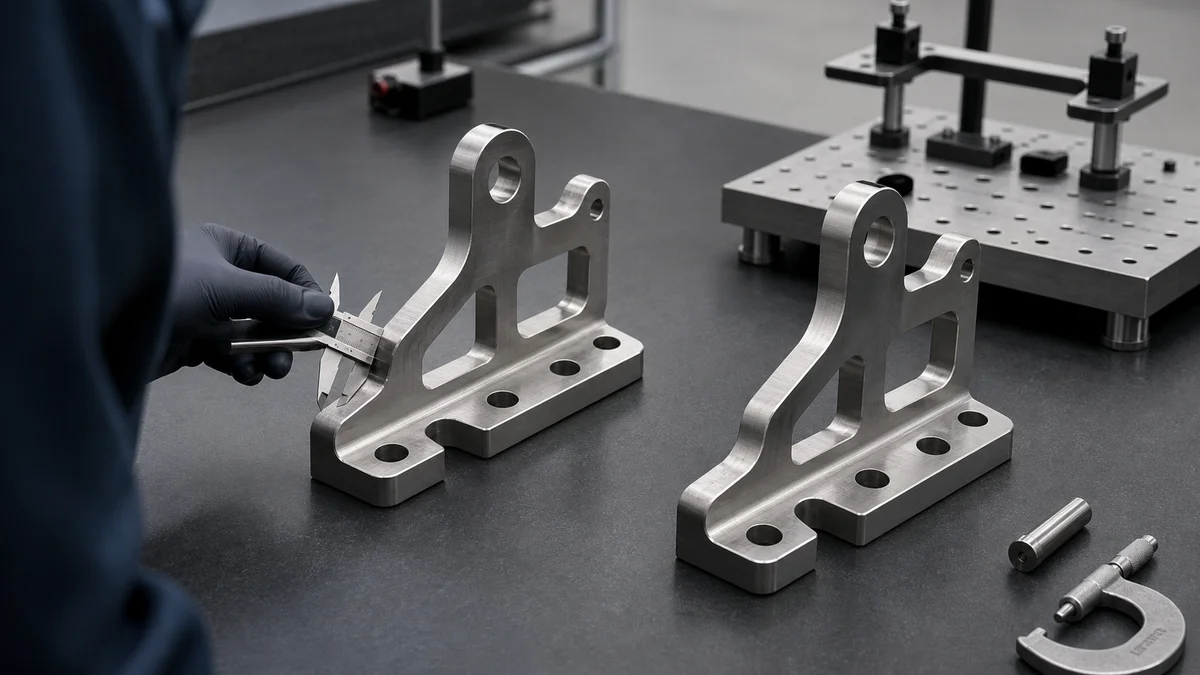
The claim that “316 is stronger” is not a substitute for engineering review. In this comparison, the principal selection difference is usually corrosion behavior, especially resistance to chloride-related attack. A load-bearing part still needs a separate assessment of the properties required for its material form, condition, geometry, and service.
Start by defining what strength means for the component. A static bracket, rotating shaft, cyclically loaded pin, and thin machined housing do not share one structural requirement. Depending on the design, the specification may need to address load direction, load cycle, temperature, unsupported length, wall thickness, stress concentration, and acceptable deformation. Changing 304 to 316 does not answer those questions.
Geometry can control performance independently of the alloy name. A deep pocket may leave a flexible wall. A small internal radius can create a stress concentration. A long slender section can be sensitive to both service loading and machining deflection. When these features govern the design, compare the required mechanical properties2 and review the geometry rather than expecting a corrosion-oriented upgrade to solve the structural problem.
A revealing diagnostic is a drawing that calls for 316 “for maximum strength” but gives neither a load requirement nor exposure data. The supplier can quote the named grade, yet cannot determine whether it addresses the design risk. A better RFQ states the corrosion environment and identifies the structural requirement separately. If neither grade satisfies that requirement, another material or a geometry change may be more appropriate than an unsupported grade upgrade.
How Do 304 and 316 Affect CNC Machining Risk?
Both grades are machinable, but 304 is generally the easier choice. Grade 316 can demand more conservative cutting, sharper tooling, closer coolant control, and greater attention to tool wear and work hardening, particularly on long cycles or difficult geometry.

Work hardening occurs3 when material near the cut becomes harder as it is deformed. If a tool rubs instead of cutting effectively, a later pass may encounter a less forgiving surface. Buyers normally should not prescribe feeds, speeds, or coolant settings without process evidence, but the RFQ should expose the geometry that makes machining control important.
Review these risk areas before treating 304 and 316 as interchangeable stock choices:
- Long or feature-dense cycles: Numerous holes, threads, pockets, bores, and finishing passes increase cumulative tool engagement.
- Deep or restricted features: Deep holes, narrow pockets, small internal corners, and obstructed surfaces can require longer, less rigid tools. Limited chip evacuation can compound the difficulty.
- Thin walls and slender sections: Low rigidity can increase vibration, deflection, clamp sensitivity, poor finish, or movement after the part is released.
- Multiple setups: Features on several sides introduce reclamping and datum-transfer risk, especially when bore-to-face or cross-hole relationships are critical.
- Finish-critical surfaces: Sealing faces, sliding areas, bearing surfaces, and visible faces may need a controlled finishing strategy rather than a blanket cosmetic note.
Scenario: Consider two 316 components of similar mass. One is a simple turned spacer with accessible faces. The other is a milled housing with deep pockets, thin walls, and many drilled features. The housing presents greater tooling, tool access, work-hardening, setup, and inspection risk even though the grade is identical.
Ask the supplier to review grade and geometry together. The useful result is a process plan based on tool reach, workholding, critical feature relationships, quantity, finish, and production intent—not a generic assumption that all 316 parts carry the same machining difficulty.
Does 316 Provide Better Tolerances or Surface Finish Than 304?
Grade 316 does not inherently provide tighter tolerances or a better machined surface than 304. Dimensional and finish results depend primarily on geometry, rigidity, workholding, tool condition, machining sequence, setup relationships, localized finish requirements, and the agreed inspection method.
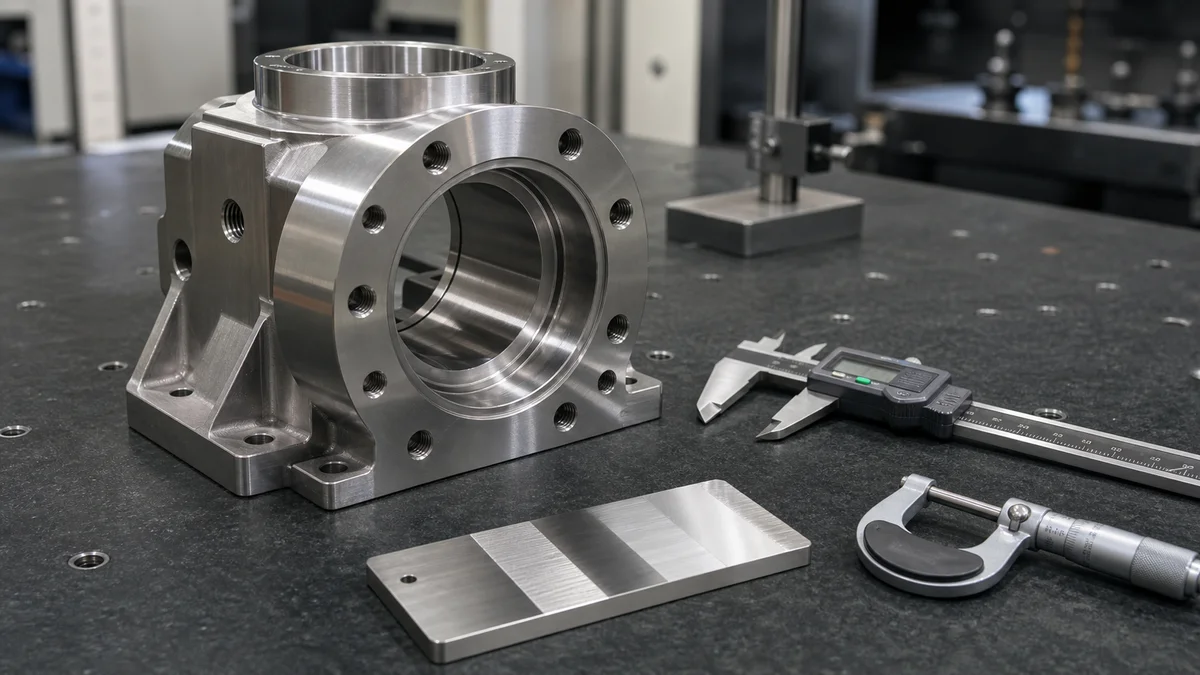
The alloy designation tells the supplier what material to machine; it does not define process capability for a particular feature. Both 304 and 316 can support precision interfaces when the machining and inspection plan is appropriate. Neither grade alone guarantees size, flatness, position, profile, or surface roughness.
A better drawing separates requirements by function. Bearing bores, sealing surfaces, alignment holes, press-fit areas, mating faces, and critical hole patterns may need explicit control. Clearance pockets, cosmetic edges, lightening features, and non-contact surfaces can often remain under a suitable general tolerance or normal machined-finish requirement. This tiered approach avoids pricing and inspecting every feature as though it carries the same risk.
Which geometry makes tolerance control harder?
Thin walls can move under cutting or clamping pressure. Deep pockets may require long tools that are more sensitive to deflection. Broad plates may move as material is removed. Features produced in different setups can also accumulate datum-transfer error or tolerance stack-up that does not exist when related surfaces are finished in one orientation.
The drawing should establish functional datums4 and identify relationships such as face-to-bore alignment or hole-pattern position relative to a mounting surface. If size is not the real functional concern, a suitable geometric control may communicate the requirement more clearly than tightening several linear dimensions.
Localized surface finish requirements matter for the same reason. A sealing face may need a defined roughness and inspection method, while an internal clearance pocket may not. Applying one fine-finish note everywhere can add finishing passes and inspection without improving function. Grade selection should follow the environment; tolerance and finish should follow feature function, geometry, and the agreed measurement plan.
What Inspection and Material Evidence Should the Order Require?
Require inspection and material evidence that matches the reason for selecting the grade and the risk of each critical feature. Define the required records, measurement scope, sampling frequency, acceptance criteria, and delivery stage before quotation instead of assuming documentation is included.
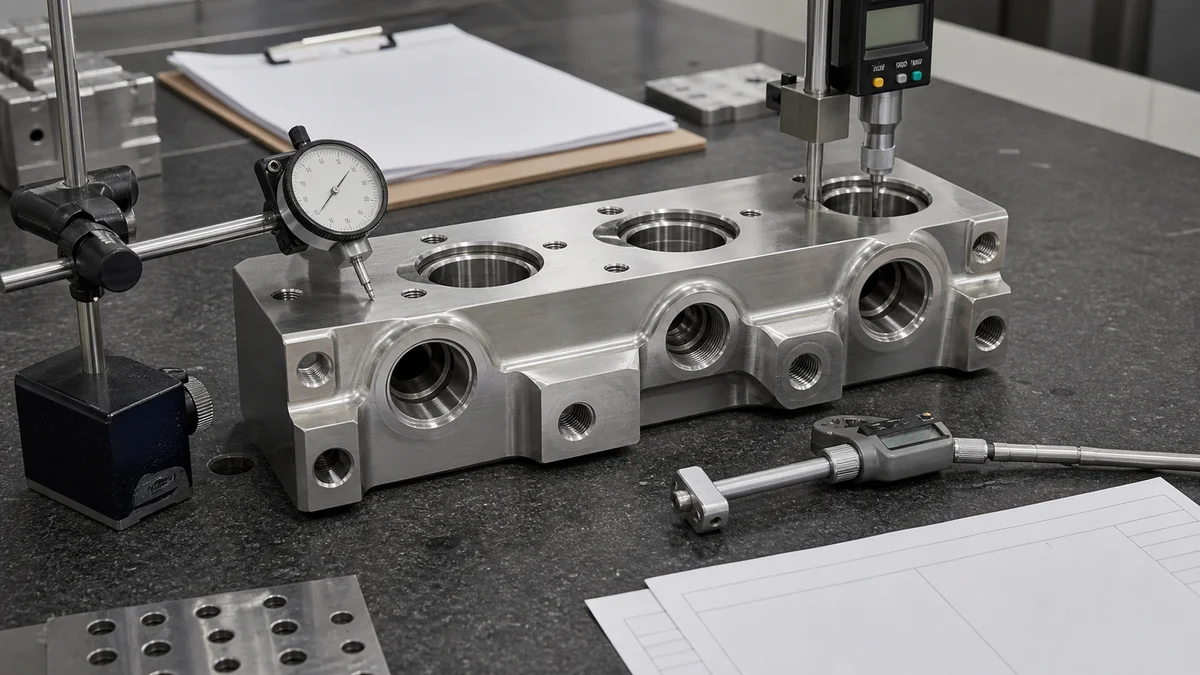
Inspection establishes whether the manufactured part meets the drawing. Material evidence supports whether the supplied stock matches the specified grade. These are related but separate acceptance questions: a dimensional report does not establish material identity, and material documentation does not prove that a bore, sealing face, or hole pattern meets its requirement.
Define the evidence before requesting price:
- Name the exact grade and state which material records, if any, must accompany the shipment.
- Mark critical dimensions, datums, geometric controls, and finish zones on the controlled drawing.
- State whether first-article inspection5 applies to the first lot, a revision change, or another approval stage.
- Define the production inspection frequency: sampling, selected checks on every part, or another agreed plan.
- Identify which results must be recorded rather than handled as routine process verification.
- Specify the inspection method when acceptance depends on it, or request the supplier’s proposed method.
- State the measurement condition for features that may change after unclamping or secondary processing.
- Clarify whether acceptance dimensions apply before or after polishing, passivation, assembly, or another operation.
A hole-pattern position relative to a sealing face illustrates why “standard inspection” is insufficient. The supplier needs the datum scheme, positional requirement, measurement method, reporting scope, and inspection frequency. Otherwise, the quote must carry an assumption about metrology effort.
When 316 is selected for corrosion margin or a stated compliance need, disclose that reason before quotation. Do not assume the grade name automatically includes special traceability, reporting, or document-retention requirements. State what evidence is necessary, when it must be supplied, and which revision governs acceptance.
How Should You Compare the Total Cost of 304 and 316 Parts?
Compare the complete manufacturing plan, not raw material price alone. Grade 316 can affect sourcing, cutting strategy, tool wear, cycle planning, inspection, and scrap exposure, while geometry, setup count, quantity, finish, documentation, and delivery timing may outweigh the grade difference.
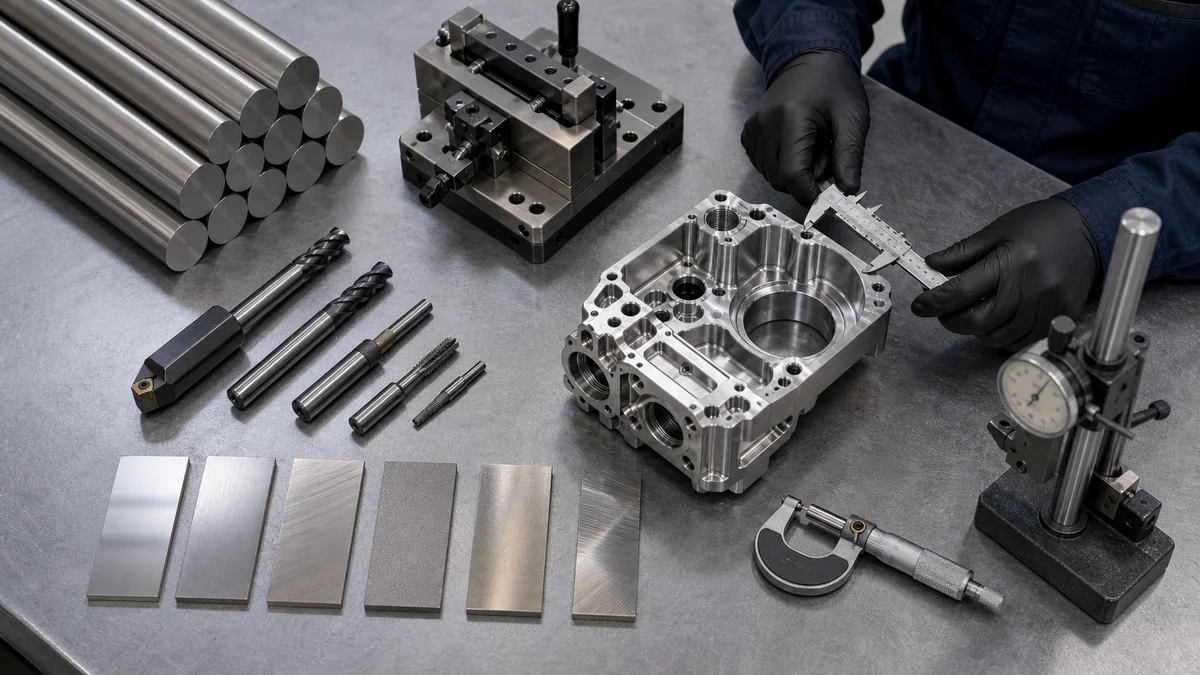
A fixed percentage premium is not a dependable budgeting rule because material availability and market conditions change. Even when 316 stock costs more, the final quotation also reflects how the part is machined, finished, and verified. Alternative-grade pricing is useful only when both materials satisfy the documented service environment.
| Quote driver | Manufacturing consequence | RFQ input needed for comparison |
|---|---|---|
| Material sourcing | Grade, condition, stock form, and availability shape purchasing assumptions | Exact grade, material condition, stock restrictions, and documentation needs |
| Machining cycle | Tool engagement, work hardening, and finish passes affect machine time | Complete model, feature count, deep geometry, and finish zones |
| Tooling exposure | Restricted access and long cycles increase tool-management risk | Hole depths, pocket openings, internal radii, and critical surfaces |
| Setup count | Repositioning adds fixturing, alignment, and datum-transfer work | Functional datums and cross-face relationships |
| Inspection scope | Tight features and recorded results require planned measurement effort | Critical tolerances, inspection method, sampling, and report requirements |
| Quantity and intent | Prototypes and repeat production support different fixturing decisions | Immediate quantity, annual usage if known, and production intent |
| Delivery basis | Procurement and secondary operations affect routing | Delivery expectations, approval stages, and partial-shipment needs |
Request separate 304 and 316 options only when engineering permits either grade. Otherwise, alternative pricing invites a substitution discussion that the service environment has already resolved.
Also verify that competing quotations use the same assumptions. One may include material evidence, documented inspection, and secondary finishing while another excludes them. Compare the active revision, grade, finish scope, inspection frequency, quantity, and delivery basis before deciding which route costs less. The right comparison is between complete manufacturing plans6, not isolated stock prices.
What Happens When the Stainless Grade Is Specified Without Exposure Evidence?
Without exposure evidence, buyers risk paying for an unnecessary 316 upgrade or approving 304 for a chloride-bearing environment where additional corrosion resistance was needed. Document the atmosphere, fluid, cleaning chemistry, temperature, frequency, duration, and exposure pattern before fixing the grade.
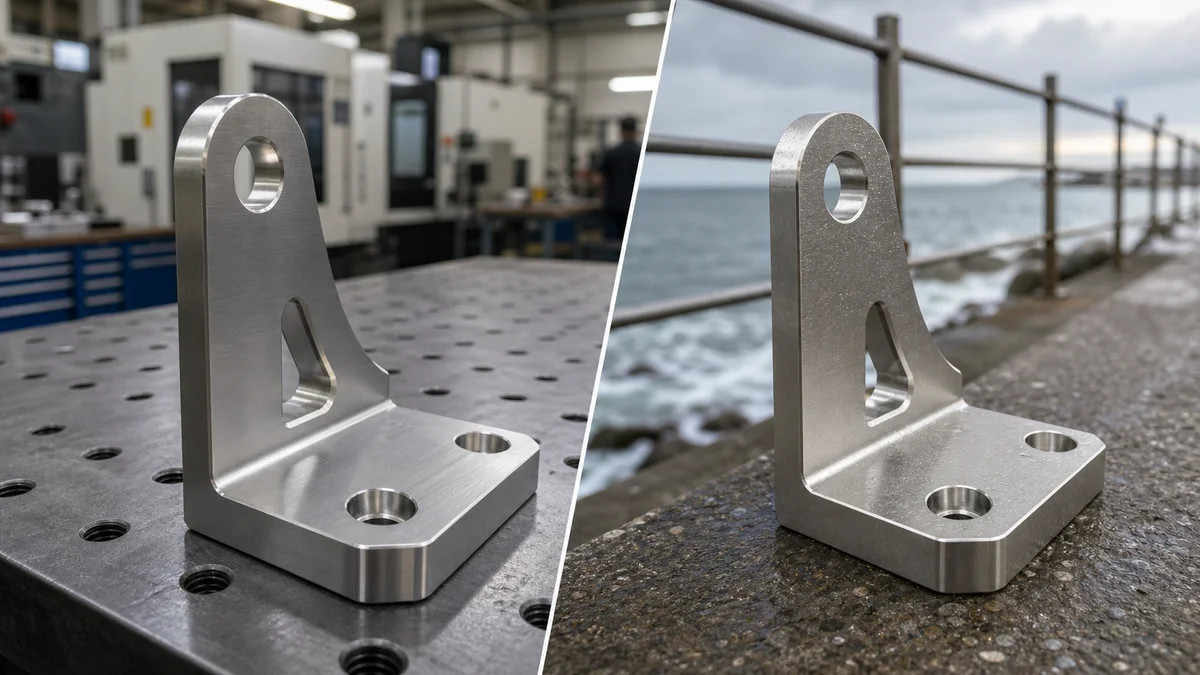
A grade callout without operating context turns a material decision into an assumption. The supplier may quote exactly what the drawing states, but cannot judge whether that grade is functionally justified. The gap becomes more serious when procurement later requests a substitution based on price or availability without knowing why the original material was selected.
Two opposite failures deserve a direct check:
- Unsupported upgrade: Grade 316 is used as a general signal of quality even though the part serves in a controlled indoor environment with no identified chloride or aggressive chemical exposure. The project accepts additional sourcing and machining implications without a defined functional benefit.
- Unsupported downgrade: Grade 304 is retained for coastal spray, marine splash, chlorinated water, aggressive cleaning, or another chloride-bearing condition. Habit or initial price has displaced the actual corrosion environment.
The exposure note should identify the atmosphere or fluid, whether contact is continuous or intermittent, and whether liquid can remain in joints, recesses, threads, or other crevices. Add cleaning chemistry, washdown frequency, temperature, deposits, drying conditions, and expected maintenance when known. Descriptions such as “outdoor,” “wet,” “food safe,” and “corrosion proof” are too vague for material approval.
For a proposed change from 316 to 304, engineering should check the cleaning solution, chloride presence, temperature, exposure duration, frequency, crevice conditions, and any stated compliance requirement. If those details allow either grade, alternative quotations may be reasonable. If they establish a clear need for 316, a purchasing substitution should not override the documented service requirement. Recording material selection rationale also reduces the chance that a later revision removes the grade without understanding its function.
Are You Quoting CNC Machining, Turret Punching, or Metal Stamping?
Confirm the process before discussing 304 or 316 manufacturing cost. CNC machining removes material from solid stock; turret punching processes sheet with programmed punches; stamping uses forming or cutting dies; sheet metal fabrication combines sheet operations; injection molding forms polymers in a mold.
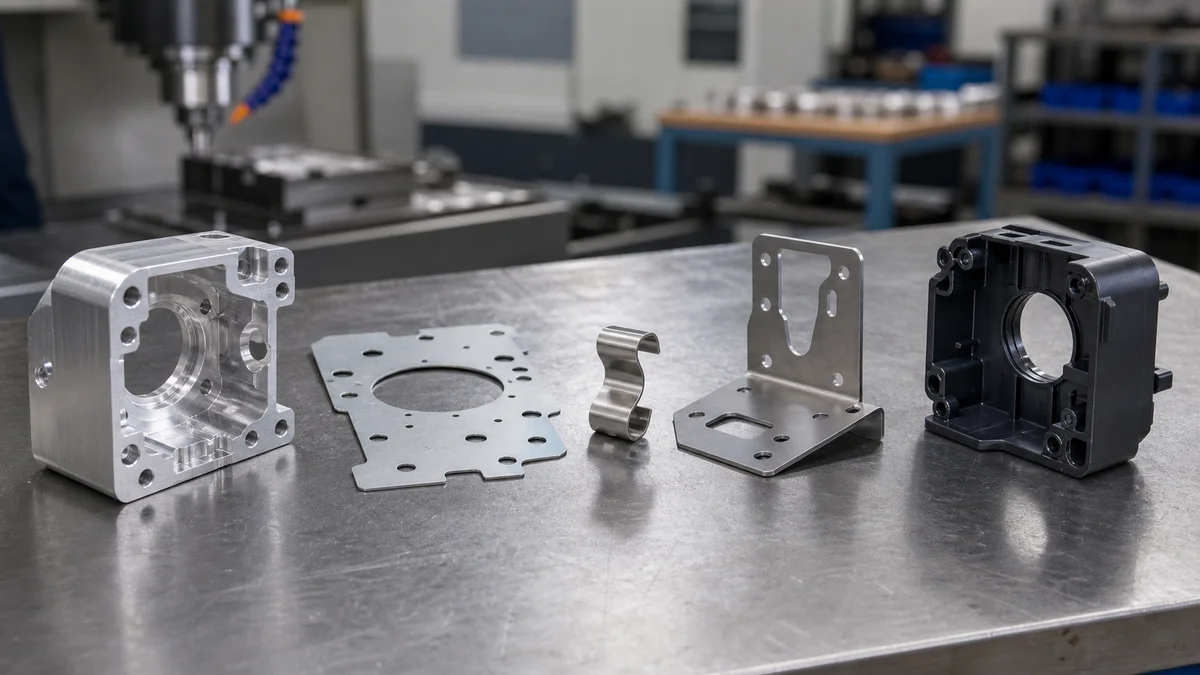
Process names are not interchangeable because they imply different stock forms, geometry rules, tooling, tolerances, edges, and cost structures. “CNC turret punching, CNC punch press, CNC-controlled stamping equipment, or metal stamping depending on the actual process” is not one standard process term. It may refer loosely to CNC turret punching, a CNC punch press, CNC-controlled stamping equipment, or general metal stamping, so the RFQ must identify the intended operation.
| Process | How the part is made | Specification details that drive acceptance |
|---|---|---|
| CNC machining | Removes material from solid stock by milling, turning, drilling, boring, or reaming | Tool access, workholding, pockets, bores, datums, tolerances, and machined finish |
| CNC turret punching or punch press work | Uses programmed punch tools on sheet | Sheet thickness, hole and form geometry, burr direction, edge condition, and tool access |
| Metal stamping | Cuts or forms sheet with dedicated dies | Material condition, bend radius, springback, burr direction, die strategy, and volume |
| Sheet metal fabrication | Combines cutting, punching, bending, forming, welding, or finishing as required | Flat pattern, bend details, joints, hardware, welds, and finished assembly geometry |
| Plastic injection molding | Injects polymer into a mold | Resin, wall thickness, draft, ribs, gate location, shrinkage, tooling, and molded finish |
Teaching scenario: Stamped stainless steel clip. A thin clip with bends and a sheared edge should not be quoted as a CNC-machined block merely because CNC-controlled equipment may participate in production. Material hardness, bend radius, springback, burr direction, and die-related geometry may matter more than a generic overall tolerance. This is an illustrative scenario, not a customer case.
For genuine CNC machining, provide solid-stock geometry and identify critical bores, faces, threads, setup relationships, and finish zones. For a sheet process, state sheet thickness, forming requirements, edge acceptance, burr orientation, and production intent. For injection molding, the relevant design conversation changes to polymer selection, draft, gate location, wall thickness, shrinkage, and mold tooling.
What Should an RFQ Include for 304 or 316 CNC Machined Parts?
A complete RFQ should combine controlled design data, exact stainless grade, service exposure, quantity, production intent, critical tolerances, localized finish requirements, inspection evidence, revision level, and delivery expectations. This information lets the supplier evaluate material and machining risk without hidden assumptions.
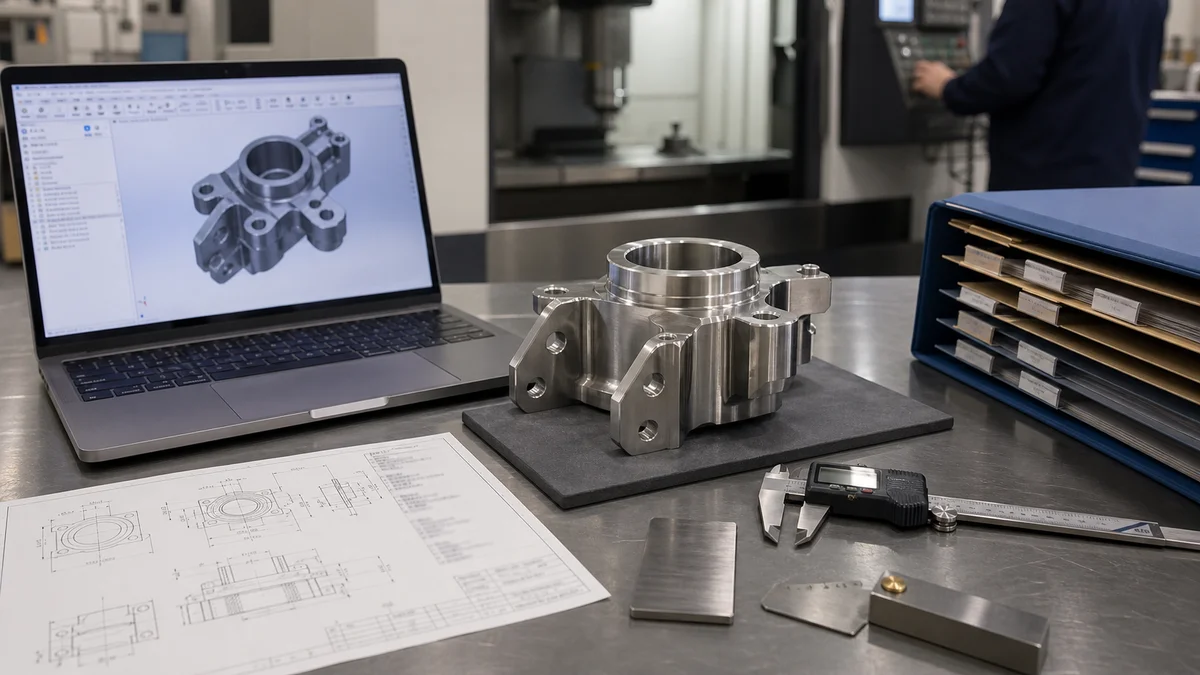
Use this RFQ approval checklist7 before requesting a recommendation, sample, or quotation:
- ☐ 3D model: Include complete geometry for tool-access, stock, setup, and manufacturability review.
- ☐ Controlled 2D drawing: Define units, part number, active revision, datums, critical dimensions, threads, notes, and acceptance requirements.
- ☐ Document authority: State whether the drawing or model controls if they disagree.
- ☐ Exact material grade: Specify 304 or 316 rather than “stainless steel.” Identify any required condition, sourcing restriction, or material evidence.
- ☐ Service environment: Describe chlorides, coastal or marine exposure, chlorinated water, chemicals, temperature, washdown practices, duration, frequency, drying, and crevice risk.
- ☐ Production intent: State whether the order is a prototype, functional sample, pilot lot, or repeat production.
- ☐ Quantity: Provide immediate quantity and expected annual usage when known so purchasing and fixturing assumptions match demand.
- ☐ Critical tolerances: Separate functional bores, sealing faces, mating surfaces, alignment features, and hole patterns from ordinary dimensions.
- ☐ GD&T and datums: Use geometric controls where position, orientation, flatness, or profile protects function. Avoid creating tolerance stack-up through unnecessary chained dimensions.
- ☐ Surface finish: Localize functional roughness and cosmetic requirements rather than applying one fine finish everywhere.
- ☐ Secondary operations: Identify polishing, passivation, deburring, edge breaks, marking, assembly, cleaning, or other required steps. State when dimensions apply if finishing changes the accepted surface.
- ☐ Inspection expectations: Define first-article reporting, recorded dimensions, sampling, selected checks on every part, material evidence, measurement method, and inspection timing.
- ☐ Delivery expectations: State the required date, partial-shipment needs, packaging concerns, and approval stages before production.
Classify features as functional, assembly-related, cosmetic, or non-critical where useful. This gives the supplier a clear basis for planning tooling, workholding, finishing, inspection, cost, and schedule around the requirements that determine acceptance.
For a material recommendation, sample, or quotation, send the 3D model, controlled 2D drawing, proposed grade, quantity, prototype or production intent, service exposure, critical tolerances, surface finish, inspection expectations, revision level, secondary operations, and delivery requirements.
References
-
Molybdenum grade stainless steels - Molybdenum is one of the few elements. It has a particularly strong positive effect on pitting and crevice corrosion resistance in chloride-containing solutions ↩
-
AISI 304 stainless steel - Better corrosion resistance than Type 302. High ductility, excellent drawing, forming, and spinning properties. Mechanical Properties Hardness, Tensile ... ↩
-
Drilling Difficult Materials - SME.org - austenitic stainless, geometry, edge prep, and a real good coating. Slowing drilling down generates less heat in the cut and prevents the ... ↩
-
GD & T Professional Certification, GDTP Y14.5 - Reviewing feature control frames, datum feature references, modifiers, and related dimensions to determine requirements for manufacturing, inspection, or ... ↩
-
Quality Manager - Job Board and Career Center - ASQ - First Article Inspection (FAI) activities per customer requirements. Evaluate incoming material, source inspection activities, and manage Supplier. Prepare and ... ↩
-
Future Composites Exchange Technical Program - SME.org - This talk outlines a vision moving towards a closed-loop AFP system, termed AFP+ , that seamlessly integrates design, process planning, ... ↩
-
CNC Machining RFQ Template Guide - uneed - The package typically starts with a 3D CAD model, often a STEP file, and a 2D PDF drawing that defines tolerances, GD&T, notes, surface finish, and material ... ↩